
Academy · Online · Kentucky
Paramedical camouflage course for Kentucky artists, live 1:1 on Zoom
One-on-one scar and stretch mark camouflage training on Zoom for artists in Louisville, Lexington, Bowling Green, Northern Kentucky and across the Commonwealth. Live with Evelyn from Canada, scheduled around your time zone.
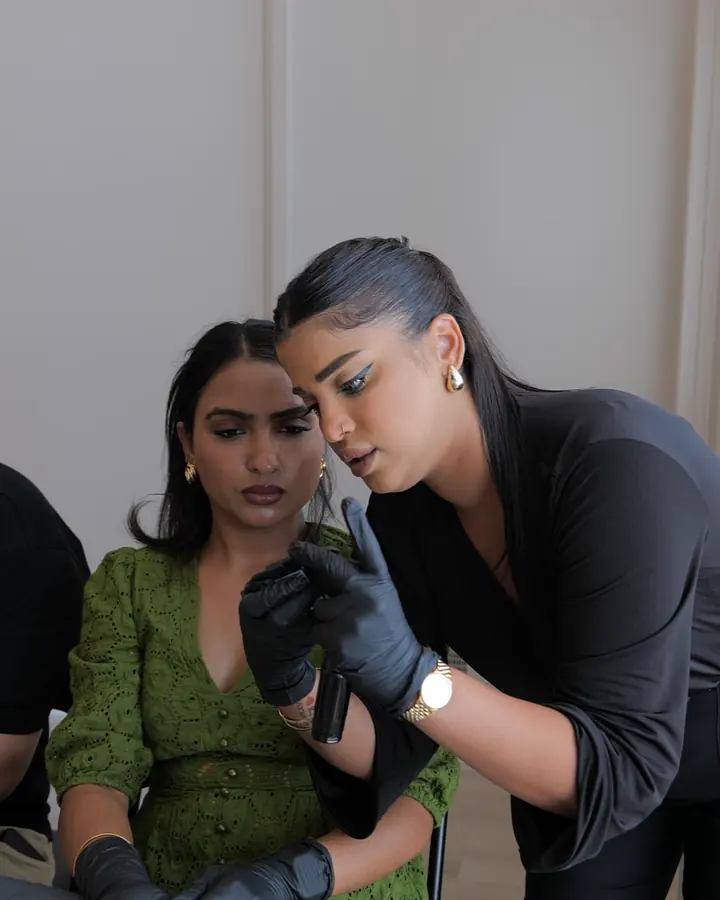
Camouflage training for Kentucky artists
Kentucky's beauty industry is centred on two strong cities and a ring of fast-growing suburbs. Louisville has a large hospital district downtown and busy plastic surgery practices in the East End, while Lexington combines a university medical centre with a loyal local client base. Brow and lip studios are now common in both cities, and in Bowling Green, Northern Kentucky and Elizabethtown too. Specialists who can camouflage a surgical scar or stretch marks are much harder to find.
The SKINEAV 1:1 Zoom course teaches Kentucky artists that specialist skill in private live sessions with Evelyn: deciding whether a scar is healed and suitable, mixing a custom skin-toned pigment, choosing depth and needle configuration for scar tissue, and planning several gentle sessions instead of one heavy one. It is live training, not a video library.
Tuition: $2,997 USD for the live online 1:1 Zoom course taught from Canada, or $3,697 USD with the training kit shipped to the US. Payment plans are available, e.g. $500 deposit + 3 x $999. See the US course page for what is included.
How tattoo registration works in Kentucky
Kentucky regulates tattooing statewide under 902 KAR 45:065, but registration is handled locally. The Cabinet for Health and Family Services' Body Art Section says anyone tattooing, including microblading and cosmetic tattooing, must register through the local health department in the county or district where they work. All tattooing must take place under a Kentucky certified studio.
The state's tattooing FAQ is unusually clear for permanent makeup artists. It says permanent makeup, including microblading, is regulated as tattooing, and that licensed estheticians who do microblading must also register as tattoo artists, with the salon or spa holding a tattoo studio certificate. At a high level, applicants must be at least 18 and show proof of an approved bloodborne pathogen course. Registrations are annual and do not transfer from one county or district to another.
Camouflage puts pigment into the skin, so plan on it being treated as tattooing and confirm with your local health department. The SKINEAV Certificate of Completion is proof of training. It is not a Kentucky registration.
Real training moments
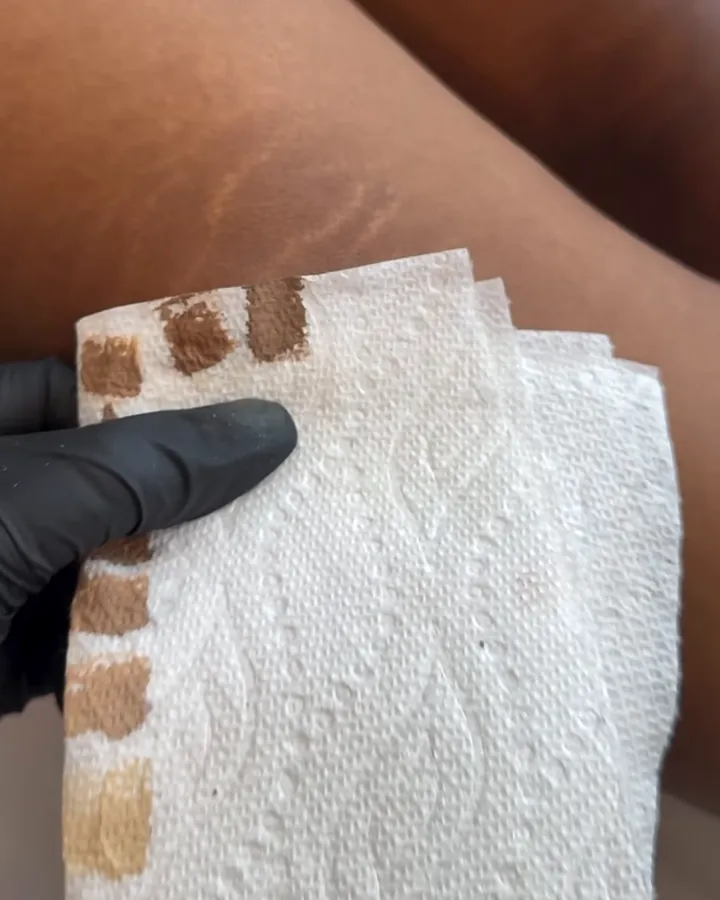
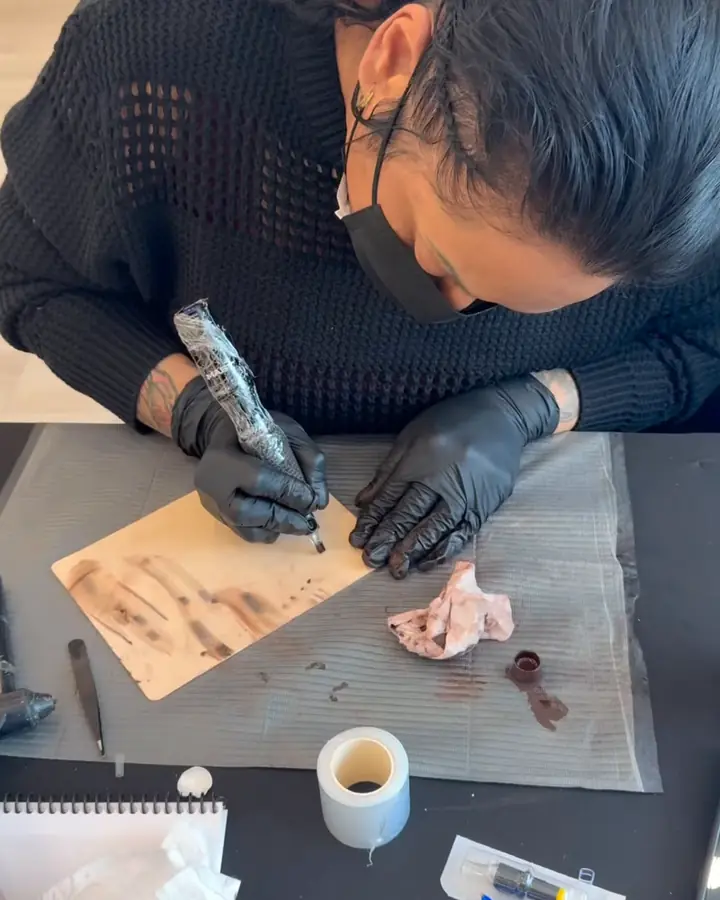
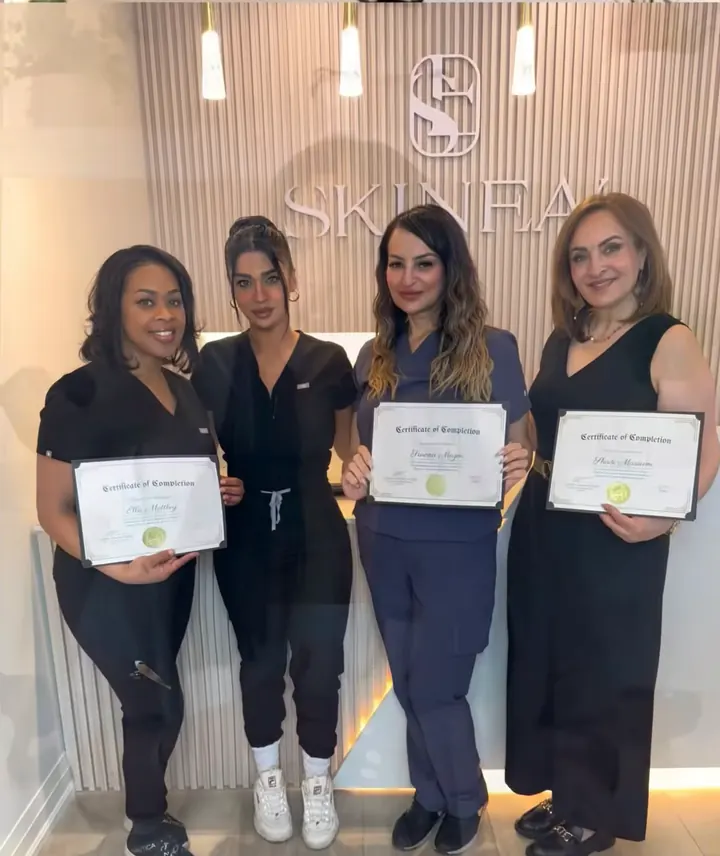
Where Kentucky camouflage clients are
- Louisville: the East End, St. Matthews, the Highlands and Jeffersontown, close to the downtown medical district
- Lexington: Hamburg, Chevy Chase and the suburbs toward Nicholasville and Georgetown
- Northern Kentucky: Covington, Florence and Fort Thomas, part of the Cincinnati market
- Bowling Green: a growing city in the south with very few camouflage specialists
- Owensboro, Paducah and Elizabethtown: smaller markets where one well-trained artist can become the local name
Common requests include C-section and tummy tuck scars, breast surgery scars and stretch marks. Read C-section scar camouflage and stretch marks after pregnancy.
How training works
- Free callTalk through your experience, your state and the right format.
- Reserve your seatPick session times in your own time zone.
- Live 1:1 on ZoomColour theory, technique and guided practice with Evelyn.
- Six months of mentorshipFeedback on your work while you build your business.
What Kentucky artists ask before enrolling
"I'm a licensed esthetician who does microblading. Am I already covered?" Not automatically. Kentucky's FAQ says estheticians doing microblading must register as tattoo artists with the local health department, and the business needs a tattoo studio certificate. Check with your health department before adding body camouflage.
"I work in Louisville but live in another county. Which health department do I contact?" The one for the county or district where you actually tattoo. Kentucky registrations do not transfer between districts, so a second work location may need its own registration.
"Is an online bloodborne pathogen course accepted?" Kentucky's FAQ says an OSHA-compliant course, online or in person, that lets students ask questions is generally sufficient, and it gives the Public Safety Branch as a contact if you are unsure.
Scheduling from Kentucky
Most of Kentucky, including Louisville, Lexington and Northern Kentucky, is on Eastern Time, the same as Evelyn in Toronto. The western part of the state, including Bowling Green, Owensboro and Paducah, is on Central Time, one hour behind. Session times are confirmed in writing in both zones.
What a training week can look like from Kentucky
A typical week mixes one theory session, covering undertone, scar assessment and when to send a client back to their doctor, with one live practice session on practice skin while Evelyn watches your hand position, depth and saturation on camera. Between sessions you build a consultation form, a consent process and an aftercare sheet that fit your studio and your local health department.
Your first camouflage clients in Kentucky
Most Kentucky graduates begin with clients who already trust them, often brow or lip clients who mention a scar. A small, consent-based portfolio photographed in consistent light then makes it easier to introduce the service to plastic surgeons, OB-GYNs and physical therapists in Louisville and Lexington. The course covers how to describe camouflage honestly, without promising results.
How the course fits a Kentucky beauty business
Kentucky artists who are already registered and working under a certified studio can usually add camouflage as a new specialist service, after confirming with their local health department.
The course covers the full basics of camouflage, learning on practice skin, theory, machine and ink, pigment chemistry basics, and the business side: finding your audience, building a pricing strategy you set yourself, and spacing sessions properly. You can add the training kit, you receive a SKINEAV Certificate of Completion, and you get six months of mentorship with Evelyn afterwards. It does not promise clients or income. It gives you a skill, a method and someone to ask when a real case comes in.
See the US course overview for the full curriculum and format.
Licensing note: the SKINEAV Certificate of Completion shows you finished Evelyn's training. It is not a state license, permit or registration. Before you tattoo anyone in the US, check and follow the rules of your state, county and city.
Frequently asked questions
Is permanent makeup regulated as tattooing in Kentucky?
Yes. The state says permanent makeup, including microblading, is regulated as tattooing and requires tattoo artist registration with the local health department.
Who registers tattoo artists in Kentucky?
The local health department in the county or district where you tattoo, under rules set by the Cabinet for Health and Family Services.
Is the SKINEAV certificate a Kentucky registration?
No. It is a Certificate of Completion for the training only.
What time are sessions for Kentucky students?
Eastern Kentucky shares Toronto's Eastern Time. Western Kentucky is on Central Time, one hour behind.
Do I need to travel for the course?
No. It is taught live over Zoom from Canada. SKINEAV has no US location.
Is the course live?
Yes. It is live, one-on-one with Evelyn on Zoom, with six months of mentorship afterwards.