
Academy · Online · Massachusetts
Paramedical camouflage course for Massachusetts artists, live 1:1 on Zoom
One-on-one scar and stretch mark camouflage training on Zoom for artists in Boston, Cambridge, Worcester, Springfield and across Massachusetts. Live with Evelyn from Canada, on the same Eastern Time.
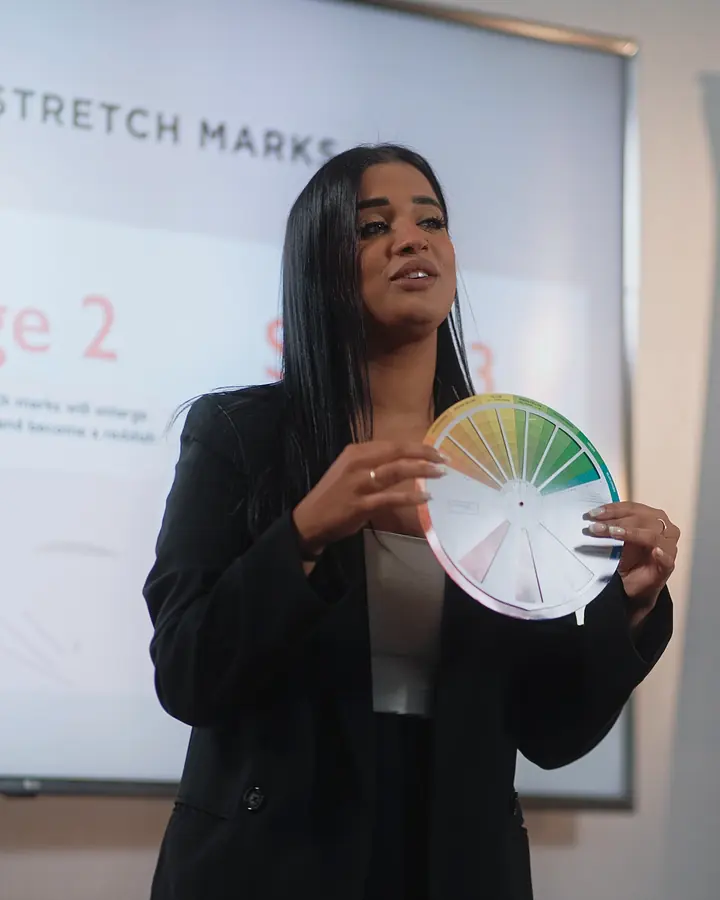
Camouflage training for Massachusetts artists
Massachusetts has one of the densest concentrations of hospitals and medical specialists in the world. Boston's teaching hospitals, the surgical centres around Route 128 and busy plastic surgery practices in Wellesley, Newton and the North Shore all produce patients who live with healed surgical scars. Many of them never hear that camouflage exists. When they do search for it, they usually find brow studios and laser clinics, not an artist who can colour-match scar tissue.
The SKINEAV 1:1 Zoom course teaches Massachusetts artists to fill that gap carefully: assessing whether a scar or stretch mark is suitable, mixing a custom skin-toned pigment, choosing depth and needle configuration for fragile tissue, and planning several gentle sessions instead of one heavy one. Every session is live and private with Evelyn, who has more than ten years of camouflage experience. You are not watching a recording.
Tuition: $2,997 USD for the live online 1:1 Zoom course taught from Canada, or $3,697 USD with the training kit shipped to the US. Payment plans are available, e.g. $500 deposit + 3 x $999. See the US course page for what is included.
How body art permits work in Massachusetts
Massachusetts has no statewide tattoo license. Body art is regulated city by city and town by town through local boards of health. The Department of Public Health publishes model body art regulations and inspection forms that boards can adopt or adapt, so the details, fees and training rules differ from one community to the next. Many local versions require both an establishment permit and an individual practitioner permit.
Boston is a good example of how detailed local rules can be. The Boston Public Health Commission requires an establishment permit for any business offering body art, including permanent makeup, and a practitioner license for every individual artist, including visiting and convention artists. Its Body Art Regulations include cosmetic tattooing in the definition of body art. The Commission also warns that opening a body art space in Boston will likely need a zoning variance and a hearing, so new studios should start early.
Camouflage places pigment into the skin, so treat it as body art and ask the board of health in the town where you work which permits apply. The SKINEAV Certificate of Completion is proof of training. It is not a Massachusetts permit or a Boston practitioner license.
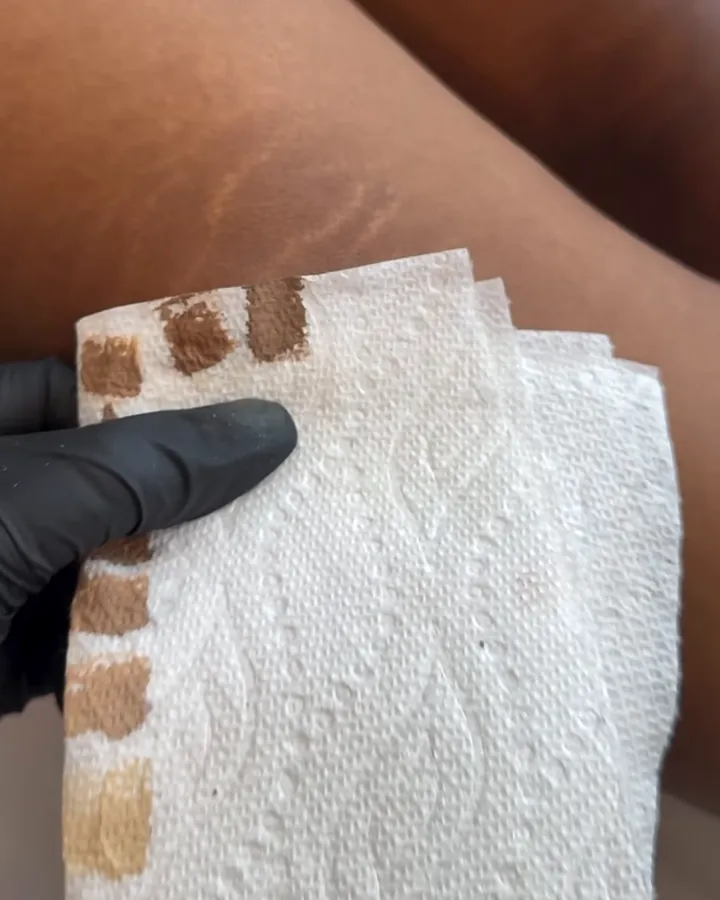
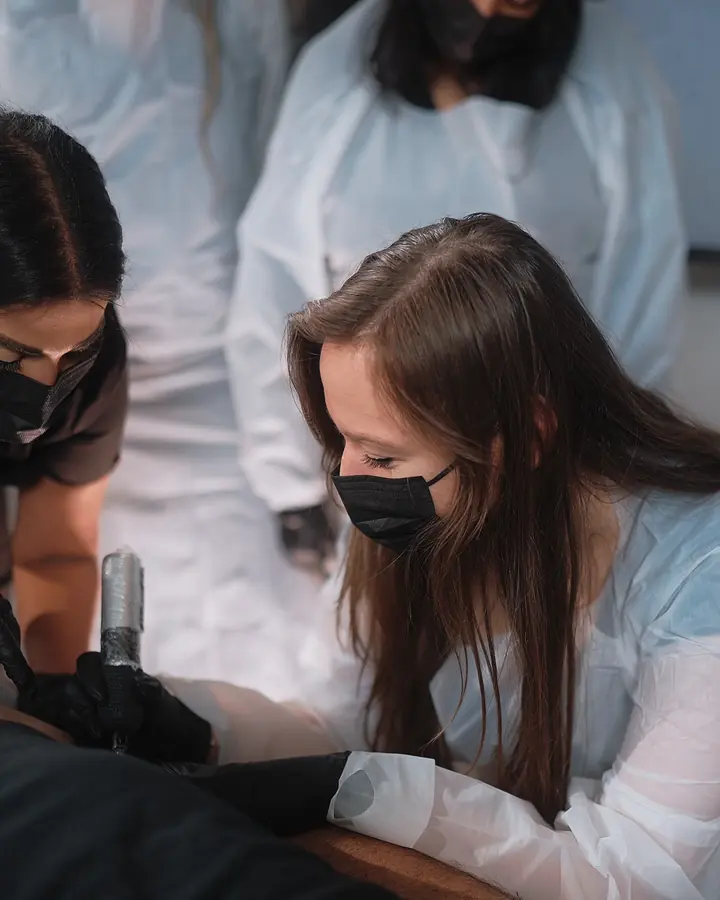
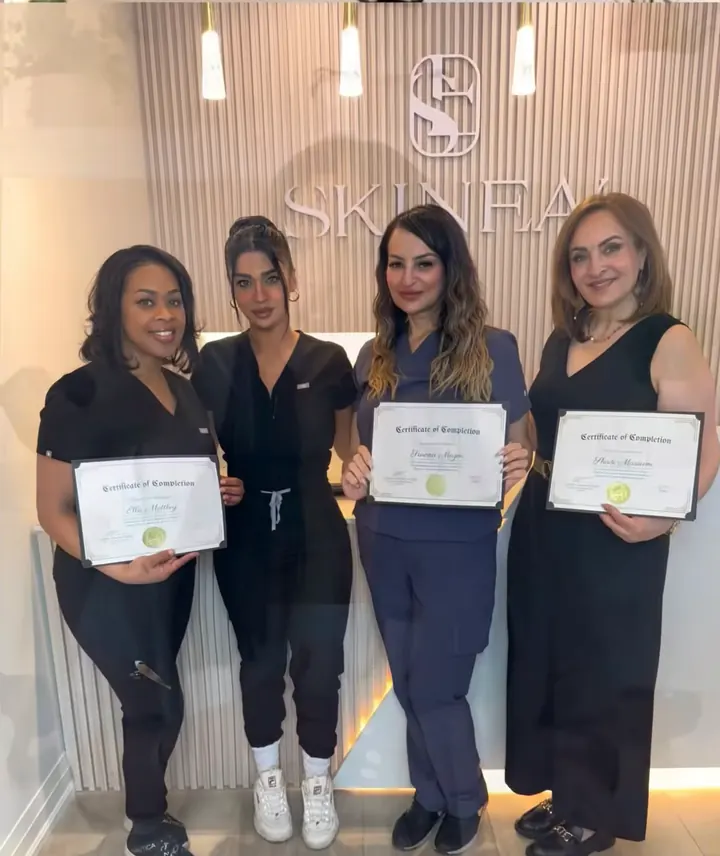
Real training moments
Where Massachusetts camouflage clients are
- Greater Boston: Back Bay, the South End, Cambridge, Brookline, Newton and Wellesley, close to major hospitals and surgical practices
- North and South Shore: Lynn, Peabody, Quincy and Plymouth, with many established PMU studios
- Worcester: a medical and university city in the centre of the state with few camouflage specialists
- Springfield and the Pioneer Valley: Springfield, Holyoke and Northampton, a large community of Latina clients with olive and brown skin tones
- Cape Cod and the islands: a seasonal market where sun exposure matters for colour planning
Common requests include breast reconstruction and reduction scars, abdominal surgery scars and stretch marks after pregnancy. Read tummy tuck and breast scar camouflage and abdominal surgery scars to see how assessment works.
How training works
- Free callTalk through your experience, your state and the right format.
- Reserve your seatPick session times in your own time zone.
- Live 1:1 on ZoomColour theory, technique and guided practice with Evelyn.
- Six months of mentorshipFeedback on your work while you build your business.
What Massachusetts artists ask before enrolling
"My town hasn't adopted body art rules. Does that mean I can't work there?" Not necessarily, but you must ask. Some boards of health have their own regulations, some follow the state model, and some may not permit body art in certain zones. Ask the board in writing and keep the answer.
"I already hold a Boston practitioner license. Does the course change that?" No. Your license comes from the Commission. The course adds specialist camouflage skill, but you still follow every condition of your Boston license and establishment permit.
"Many of my clients have seen camouflage on social media. How do I manage expectations?" The course covers an honest consultation: camouflage blends and softens a healed scar, usually over more than one session, and it is not right for every case. Saying no to a poor candidate protects both the client and your reputation.
Scheduling from Massachusetts
Massachusetts and Toronto are both on Eastern Time, so a 10 a.m. session in Boston is 10 a.m. for Evelyn. Daylight saving changes on the same dates. Many Boston-area students book before their studio opens or on a quieter weekday afternoon.
What a training week can look like from Massachusetts
A typical week mixes one theory session, covering undertone, scar assessment and when to send a client back to their surgeon, with one live practice session on practice skin while Evelyn watches your hand position, depth and saturation on camera. Between sessions you build a consultation form, a consent process and an aftercare sheet that fit the rules of your local board of health.
Your first camouflage clients in Massachusetts
Most Massachusetts graduates start with clients who already trust them, often brow or lip clients who mention a scar. A small, consent-based portfolio photographed in consistent light then makes it easier to approach plastic surgeons, breast centres and physical therapists. The course covers how to describe camouflage honestly, without promising results, and how to keep records that a medical referral partner will respect.
How the course fits a Massachusetts beauty business
Because rules are set locally, most students add camouflage inside a studio that already holds the right establishment permit, so the main change is a new specialist service rather than a new business.
The course covers the full basics of camouflage, learning on practice skin, theory, machine and ink, pigment chemistry basics, and the business side: finding your audience, building a pricing strategy you set yourself, and spacing sessions properly. You can add the training kit, you receive a SKINEAV Certificate of Completion, and you get six months of mentorship with Evelyn afterwards. It does not promise clients or income. It gives you a skill, a method and someone to ask when a real case comes in.
See the US course overview for the full curriculum and format.
Licensing note: the SKINEAV Certificate of Completion shows you finished Evelyn's training. It is not a state license, permit or registration. Before you tattoo anyone in the US, check and follow the rules of your state, county and city.
Frequently asked questions
Does Massachusetts have a state tattoo license?
No. Body art is regulated by local boards of health, many of which use or adapt the Department of Public Health model regulations.
Do I need a license to do camouflage in Boston?
Boston requires a practitioner license from the Boston Public Health Commission for every individual performing body art, including permanent makeup, and an establishment permit for the business.
Is the SKINEAV certificate a Massachusetts permit?
No. It is a Certificate of Completion for the training only.
What time are sessions for Massachusetts students?
Massachusetts and Toronto are both on Eastern Time, so there is no time difference.
Do I need to travel for the course?
No. It is taught live over Zoom from Canada. SKINEAV has no US location.
Is the course live?
Yes. It is live, one-on-one with Evelyn on Zoom, with six months of mentorship afterwards.