
Surgical scars · Guide
Tummy tuck and breast surgery scar camouflage
Camouflage tattooing for tummy tuck, breast reduction, lift and other cosmetic surgery scars: timing, suitability, what to tell your surgeon and what results to expect.
Cosmetic and reconstructive surgery often leaves a long, careful scar: across the lower abdomen after a tummy tuck, around or under the breast after a reduction or lift, or along the body after other procedures. Surgeons place these scars thoughtfully, and many fade well. Some, though, heal lighter or wider than hoped, and that pale line can feel like the one thing standing between you and fully enjoying the result. This guide explains how camouflage tattooing can help and how to time it.
What camouflage does for surgical scars
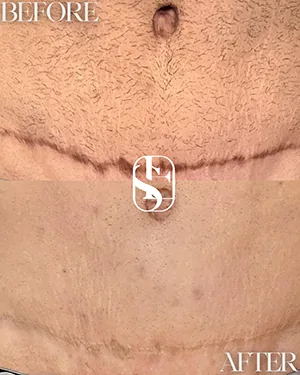
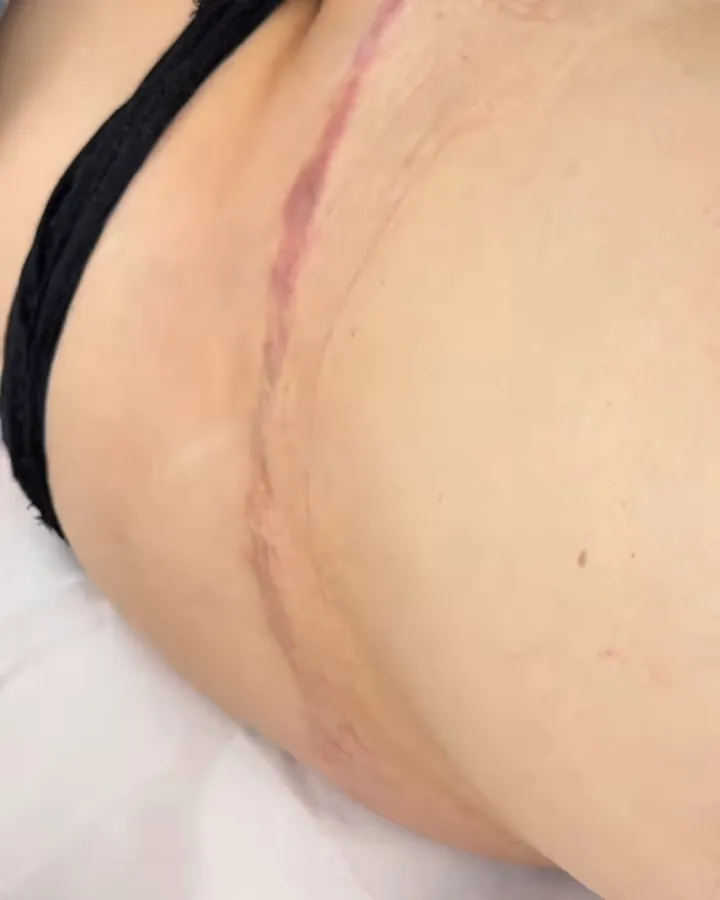
A mature surgical scar is often paler than the surrounding skin. Camouflage places pigment, mixed to match your own skin, into that pale line. The aim is to reduce contrast, so the scar recedes rather than stands out. It is a cosmetic finishing step, not part of the surgery itself.
You can see an example in our gallery of a tummy tuck scar, and read about C-section and surgical scar camouflage at SKINEAV.
Common scars we see
- Abdominoplasty (tummy tuck): a long horizontal scar across the lower abdomen, sometimes with a scar around the navel.
- Breast reduction and lift: around the areola, vertically down, and along the fold beneath the breast.
- Breast augmentation: usually small scars in the fold, around the areola or under the arm.
- Liposuction entry points: small round marks that sometimes heal pale.
- Other procedures: arm lifts, thigh lifts and scars from general or orthopaedic surgery.
Please note that SKINEAV does not offer areola or nipple reconstruction tattooing. Our work focuses on camouflaging pale scar tissue to blend with surrounding skin.
Timing: let the scar finish healing
Surgical scars change for many months. They often start pink or red, then gradually soften and lighten. Camouflage is generally considered once the scar has matured: no longer pink, not tender, flat or close to flat, and unchanged for several months. For many people that is a year or more after surgery, and sometimes longer.
Your surgeon's advice comes first. If you are still in follow-up, ask them whether they are happy with how the scar has matured and whether they have any concerns about cosmetic tattooing over it.
Wide or raised scars
Some scars stretch or widen as they heal, especially across the abdomen. Wide, flat, pale scars can still be good candidates, though they may need more sessions. Raised (hypertrophic) or keloid scars are different. Colour cannot flatten raised tissue, and tattooing can aggravate keloid-prone skin, so these are generally not treated. If your scar has been treated with injections or silicone, mention it.
What a consultation looks like
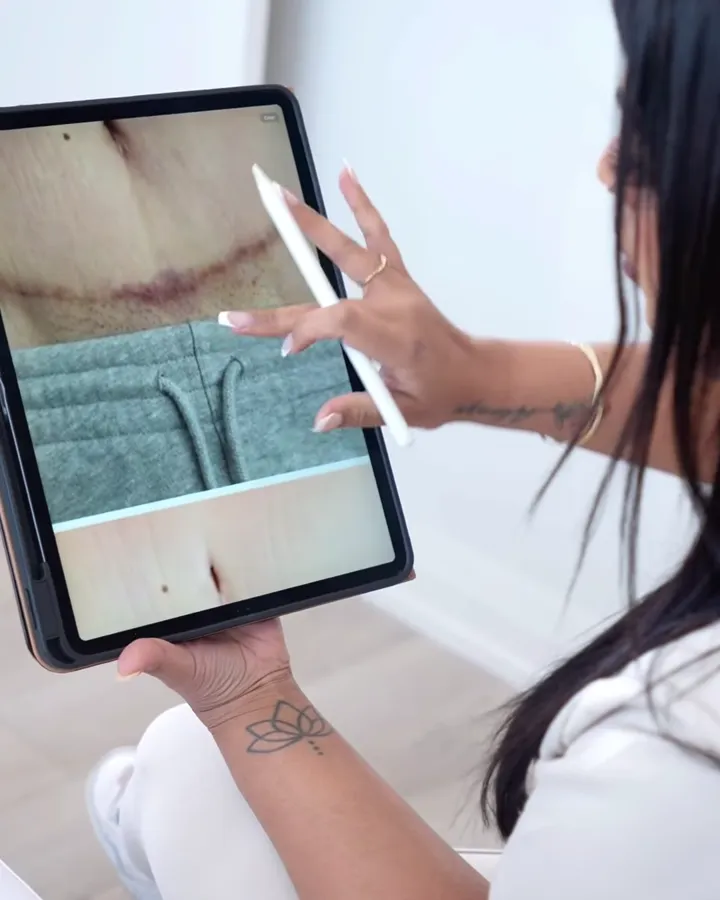
Evelyn will look at the scar in good light, ask about the date and type of surgery, any complications, healing history, medications and skin conditions, and what bothers you about the scar now. She will test colour on your skin and explain what is realistic. If it is too early, you will hear that, with an idea of when to check again.
Sessions and healing
Most people need more than one session, spaced weeks apart. Scar tissue can take pigment differently from normal skin, so the first session guides the next. After a session the line may look slightly pink, and the colour may look stronger before it softens. The area needs gentle care: no soaking, no picking, and protection from friction (such as tight waistbands) and sun. See our aftercare guide.
Realistic results
The best results look calm, not erased. A well-blended scar can often become much less noticeable in everyday light and in swimwear, while still being visible close up or in strong side light, especially if it has texture. Results vary with skin type, scar width and how the skin heals.
Planning around your life
Camouflage sits nicely in the gap between "surgery done" and "summer plans". If you have a holiday, an event or another procedure ahead, tell Evelyn at the start so sessions and sun-free healing time can be planned around it.
Combining with other treatments
Some people work on texture first with medical aesthetic treatments, then add camouflage for colour. Others go straight to camouflage. The order matters, because treatments like laser can affect pigment already in the skin. Read stretch mark camouflage vs laser and microneedling for how these options compare.
A simple timeline many clients follow
Every recovery is different, but a common sequence looks like this:
- Surgery and early recovery. Follow your surgeon's instructions on wound care, garments and activity.
- Scar care phase. Silicone, massage or other measures your surgeon recommends, plus strict sun protection on the scar.
- Maturing. Over many months the scar softens and lightens. Taking a photo every couple of months, in the same light, helps you see whether it is still changing.
- Photo assessment. When the scar looks pale and settled, send photos for a free first opinion.
- Consultation and colour test in Vaughan.
- Camouflage sessions, spaced weeks apart, timed around your life.
The navel and other small details
After a tummy tuck, the scar around the navel can heal pale or slightly uneven. It is small, but it is often the detail people notice most in a swimsuit. Small areas like this can sometimes be addressed in the same plan as the main scar. Liposuction entry marks are similar: small, sometimes pale, and occasionally worth softening once healed.
When a revision might come first
If a scar is very wide, tethered or raised, your surgeon may discuss a scar revision. If that is a possibility, it makes sense to decide on revision before camouflage, because tattooing a scar that is later revised would waste time and money. Ask your surgeon openly about it.
A word on body changes
Significant weight change after camouflage can stretch or shift the skin around a scar. If you are planning further weight loss, another pregnancy or more surgery, mention it. Sometimes it is better to wait until your body is settled, so the result stays where it belongs.
Coming to SKINEAV
SKINEAV is a specialist camouflage clinic at 36 Bessemer Ct Unit 1, Vaughan, ON L4K 3C9, with free parking, close to Highway 7, 407 and 400. Clients come from Toronto, Richmond Hill, Markham, Mississauga and beyond. Start with a free phone consult or a free photo assessment, or call or text 647-492-4584.
Frequently asked questions
How long after a tummy tuck can I camouflage the scar?
Usually once the scar is pale, flat and stable, often a year or more after surgery. Your surgeon's guidance comes first.
Can breast reduction scars be camouflaged?
Mature, pale breast scars can often be softened. SKINEAV does not offer areola or nipple reconstruction tattooing.
Will camouflage make my scar disappear?
No. It reduces colour contrast so the scar can look less noticeable. Texture and some visibility in close light remain.
Can a raised surgical scar be treated?
Raised hypertrophic and keloid scars are generally not suitable, because colour cannot flatten them and tattooing can aggravate them.
Should I tell my surgeon?
Yes, especially if you are still in follow-up. It is good practice to check they are happy with how the scar has healed.
“We don’t fix texture, we fix color.”
Evelyn Alvares Vega, founder of SKINEAV
Real results and real moments
How it works at SKINEAV
- Photo or callSend a photo or book a free phone consult. Honest first answer.
- Assessment & colour testIn clinic, Evelyn checks your skin and tests a custom formula.
- TreatmentPigment placed precisely, only where it is needed, one-on-one.
- Heal & reviewThe colour settles over weeks; follow-ups are planned if needed.