
Stretch marks · Comparison
Stretch mark camouflage vs laser vs microneedling
An honest comparison of stretch mark camouflage tattooing, laser, microneedling, creams and inkless treatment: what each targets, who it suits and how they can work together.
Search "stretch mark treatment" and you will find a long list of options, each promising something. It is easy to feel overwhelmed. The truth is that different treatments work on different things. Some target texture, some target colour, and some simply help skin feel more comfortable. Understanding the difference helps you pick the right option, or the right combination, for your stretch marks.
Two things that make stretch marks visible
Stretch marks are visible for two main reasons:
- Colour contrast. New stretch marks are often red, pink or purple. Over time many fade to white or silver, which can stand out against the surrounding skin, especially on medium and deeper skin tones, or when tanned.
- Texture. Stretch marks can be slightly sunken or crinkled, catching light differently from the skin around them.
Each treatment below tends to work more on one of these than the other.
Creams and oils
Moisturisers can help skin feel soft and comfortable, and some people find they help newer marks look a little calmer. Evidence for dramatic changes to mature white stretch marks is limited. Creams are low-risk and easy, but they are rarely the answer for established, pale marks.
Laser and light treatments
Various lasers and light devices are offered for stretch marks in medical and aesthetic clinics. Some aim to reduce redness in newer marks; others aim to stimulate collagen to improve texture. Results vary, often need several sessions, and suitability depends on skin type, since some devices carry a higher risk of pigment changes on deeper skin tones. These treatments are provided by medical aesthetic professionals, and you should discuss your skin type and expectations with them directly.
Microneedling
Microneedling creates tiny controlled injuries to encourage collagen remodelling. It is mainly a texture treatment. Some people see gradual softening of sunken marks over a series of sessions. It does not add colour, so pale marks generally stay pale.
Inkless treatment
Inkless techniques work the skin without pigment, aiming to stimulate the skin's own response in the mark. Suitability depends on the marks and the skin. It is sometimes chosen when people prefer not to add pigment. See inkless camouflage and our comparison of inkless vs camouflage tattoo.
Camouflage tattooing
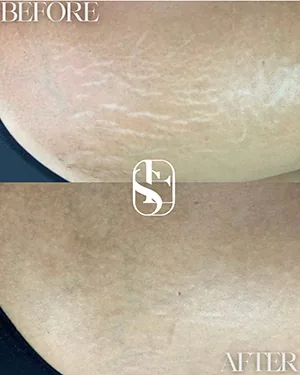
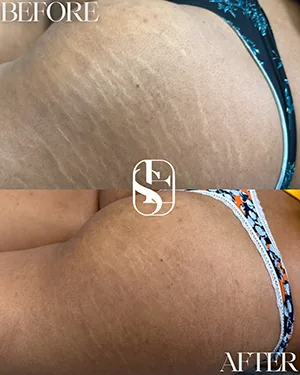
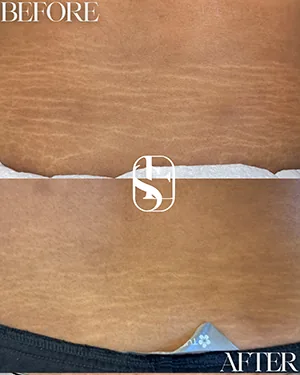
Stretch mark camouflage places custom-mixed, skin-toned pigment into mature, pale marks. It is mainly a colour treatment: it reduces the contrast between the marks and your skin, which many clients find makes them much less noticeable in everyday light. It does not remove the marks or fully level texture. It tends to suit white or silver marks that have finished changing, rather than new red or purple marks. See stretch mark camouflage and the full guide.
Side by side
- Main target: creams = comfort; laser = redness or texture depending on device; microneedling = texture; inkless = texture and tone without pigment; camouflage tattoo = colour contrast.
- Best timing: creams and some lasers are often discussed for newer marks; camouflage is for mature, pale marks.
- Adds pigment: only camouflage tattooing.
- Who provides it: laser and medical microneedling are offered by medical aesthetic providers; camouflage is a specialist cosmetic tattoo discipline.
Can they be combined?
Yes, and for some people a combination makes sense. A common approach is to address texture first, let the skin fully settle, and then consider camouflage to soften colour contrast. The order matters. Laser treatment over an area that already contains pigment may affect that pigment, so tell every provider about every treatment you have had, and plan the sequence together.
How to choose
Ask yourself what bothers you most:
- "They're white and they stand out." Colour is the main issue. Camouflage may be worth exploring.
- "They're dented and I can feel them." Texture is the main issue. Texture-focused treatments may come first.
- "They're still pink or purple." They may still be changing. Give them time, and speak with a medical provider about early options.
- "Both." A staged plan may be best.
Expectations matter
No treatment makes skin look as if stretch marks never existed. The realistic goal is for the marks to stop being the first thing you notice. People who feel happiest with their results usually went in with a clear idea of what would change and what would not.
Timing a combined plan
If you decide to combine texture work and camouflage, sequencing matters. A sensible approach many people discuss with their providers looks like this:
- Texture treatments first, with a medical aesthetic provider, if texture is a major concern.
- A healing pause so the skin can fully settle after the final texture session.
- Camouflage assessment, once the colour of the marks is stable.
- Camouflage sessions, with all providers aware of what has been done.
Doing it the other way round is possible in some cases, but any treatment that heats or resurfaces the skin over pigment needs careful discussion first.
Skin tone considerations
Treatments affect different skin tones differently. Some energy-based devices carry a higher risk of darkening or lightening on deeper skin, and providers adjust settings or recommend alternatives accordingly. Camouflage on deeper skin needs careful undertone matching and test areas. Whatever you choose, ask each provider how much experience they have with your skin tone and ask to see healed results.
What success looks like
It helps to define success before you start. For some people it is wearing a swimsuit without thinking about their stomach. For others it is less contrast in summer, when marks look whiter against a tan. Knowing your goal makes it easier to choose between texture and colour treatments, or to decide you need both. It also helps your provider explain whether your goal is realistic.
A note on "before and after" photos
Before and after photos are useful, but lighting, angle and editing can change how marks look dramatically. Look for photos in consistent light, of healed results, and ideally on skin like yours. SKINEAV only shows real clients' results with their permission.
Next step
If your marks are pale and settled, send a photo for a free photo assessment or book a free phone consult. Evelyn will tell you honestly whether camouflage suits your skin, and when another option might be better. Call or text 647-492-4584. SKINEAV is at 36 Bessemer Ct Unit 1, Vaughan, ON L4K 3C9, and welcomes clients from across the GTA.
Frequently asked questions
Which is better for stretch marks, laser or camouflage tattoo?
They work on different things. Laser is often used for redness or texture; camouflage tattooing softens colour contrast in mature, pale marks.
Can I have laser after camouflage?
Tell any laser provider about the pigment first, because some lasers can affect tattoo pigment. Planning the order together is best.
Does microneedling remove white stretch marks?
Microneedling mainly targets texture. It does not add colour, so pale marks generally remain pale.
Are creams worth it for old stretch marks?
Creams can help skin comfort, but evidence for major changes to mature white marks is limited.
Can camouflage work on red stretch marks?
Usually not. Red or purple marks are often still changing. Camouflage is for mature, pale marks.
“We don’t fix texture, we fix color.”
Evelyn Alvares Vega, founder of SKINEAV
Real results and real moments
How it works at SKINEAV
- Photo or callSend a photo or book a free phone consult. Honest first answer.
- Assessment & colour testIn clinic, Evelyn checks your skin and tests a custom formula.
- TreatmentPigment placed precisely, only where it is needed, one-on-one.
- Heal & reviewThe colour settles over weeks; follow-ups are planned if needed.