
Inkless · Comparison
Inkless vs camouflage tattoo: which suits you?
What is the difference between inkless stretch mark treatment and camouflage tattooing? How each works, who each suits, healing, and how to decide.
"Inkless" has become a popular search term, often alongside "stretch mark removal". If you are trying to understand how inkless compares with camouflage tattooing, you are asking the right question. They are related, they are both offered at SKINEAV, and they are suited to different situations. This guide explains how each works, so you can have a more informed conversation at your consultation.
A note on the word "removal"
You will often see inkless described as "stretch mark removal". We prefer to be precise: neither inkless nor camouflage tattooing removes stretch marks. Both aim to make marks less noticeable. Keeping that in mind helps you set expectations that leave you happy with the result.
How camouflage tattooing works
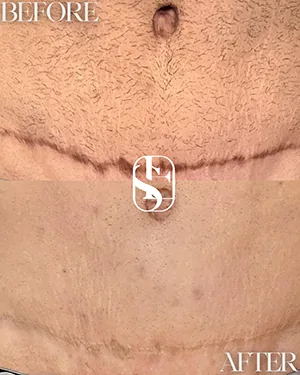
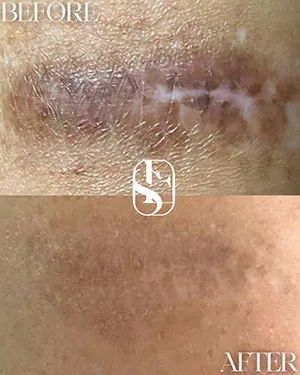
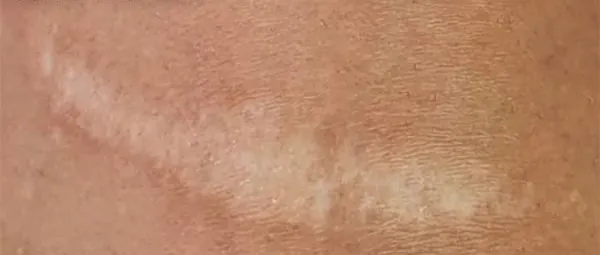
Camouflage tattooing places custom-mixed, skin-toned pigment into pale marks. Its main effect is on colour: it reduces the contrast between the marks and the skin around them. It suits mature, white or silver stretch marks and pale scars that have finished changing. Learn more on our stretch mark camouflage page.
How inkless works
Inkless treatment works the mark without adding pigment. The idea is to prompt the skin's own healing response within the mark. Because no pigment is added, there is no colour to match, and no tattoo pigment in the skin afterwards. Suitability depends on the type and age of the marks, the skin and the area. Learn more on our inkless camouflage page.
Key differences
- Pigment: camouflage adds pigment matched to your skin; inkless adds none.
- Main effect: camouflage mainly softens colour contrast; inkless works on the mark itself without colour.
- Colour matching: central to camouflage; not needed for inkless.
- Sun and seasons: with camouflage, tanning changes the contrast between pigment and skin; with inkless, there is no pigment to contrast, though sun protection still matters for healing skin.
- Who it suits: both are assessed case by case.
Who tends to suit camouflage
- Marks that are clearly lighter than your skin.
- People whose main concern is the white or silver colour.
- Mature, settled marks, flat or close to flat.
- People comfortable with pigment in the skin and with long-term sun care.
Who tends to suit inkless
- People who prefer not to have pigment added.
- Some marks where colour matching would be especially tricky.
- Cases where Evelyn feels the mark will respond to this approach.
Can you have both?
Sometimes. In some cases a plan uses one approach on certain areas and the other elsewhere, or uses them at different stages. That decision is made in person, because it depends on your skin's response and your goals.
What sessions are like
Both involve a session focused on a defined area, followed by weeks of healing. Afterwards, the area may look pink or raised for a time. Aftercare is broadly similar: keep it clean, do not pick, avoid soaking and sun. See the aftercare guide.
Results and patience
With either approach, results build over time and usually over more than one session. Results vary from person to person. Healed results are what count, so be wary of judging any approach on fresh photos.
Questions to ask at your consultation
- Which approach do you recommend for my marks, and why?
- What change is realistic with each?
- How many sessions might each need?
- How would sun and tanning affect each result?
- Can I see healed results from each approach?
A practical way to think about it
A simple question often clarifies the choice: would you be happy if the marks stayed slightly visible but more even in texture, or would you prefer them to match your skin colour more closely?
- If colour is what bothers you, camouflage tattooing is often the more direct answer for pale marks.
- If you would rather avoid pigment, and your marks suit it, inkless may be the gentler path.
- If you are unsure, start with a consultation and a test area.
Sun, seasons and maintenance
With camouflage pigment, the main long-term consideration is the sun. Your skin tans; the pigment does not tan in the same way. Many clients use sunscreen on treated areas through summer to keep contrast low. With inkless, there is no pigment to contrast, but healing skin should still be protected from sun after each session.
Healing differences
Both approaches create controlled micro-injuries, so the first days are similar: some redness, sensitivity and the need to keep the area clean and protected. With camouflage, you will also notice the colour looking stronger at first, then softening. With inkless, you will mostly notice the skin calming down and the gradual change in the marks over the following weeks.
Why you should see healed results for both
Fresh results can look dramatic with either approach, simply because of redness or fresh pigment. What matters is how the skin looks weeks later. Ask any provider for healed photos and ask how long after treatment they were taken.
Who should not have either treatment right now
Both approaches involve controlled injury to the skin, so the same cautions apply. They are generally postponed during pregnancy and breastfeeding, while marks are still red or changing, if there is an active skin condition, infection or rash in the area, and for keloid-prone skin. If you take medications that affect healing, mention them. A good consultation will cover these points before any plan is made.
The bottom line
Inkless and camouflage tattooing are tools, not rivals. The right choice is the one that suits your marks, your skin and your preferences, and an honest specialist will help you find it.
How to decide
The simplest way is to show your skin to someone who offers both and has no reason to push one over the other. Evelyn will explain which approach she would choose for your marks, or tell you if neither is a good fit right now. Send a photo for a free photo assessment, book a free phone consult, or call or text 647-492-4584. SKINEAV is at 36 Bessemer Ct Unit 1, Vaughan, ON L4K 3C9, with free parking.
Frequently asked questions
Is inkless the same as a camouflage tattoo?
No. Camouflage adds skin-toned pigment; inkless works the mark without adding pigment.
Does inkless remove stretch marks?
No treatment fully removes stretch marks. Inkless and camouflage both aim to make marks less noticeable.
Which lasts longer?
It depends on the skin and the marks. Your consultation will cover what long-term care each needs.
Can I tan after inkless or camouflage?
Protect healing skin from sun with either approach. With camouflage, tanning also changes the contrast between pigment and skin.
Do you offer both?
Yes. SKINEAV offers both and will recommend whichever suits your marks, or neither if neither is right for you.
“We don’t fix texture, we fix color.”
Evelyn Alvares Vega, founder of SKINEAV
Real results and real moments
How it works at SKINEAV
- Photo or callSend a photo or book a free phone consult. Honest first answer.
- Assessment & colour testIn clinic, Evelyn checks your skin and tests a custom formula.
- TreatmentPigment placed precisely, only where it is needed, one-on-one.
- Heal & reviewThe colour settles over weeks; follow-ups are planned if needed.