
Stretch marks · After pregnancy
Stretch marks after pregnancy: when and what to consider
A kind, practical guide for mothers: how postpartum stretch marks change, when camouflage becomes an option, breastfeeding timing, and planning sessions around family life.
Pregnancy changes the body in remarkable ways, and stretch marks are one of the most common. For some mothers they are simply part of the story. For others, especially when marks are wide, pale or across the whole abdomen, they can affect how comfortable you feel in your own skin. Both feelings are completely normal. This guide is for anyone wondering when stretch marks settle after pregnancy and whether camouflage tattooing might be an option later on.
How postpartum stretch marks change
During and just after pregnancy, stretch marks are often red, pink, purple or dark. Over the following months many gradually fade, flatten slightly and lighten, often becoming white or silver. How quickly and how much they change varies a lot between people.
This change matters, because the colour of the marks once they have settled determines which options make sense.
Give your body time
After birth your body is still recovering: skin, muscles, hormones and weight may all continue to change. It is generally wise to wait until:
- You have finished breastfeeding. Camouflage tattooing is generally postponed during pregnancy and breastfeeding.
- Your weight has been fairly stable for a while.
- The marks have lightened and stopped changing.
- If you had a C-section, the scar has fully matured. See C-section scar camouflage.
If you are planning another pregnancy soon, consider waiting until after your family is complete, since a further pregnancy can create new marks or stretch existing ones.
When camouflage becomes an option
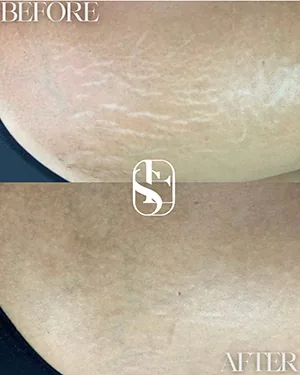
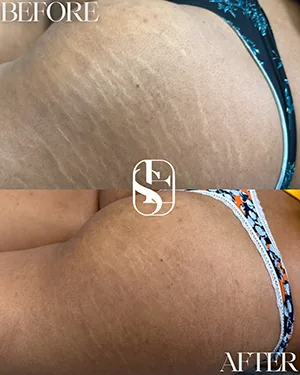
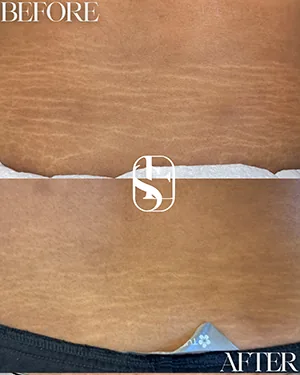
Once marks are mature and pale, camouflage tattooing can reduce the contrast between the marks and your skin. Custom-mixed pigment is placed into the pale marks so they read closer to your natural tone. The aim is for the marks to stop catching your eye, not to make skin look untouched. See stretch mark camouflage and the full guide.
Other options to know about
- Moisturisers can help comfort during and after pregnancy.
- Texture treatments such as microneedling or laser are offered by medical aesthetic providers.
- Inkless treatment works without pigment on certain marks. See inkless camouflage.
Our comparison of camouflage vs laser vs microneedling explains the differences.
Loose skin and muscle separation
Some mothers have loose skin or abdominal muscle separation (diastasis recti) after pregnancy. Camouflage tattooing does not tighten skin or change muscle. If these are concerns, a doctor or pelvic health physiotherapist is the right first conversation. Camouflage, if wanted, comes after.
Planning sessions around family life
We know time is precious with young children. Camouflage is usually done over more than one session, spaced weeks apart, so it helps to plan:
- Fewer, well-planned visits. Start with a free phone consult or a free photo assessment from home.
- Weekday appointments that fit school runs. SKINEAV is open weekdays.
- Healing time. For a few weeks after each session, avoid soaking, intense workouts and sun on the area. Autumn and winter are easier for this.
- Comfortable clothing. Soft, high-waisted or loose bottoms that will not rub.
Feeling good in your skin
Choosing camouflage is not about being unhappy with what your body has done. Many mothers tell us it is about choice: wearing a bikini at the beach with the kids, or not thinking twice about a crop top. Whatever you decide, your body has done something extraordinary.
Realistic expectations
Results vary depending on the marks, your skin tone and how your skin heals. Wide, deeply textured marks may still show some texture in side light even after colour blending. Fine, pale, settled marks often blend well. A consultation with a colour test is the best way to know what is realistic for you.
A gentle timeline after birth
Every body is different, but many mothers find it useful to think in phases:
- The first months: recovery, feeding and sleep come first. Gentle moisturising if it feels good. No decisions needed.
- After breastfeeding ends: your body continues to settle. Notice whether marks are still changing colour.
- When marks are pale and stable: this is when a free photo assessment becomes useful.
- Planning sessions: at a time when you can manage a few weeks of aftercare without swimming or sun on the area.
There is no rush. Many clients come to us years after their last pregnancy, and the marks are often easier to assess at that point.
Combining stretch marks and C-section scars
If you had a C-section, your stretch marks and scar may be close together. Often both can be included in one plan, but they mature on different timelines and behave differently. The scar may need longer before it is ready. A consultation helps decide what to do first and what can wait.
Taking photos at home
Taking your own progress photos can be helpful: same room, same time of day, natural light, no filters. Photograph from the same distance each time. This makes it easier to see when marks have stopped changing, and the photos are ideal for a free assessment.
Self-kindness
It is easy to compare your body with images online. Try to remember that most of those images are lit, posed or edited. Whether you choose camouflage or not, your body has done something remarkable.
Questions mothers often ask us
"Can I bring my baby?" For safety and focus during treatment, it is best to arrange childcare for sessions. For a short consultation, ask the clinic in advance.
"Will it hurt more on my stomach?" Sensation varies. Many people find the abdomen manageable, and breaks are always available.
"Can I lift my toddler after a session?" Usually yes, gently, while avoiding pressure or rubbing on the treated area.
"What if I get pregnant again later?" Camouflaged marks can stretch with a new pregnancy. Some clients wait until their family is complete for that reason.
Next step
When you are ready, send a photo in daylight, without filters, for a free photo assessment, or book a free phone consult. Call or text 647-492-4584. SKINEAV is at 36 Bessemer Ct Unit 1, Vaughan, ON L4K 3C9, with free parking, and many of our clients are mothers from Vaughan, Maple, Woodbridge, Richmond Hill and across the GTA.
Frequently asked questions
How long after pregnancy should I wait for stretch mark camouflage?
Wait until you have finished breastfeeding, your weight is stable and the marks have turned pale and stopped changing.
Can I have camouflage while breastfeeding?
Camouflage tattooing is generally postponed during pregnancy and breastfeeding.
Will camouflage tighten loose skin?
No. Camouflage softens colour contrast only. It does not tighten skin or affect muscle.
Should I wait if I want more children?
Many people choose to wait, because another pregnancy can create new marks or stretch existing ones.
Can my C-section scar be done at the same time?
Often both can be included in a plan once the scar has fully matured. Your consultation will confirm.
“We don’t fix texture, we fix color.”
Evelyn Alvares Vega, founder of SKINEAV
Real results and real moments
How it works at SKINEAV
- Photo or callSend a photo or book a free phone consult. Honest first answer.
- Assessment & colour testIn clinic, Evelyn checks your skin and tests a custom formula.
- TreatmentPigment placed precisely, only where it is needed, one-on-one.
- Heal & reviewThe colour settles over weeks; follow-ups are planned if needed.