
Scars · Suitability
Which scars can be camouflaged?
Not every scar suits camouflage tattooing. How to tell if your scar is mature, flat and light enough, why keloids and red scars usually wait, and what to do instead.
One of the most common questions we hear is simple: "Will this work on my scar?" The honest answer is that it depends on the scar. Camouflage tattooing is a colour technique. It works best on certain kinds of scars and is not the right tool for others. This guide walks through the main factors so you can get a realistic sense before you book anything.
The three things that matter most
When Evelyn assesses a scar, three questions come first:
- Is it mature? A mature scar has finished its active healing. It is no longer red, purple or pink, and it has stopped changing.
- Is it lighter than the skin around it? Camouflage adds skin-toned pigment. It is best at bringing pale or white areas closer to the surrounding tone.
- How much texture does it have? Pigment changes colour, not shape. Flat or gently textured scars tend to blend more convincingly than raised or deeply indented ones.
If all three line up, camouflage often has real potential. If one or more does not, the plan may be to wait, to combine approaches, or to choose something else.
Maturity: why patience pays
Scars go through stages. In the early months, they are often red or pink because the tissue is still remodelling. Tattooing a scar during that phase is a gamble: the colour of the scar is still moving, and the skin is more reactive. For many surgical scars, including C-section scars, waiting a year or more is common before camouflage is considered, and some take longer. Larger or burn scars can take longer still. Our guide to C-section scar camouflage covers timing in more detail.
A simple sign that a scar may be ready: it looks pale or skin-coloured rather than pink, it feels settled rather than tender, and it has looked the same for several months.
Colour: light scars vs dark scars
Many scars heal lighter than the skin around them, especially on medium and deeper skin tones, and these are often the best candidates. Scars that are darker than the surrounding skin (hyperpigmented) are a different conversation. They are harder to camouflage. Some can be balanced with a carefully built custom formula, in some cases the plan focuses on a lighter halo around the mark, and in others camouflage is not recommended at all. See birthmark and hyperpigmentation camouflage.
Texture: what colour can and cannot do
Light falls on raised and sunken areas differently, creating shadows. Camouflage reduces colour contrast, which often makes texture less noticeable too, but it does not level the skin. A shallow, flat scar may blend beautifully. A deeply indented or ridged scar will still show its shape in side lighting even if its colour is closer to yours.
For some textured scars, people choose to work on texture first with a medical or aesthetic provider and then consider camouflage once the skin has settled. Others decide the colour improvement alone is worth it. There is no one right answer, only an informed one.
Scars that usually are not suitable
- Keloid scars, which grow beyond the original wound and can react to further injury. Tattooing may provoke them, so camouflage is generally avoided.
- Active hypertrophic scars that are still raised, red or itchy.
- Scars that are still healing, or skin with an open wound, infection or active rash nearby.
- Areas with an active skin condition, until your doctor is happy it is under control.
If you have ever formed a keloid anywhere on your body, mention it at your consultation even if this scar looks flat.
Scars that often are good candidates
- Mature, pale C-section scars and many surgical scars.
- Older, flat injury scars that have healed lighter.
- Many self-harm scars once fully healed. See our private, judgement-free guide to self-harm scar camouflage.
- Some burn scars and skin graft edges, case by case. See the burn scar camouflage guide.
- Acne scarring that has left lighter marks, depending on texture.
How skin tone affects the plan
Camouflage can be done across skin tones from fair to deep, but each brings its own considerations. Deeper skin tones can be more prone to pigment changes after injury, so test areas and careful technique are important. Very fair skin can show pinkness longer after a session. A skilled artist mixes for your undertone, not just your surface colour. Read how skin colour matching works.
The location of the scar
The body part matters. Areas that move a lot, rub against clothing or see a lot of sun can behave differently. Hands and feet tend to hold pigment less predictably. Faces need extra care and conversation. None of these rule camouflage out, but they shape how many sessions to expect and how results may age.
What to do if you are not sure
Take a photo in daylight, without a filter, from a little distance and close up. Then send it for a free photo assessment, or call or text 647-492-4584. If your scar is not ready, you will hear that honestly, along with a rough idea of when to check again. If it looks promising, an in-person consultation in Vaughan confirms it with a colour test on your skin.
Questions to ask yourself before the consultation
It helps to arrive with a clear sense of what you want. Ask yourself what bothers you most about the scar: its colour, its outline, its texture, or simply that people ask about it. Think about where you notice it: in the mirror, in photos, in a swimsuit, at the gym. And think about timing. If you have a holiday, a wedding or a surgery coming up, mention it, because sessions and healing need to fit around your life rather than the other way round.
It is also worth thinking about what "better" would look like for you. Some people want the scar to stop catching their eye; others want to feel comfortable in a particular outfit again. Sharing that helps Evelyn design a plan that measures success the way you do.
A note on expectations
The best camouflage results are not "invisible"; they are calmer. People often describe the change as no longer noticing the scar first in the mirror. That shift is real and meaningful, and it starts with choosing the right scar at the right time.
Frequently asked questions
How old does a scar need to be for camouflage?
It needs to be fully healed and settled, which for many surgical scars is a year or more. Colour and stability matter more than the exact date.
Can a raised scar be camouflaged?
Colour can be softened on gently raised scars, but tattooing will not flatten them. Keloid and active hypertrophic scars are generally not treated.
Can you camouflage a scar that is darker than my skin?
Sometimes, with a custom formula, but darker scars are harder to blend than lighter ones and are assessed case by case.
Does camouflage work on deep skin tones?
It can, with careful colour mixing and test areas, because deeper skin can be more prone to pigment changes after injury.
How can I check suitability before booking?
Send clear daylight photos for a free photo assessment or book a free phone consult for an honest first opinion.
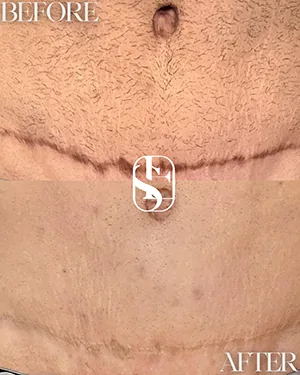
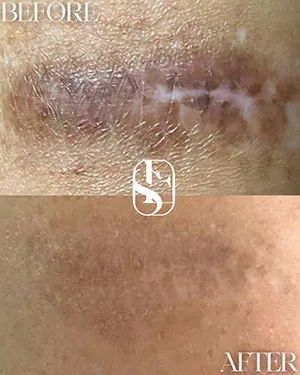
“We don’t fix texture, we fix color.”
Evelyn Alvares Vega, founder of SKINEAV
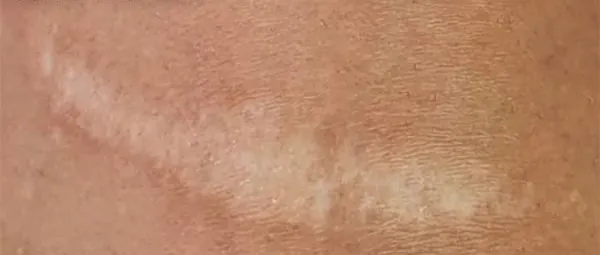
Real results and real moments
How it works at SKINEAV
- Photo or callSend a photo or book a free phone consult. Honest first answer.
- Assessment & colour testIn clinic, Evelyn checks your skin and tests a custom formula.
- TreatmentPigment placed precisely, only where it is needed, one-on-one.
- Heal & reviewThe colour settles over weeks; follow-ups are planned if needed.