
Paramedical tattoo · Complete guide
What is paramedical tattooing? A complete guide
A clear, honest guide to paramedical tattooing and skin camouflage in Toronto and the GTA: what it treats, how it works, who it suits, sessions, healing and how to choose a specialist.
Paramedical tattooing is a specialised branch of cosmetic tattooing that uses skin-toned pigment to soften the visible contrast of scars, stretch marks, patches of lost pigment and other marks. You may also see it called skin camouflage, camouflage tattooing, scar camouflage or medical tattooing. If you live in Vaughan, Toronto or anywhere in the GTA and you are trying to understand whether it could help you, this guide brings the essentials together in one place. It is written to be honest rather than to sell, because the best results start with the right expectations.
The short definition
A paramedical camouflage tattoo places custom-mixed pigment into lighter areas of skin so that they read closer to the skin around them. The goal is not to erase anything. The goal is to reduce contrast, so that the eye stops being drawn to the mark. When it suits the person and the area, the result can feel like a quiet freedom: wearing what you want, moving how you want, without thinking about that spot first.
It is cosmetic work. It does not treat a medical condition, it does not change scar tissue into normal skin, and it is not a replacement for care from your doctor or dermatologist.
What paramedical tattooing is used for
At SKINEAV, camouflage is used for:
- Stretch marks that have matured and turned lighter than the surrounding skin. See stretch mark camouflage.
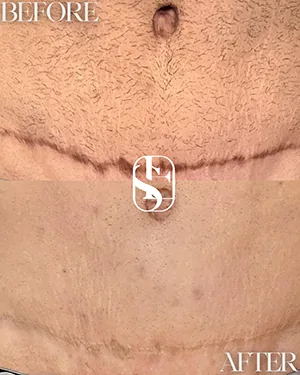
- C-section and surgical scars, including tummy tuck, breast and other procedure scars, once healed and settled. See C-section and surgical scar camouflage.
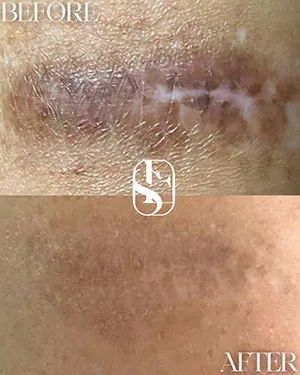
- Burn, injury, acne and self-harm scars, case by case. See burn, injury and other scar camouflage.
- Stable vitiligo and hypopigmentation, after a careful conversation about stability. See vitiligo camouflage.
- Birthmarks and some hyperpigmentation, where the plan is about balancing tone. See stain camouflage.
There is also a related, pigment-free option for some stretch marks and scars. See inkless camouflage, and our comparison of inkless and camouflage tattooing.
How it works
Skin colour is not one flat colour. It has undertones, it changes slightly from one part of the body to another, and it can shift with the seasons. A camouflage artist studies the skin around the mark and blends pigment to match it, then tests that colour on your skin before the treatment starts. The pigment is placed with fine needles into the mark itself, following its shape rather than covering a whole area.
After healing, the colour usually settles and softens. That is why camouflage is normally planned as more than one session, spaced weeks apart. Each session builds on what the skin showed in the last one. You can read more in how skin colour matching works.
Who it usually suits
Camouflage tends to suit marks that are:
- Lighter than the surrounding skin (white, silver or pale).
- Fully healed and stable. For most scars, that means many months after the injury or surgery, and no longer red, pink or changing.
- Reasonably flat, or with gentle texture. Colour can soften contrast, but it does not flatten raised tissue.
It is usually not the right choice for raised keloid scars, scars that are still red or healing, active skin conditions in the area, or vitiligo that is still spreading. A good specialist will say so plainly and, where useful, suggest waiting or speaking with your doctor first. Our article on which scars can be camouflaged goes deeper.
What a first consultation looks like
Most people start at home, with a free phone consult or by sending a photo for a free photo assessment. If camouflage looks promising, the next step is an in-person consultation in Vaughan. Evelyn looks at the skin in good light, asks about your health history and how the mark formed, explains what is realistic, and tests colour on your skin. You leave with a plan and a clear idea of what to expect, with no pressure to go ahead.
Good questions to bring:
- Is my mark mature and stable enough?
- What result is realistic for my skin tone and texture?
- How many sessions might I need, and how far apart?
- How will the colour look when I tan, and when I don't?
- Can I see healed results on skin like mine?
Sessions and healing
A typical session focuses on a defined area. Afterwards the skin may look slightly pink or raised for a short time, and the colour often looks stronger at first than it will once healed. Over the following weeks it settles. Aftercare is simple but matters: keep the area clean, avoid soaking, avoid picking, and protect it from the sun. Our aftercare guide explains the first weeks step by step.
Results vary between people and areas. Some skin takes pigment readily; some needs more sessions. Pigment can soften over time, so occasional touch-ups may be part of the long-term plan.
Is paramedical tattooing safe?
Like any tattoo, camouflage involves breaking the skin, so hygiene and judgement matter. In Ontario, tattooing is a personal service setting regulated through local public health, which inspects for infection prevention and control. Ask any clinic how they handle single-use needles, sterilisation and record keeping. Just as important is judgement: knowing when not to treat. Tell your artist about medications, skin conditions, a tendency to keloid, pregnancy or anything else relevant.
Paramedical tattooing vs makeup, laser and other options
Camouflage makeup can be excellent for an event or for daily cover, but it has to be applied and removed every day. Laser and microneedling work on texture and are done in clinics with different expertise. Camouflage tattooing works on colour contrast. For some people, these options work best together, in the right order. See camouflage tattoo vs cover makeup and stretch mark camouflage vs laser and microneedling.
Choosing a specialist in the GTA
Many studios now list camouflage as one service among dozens. Camouflage is a discipline of its own: colour theory, scar assessment and patience. Look for a specialist who shows healed results (not only fresh ones), who tests colour on your skin, who explains what will not change, and who is comfortable telling you to wait. Our checklist on how to choose a scar camouflage artist has eight questions to ask.
SKINEAV is a specialist camouflage clinic in Vaughan, at 36 Bessemer Ct Unit 1, Vaughan, ON L4K 3C9, with free parking. Evelyn Alvares Vega has more than 10 years in paramedical tattooing and also trains other artists. Clients come from Toronto, Richmond Hill, Markham, Brampton, Mississauga and across the GTA, and treatment is planned around a small number of well-spaced visits.
The bottom line
Paramedical tattooing is not about hiding who you are. It is about choice: deciding how much attention a mark gets. If you are curious, the easiest first step is a conversation. Call or text 647-492-4584, book a free phone consult, or send a photo and get an honest first answer.
Frequently asked questions
Is paramedical tattooing permanent?
It is a tattoo, so pigment stays in the skin long term, but it can soften over time. Some people need occasional touch-ups to keep the blend looking its best.
Does paramedical tattooing remove scars?
No. It does not remove a scar or change scar tissue. It reduces colour contrast so the scar can look less noticeable.
Is it the same as a regular tattoo?
It uses similar tools, but the aim, pigments and technique are different. Camouflage is about matching your own skin rather than adding a design.
How long should I wait after surgery?
Scars generally need to be fully healed and settled, which is often a year or more. Your consultation will confirm whether your scar is ready.
Can I find out if it suits me without travelling?
Yes. Book a free phone consult or send a photo for a free assessment, and you will get an honest first opinion before you make the trip.
“We don’t fix texture, we fix color.”
Evelyn Alvares Vega, founder of SKINEAV
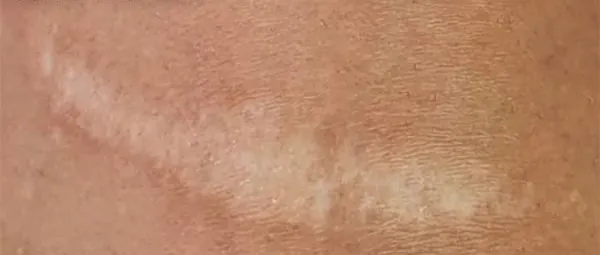
Real results and real moments
How it works at SKINEAV
- Photo or callSend a photo or book a free phone consult. Honest first answer.
- Assessment & colour testIn clinic, Evelyn checks your skin and tests a custom formula.
- TreatmentPigment placed precisely, only where it is needed, one-on-one.
- Heal & reviewThe colour settles over weeks; follow-ups are planned if needed.