
Self-harm scars · Private guide
Self-harm scar camouflage: a gentle guide
A judgement-free guide to camouflage tattooing for healed self-harm scars: who it suits, privacy, what sessions are like, and support resources in Ontario.
If you are reading this, you may have scars from self-harm that are fully healed, and you may be wondering whether there is a way to make them less noticeable. You do not need to explain or justify that wish to anyone. Many people simply want to wear short sleeves without questions, or to choose when they share their story. This guide explains how camouflage tattooing may help, and what to expect, in a private and respectful way.
If you are struggling right now, please reach out first. In Canada you can call or text 9-8-8, the Suicide Crisis Helpline, any time. Kids Help Phone is available at 1-800-668-6868 or by texting CONNECT to 686868. Your safety matters more than any cosmetic step.
What camouflage can do
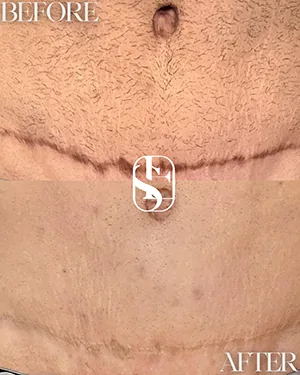
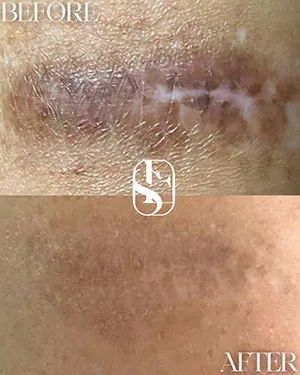
Healed self-harm scars are often lighter than the surrounding skin, sometimes in clusters of fine lines. Camouflage tattooing places custom-mixed, skin-toned pigment into those lighter lines, so they blend more closely with your natural tone. The goal is not to make skin look untouched. It is to lower the contrast, so the scars stop drawing the eye.
What it cannot do
Camouflage does not remove scars or change their texture. Raised or deeply indented lines will keep their shape. Scars that are still pink, red or recently healed need more time before they are suitable. Keloid-prone skin needs special caution.
Who it usually suits
Camouflage tends to suit scars that are fully healed, pale or white, flat or close to flat, and stable for many months. Our guide on which scars can be camouflaged explains these factors in more detail.
It is also important that you feel ready. Some people find it helpful to talk with a counsellor or doctor about the decision, especially if the scars are connected to recent difficult times. That is not a requirement; it is just a kindness to yourself.
Privacy and respect
At SKINEAV, consultations are one-on-one with Evelyn in a private room. You will not be asked to retell your story. The questions will be practical: how long ago the scars healed, any skin conditions, any medications, and what you hope to change. You choose what to share beyond that.
You can start without coming in at all. A free phone consult or a free photo assessment lets you ask questions from home. If you prefer, you can send a photo of a small area first.
What a session is like
A session usually focuses on a defined area, such as part of the forearm. Evelyn tests colour on your skin first. You can ask for breaks, ask what she is doing, or stop at any time. Afterwards the area may look slightly pink or raised for a short time, and the colour may look stronger before it settles. Sessions are spaced several weeks apart so each one can heal. The aftercare guide explains the first weeks.
Most people need more than one session, and results vary depending on the skin and how the scars healed.
Inkless and other approaches
Some people ask about inkless techniques, which work without pigment on certain textured or lighter scars. Others consider decorative tattoos over the area instead of camouflage, which is a different artistic choice. A decorative tattoo artist and a camouflage specialist can each tell you honestly what their approach would achieve. Read inkless vs camouflage tattoo for a comparison.
Practical tips before you book
- Take daylight photos without filters, close up and from a little distance.
- Note roughly how long ago the most recent scars healed.
- Make a list of any skin conditions, keloids or medications.
- Think about what would feel like success: less attention in short sleeves, more comfort in photos, or something else.
- Plan sessions at a time when you can protect the area from sun and friction for a few weeks.
Talking with others about it
You do not owe anyone an explanation. If someone close to you asks, a simple "I'm having some skin camouflage done" is enough. Some people find that choosing camouflage becomes part of feeling that a chapter has closed; others simply see it as practical. Both are fine.
Support resources in Ontario
- 9-8-8 Suicide Crisis Helpline: call or text 988, 24/7.
- Kids Help Phone: 1-800-668-6868, or text CONNECT to 686868.
- Your family doctor or a walk-in clinic can connect you with mental health services.
- ConnexOntario (1-866-531-2600) offers free information about mental health services in Ontario.
If you feel nervous about the first visit
It is very common to feel anxious about showing scars to someone new, even when they are long healed. A few things can help:
- Start remotely. A photo assessment means the first look happens without you in the room.
- Bring someone, or come alone. Either is fine. Some people like a friend for support; others prefer total privacy.
- Wear what helps. A long-sleeved top you can roll up, so only the area being assessed is uncovered.
- Ask for the plan out loud. Knowing each step before it happens can make the session feel more manageable.
- Agree a signal. If you want a break, you can simply say so, or agree a hand signal beforehand.
Evelyn's approach is calm and practical. The focus is on your skin and what you would like to change, nothing more.
Thinking about the long term
Camouflage is a long-term choice. Skin changes with age and sun, and pigment can soften, so occasional touch-ups may be part of the future. Sun protection on the area helps keep the blend looking natural. It is also worth knowing that healed scars of different ages may respond differently, so a plan for an area with older and newer lines may treat them in stages.
If more scars appear in future
Please be gentle with yourself. If you are going through a hard time, support comes first, and camouflage can wait. New scars need to heal completely before any cosmetic work, and that is not something to rush. When you are ready, the door is open, with no judgement.
What clients often say afterwards
People rarely describe the result as "my scars are gone". More often they say something like: "I stopped thinking about my arms." That quiet shift, being able to roll up your sleeves without planning it, is what camouflage aims for.
Coming to the clinic
SKINEAV is a private, specialist camouflage clinic at 36 Bessemer Ct Unit 1, Vaughan, ON L4K 3C9, with free parking, and clients come from Toronto, Richmond Hill, Brampton and across the GTA. Call or text 647-492-4584, book a free phone consult, or send a photo. You will get an honest, kind answer.
Frequently asked questions
Can self-harm scars be covered with a skin-coloured tattoo?
Healed, pale and fairly flat scars can often be softened with camouflage. It reduces contrast but does not remove scars or change texture.
Will I have to explain how I got my scars?
No. Questions are practical, about healing and health. You decide what else to share.
How long after healing should I wait?
Scars should be fully healed, pale and stable for many months. A consultation confirms whether they are ready.
How many sessions will I need?
Usually more than one, spaced several weeks apart. It depends on your skin and the scars.
Can I start without coming in?
Yes. A free phone consult or free photo assessment lets you ask questions privately from home.
“We don’t fix texture, we fix color.”
Evelyn Alvares Vega, founder of SKINEAV
Real results and real moments
How it works at SKINEAV
- Photo or callSend a photo or book a free phone consult. Honest first answer.
- Assessment & colour testIn clinic, Evelyn checks your skin and tests a custom formula.
- TreatmentPigment placed precisely, only where it is needed, one-on-one.
- Heal & reviewThe colour settles over weeks; follow-ups are planned if needed.