
Burn scars · Guide
Burn scar camouflage: an honest guide
Can a camouflage tattoo help a burn scar or skin graft? Timing, texture, colour, sessions and realistic expectations for burn survivors in Toronto and the GTA.
Burn scars carry more than a mark on the skin. For many people they hold a story of pain, recovery and a lot of strength. Some survivors are proud to show their scars. Others would like the option of drawing less attention to them, or to the edges of a skin graft. Both choices are valid. This guide explains where camouflage tattooing can help with burn scarring, where it cannot, and how to approach it safely.
First, the medical side comes first
Burn recovery is often guided by a burn team, plastic surgeon, physiotherapist or occupational therapist. Pressure garments, silicone, scar massage and sometimes surgery all play a part in how a burn scar matures. Camouflage tattooing is a cosmetic step that belongs at the end of that journey, never in the middle of it. If you are still under active care, ask your team when it would be reasonable to consider cosmetic options.
Why burn scars are different
Burn scars vary much more than a neat surgical line. A single area can include:
- Pale, flat zones where pigment has been lost.
- Darker zones where the skin has over-produced pigment.
- Raised, firm or ropey sections.
- Graft edges, where the colour and texture of donor skin meet the surrounding skin.
- Shiny or tight skin that reflects light differently.
Each of these behaves differently with pigment. That is why burn camouflage is planned area by area, not as a single colour over everything.
Where camouflage can help
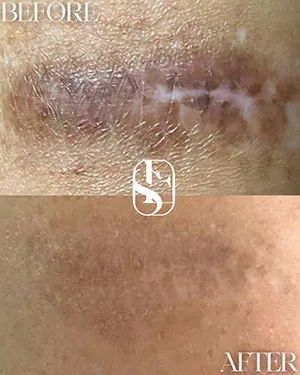
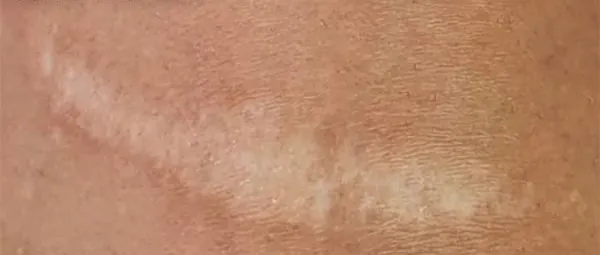
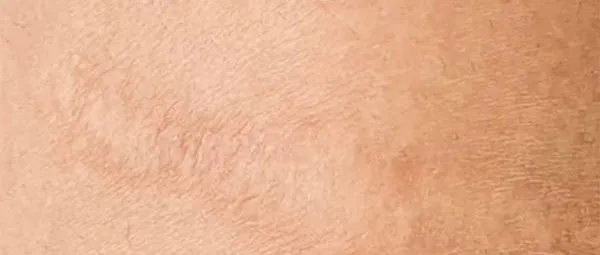
Camouflage is most useful on the pale, flat or gently textured parts of a mature burn scar. Blending skin-toned pigment into lighter patches can reduce the patchwork effect, so the eye reads the area as more even. Graft edges, where a pale line separates two skin tones, are another place where careful colour can soften a hard transition.
The aim is calmer contrast, not perfect skin. People often describe the change as the scar no longer being the first thing they see.
Where it usually cannot
- Raised or thick scar tissue will keep its shape. Colour may make it a little less noticeable, but it will not flatten.
- Scars that are still red, itchy or changing need more time.
- Very tight or fragile skin may not tolerate tattooing well. This is assessed in person, gently.
- Darker (hyperpigmented) areas are the hardest to blend; the plan may balance them with a custom formula or focus around them instead.
- Keloid-prone skin needs particular caution, and is often not treated.
Timing
Burn scars can take a long time to mature, often longer than surgical scars, and larger burns longer still. A good rule of thumb is that the scar should be pale or skin-coloured rather than pink or purple, and should have looked stable for several months. Your burn care team's view is valuable here.
What a burn camouflage consultation is like
Consultations are private and unhurried. Evelyn will ask about how and when the burn happened, any surgeries or grafts, how the skin feels now, and what you hope to change. She will look at the area in good light and may test colour in a small spot. If camouflage is not a good idea for your skin right now, you will hear that clearly, with reasons. Sometimes the best plan is to start with a small test area and see how your skin responds before committing to more.
You are always in control. You can pause at any time, ask for breaks, or decide not to go ahead.
Sessions and healing
Burn camouflage is usually gradual. Sessions are spaced weeks apart so the skin can heal and the colour can settle. Scar tissue can hold pigment unevenly, so the first session often acts as a guide for the next. Aftercare is similar to other camouflage work: gentle cleansing, no picking or soaking, and strict sun protection. Read the aftercare guide for detail.
Talking about it with the people around you
Choosing camouflage after a burn can bring up mixed feelings, for you and for family members who were there through the recovery. Some people find it helpful to explain that this is not about hiding what happened, but about having a choice in how much the scar is noticed day to day. Survivor communities, such as peer support groups through burn foundations, can also be a source of encouragement and honest experience.
Questions to ask any artist about burn scars
- Have you worked on burn scars and grafts before? Can I see healed results?
- How will you handle the different zones in my scar?
- What will not change?
- Will you do a test area first?
- What happens if my skin reacts?
Inkless and other options
Some people ask about inkless techniques for textured areas. Inkless work does not add pigment and has its own suitability rules. It is rarely the first choice on fragile burn skin, but it is worth discussing. See inkless vs camouflage tattoo.
Coming to the clinic
SKINEAV is a specialist camouflage clinic at 36 Bessemer Ct Unit 1, Vaughan, ON L4K 3C9, with free parking, and clients travel from Toronto, Brampton, Markham, Mississauga and beyond. To save a trip, you can start with a free phone consult or send photos for a free photo assessment. Call or text 647-492-4584 any time with questions.
A gentle, staged example
To make the process concrete, here is how a typical plan might be structured for a mature burn on the forearm with a pale graft edge and a firmer central area. This is an illustration of the approach, not a promise for any individual case.
- Phone or photo assessment. Photos in daylight show the zones of the scar and help decide whether an in-person visit is worthwhile.
- In-clinic consultation. Evelyn feels the texture, checks how the skin moves and tests one or two colour mixes on the pale graft edge.
- Healed check. A few weeks later, the healed test shows how this particular scar tissue holds pigment.
- First session on the most promising zone, usually the flattest, palest area.
- Review and refine. The next session adjusts the mix and extends the area if the skin responded well. Firmer zones may be left alone, or approached very lightly.
Working this way keeps you in control, limits risk and builds the result on evidence from your own skin.
Living with the result
Once healed, a camouflaged burn area still needs sun care, because the surrounding skin tans and the pigment does not. Gentle moisturising as your skin needs it, and protecting the area from friction during the first weeks after each session, help the colour settle well. Many survivors find that the biggest change is not visual at all: it is spending less energy deciding what to wear or how to position an arm in a photo.
Questions you may want to ask yourself
- Which zone of the scar bothers me most, and why?
- Would I be happy with a softer edge, even if the centre still shows texture?
- Is this a good time in my life for a few weeks of careful aftercare?
There are no wrong answers, and it is completely fine to start with a conversation and decide later.
The bottom line
Burn scar camouflage is careful, patient, case-by-case work. When the scar is mature and the expectations are clear, it can give survivors more choice about how they feel in their skin. It begins with an honest conversation.
Frequently asked questions
Can a tattoo cover a burn scar?
Camouflage can soften the colour contrast of mature, pale areas of a burn scar. It will not remove the scar or flatten raised tissue.
How long after a burn can I get camouflage?
Often well over a year, once the scar is pale and stable. Your burn care team's opinion is helpful.
Can skin graft edges be camouflaged?
Often, yes. Softening the pale line where graft and surrounding skin meet is a common goal, assessed case by case.
Is burn scar camouflage painful?
Sensation varies. Scar tissue can feel more or less sensitive than normal skin. Breaks are always available and you can stop at any time.
Do you start with a test area?
For burn scars a small test area is often the safest first step, so you can see how your skin responds.
“We don’t fix texture, we fix color.”
Evelyn Alvares Vega, founder of SKINEAV
Real results and real moments
How it works at SKINEAV
- Photo or callSend a photo or book a free phone consult. Honest first answer.
- Assessment & colour testIn clinic, Evelyn checks your skin and tests a custom formula.
- TreatmentPigment placed precisely, only where it is needed, one-on-one.
- Heal & reviewThe colour settles over weeks; follow-ups are planned if needed.