
Academy · Online · Oklahoma
Paramedical camouflage course for Oklahoma artists, live 1:1 on Zoom
One-on-one scar and stretch mark camouflage training on Zoom for artists in Oklahoma City, Tulsa, Norman, Edmond and across Oklahoma. Live with Evelyn from Canada, scheduled around Central Time.
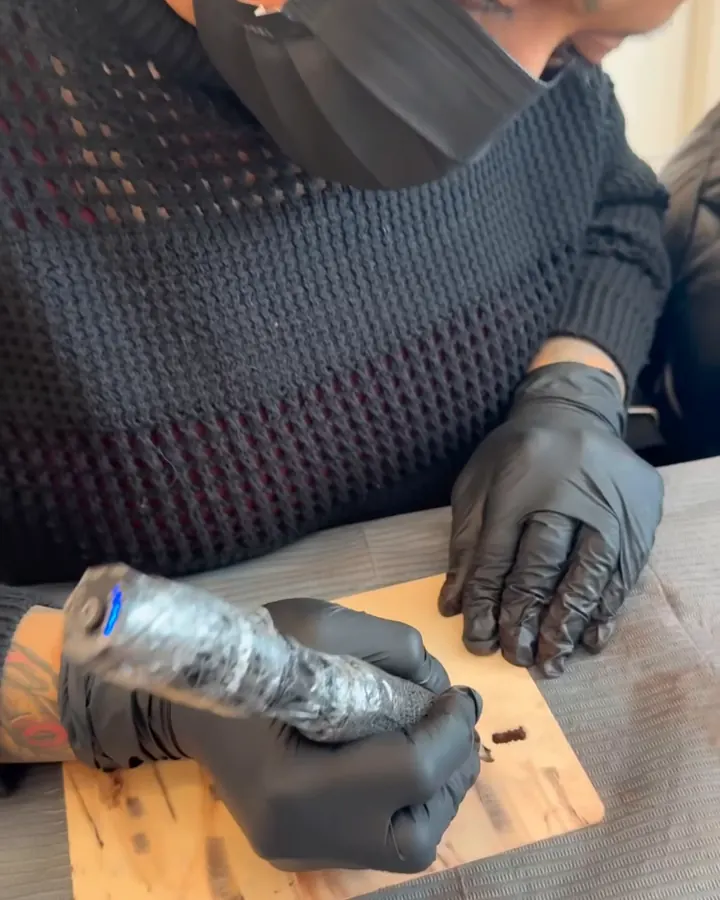
Camouflage training for Oklahoma artists
Oklahoma only legalised tattooing in 2006, so its studio scene is younger than in most states, but it has grown fast. Oklahoma City's Plaza District and Midtown, Tulsa's Brady Arts District and Cherry Street, and college towns like Norman and Stillwater all have busy studios and PMU artists. Camouflage for scars and stretch marks is still very hard to find, and clients often assume nobody in the state offers it.
The SKINEAV 1:1 Zoom course gives licensed Oklahoma artists a structured way to add it. In private live sessions, Evelyn teaches scar and stretch mark assessment, custom colour matching, safe technique on healed scar tissue and an honest consultation process. It is not a recorded library, and it is built around your questions and your clients.
Tuition: $2,997 USD for the live online 1:1 Zoom course taught from Canada, or $3,697 USD with the training kit shipped to the US. Payment plans are available, e.g. $500 deposit + 3 x $999. See the US course page for what is included.
How tattoo licensing works in Oklahoma
Oklahoma has one of the more structured systems in the country. The Oklahoma State Department of Health licenses tattoo and body piercing artists, apprentices, sponsors and establishments through its Consumer Health Service.
At a high level, an artist license requires being at least 18, current bloodborne pathogen, first aid and CPR certification, and proof of experience: either completion of an approved Oklahoma apprenticeship or documented licensure elsewhere, followed by a written examination. The department describes the apprenticeship as a curriculum of about 1,500 hours over one to two years under a sponsor who has been licensed for at least five years. Licenses are renewed annually and must be displayed where clients can see them.
Camouflage puts pigment into the skin, so ask the department which license covers the work you plan to do. The SKINEAV Certificate of Completion is proof of training. It is not an Oklahoma license, and it does not count toward apprenticeship hours.
Real training moments
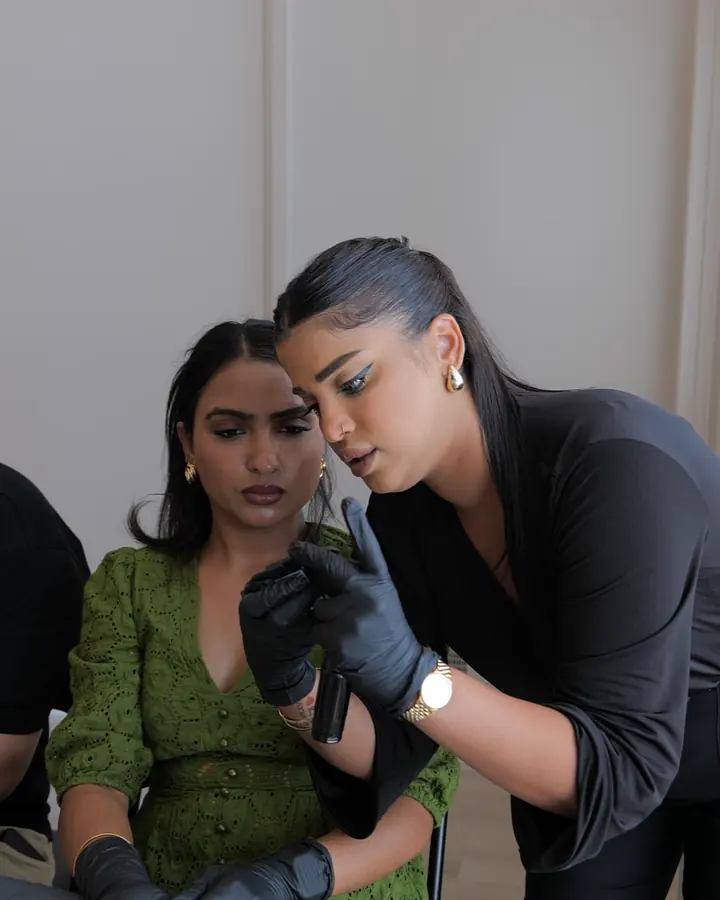
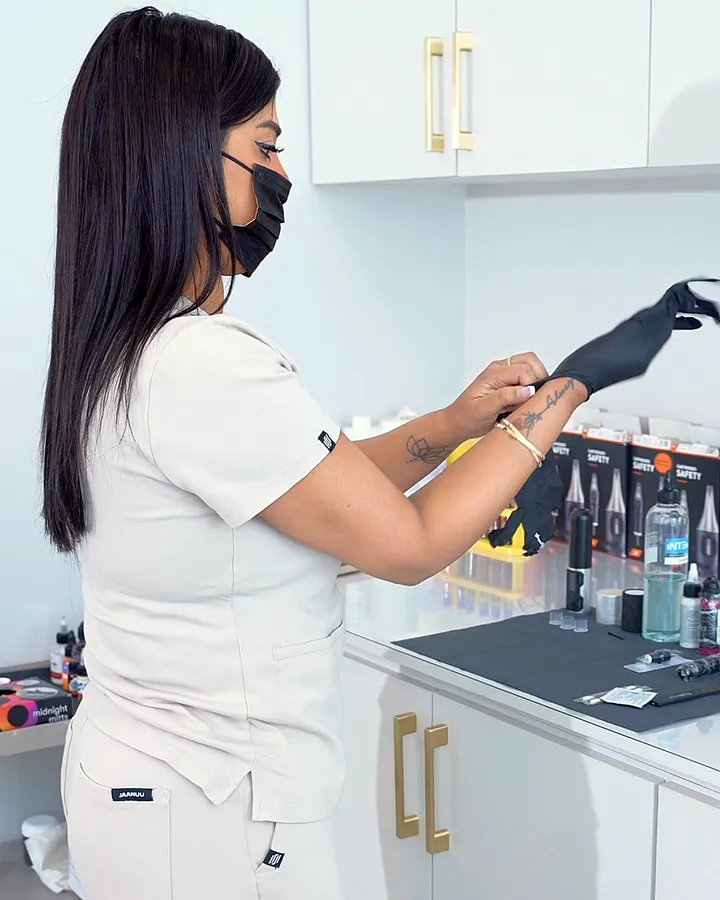
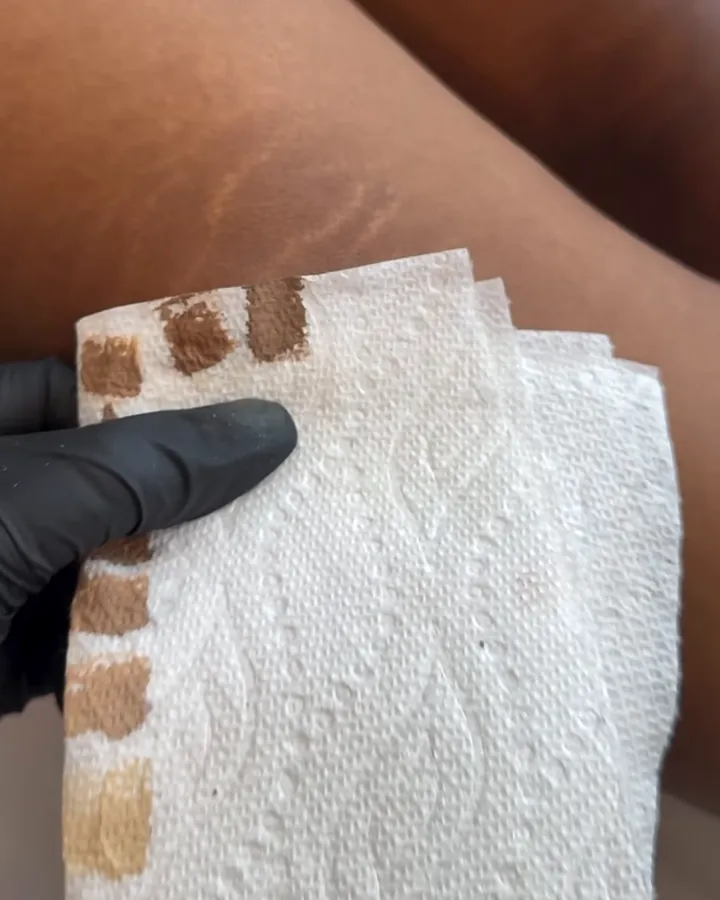
Where Oklahoma camouflage clients are
- Oklahoma City metro: Nichols Hills, Edmond, Moore and Norman, with major hospitals and a growing cosmetic surgery market
- Tulsa metro: Midtown, Broken Arrow, Owasso and Jenks, a strong PMU and med spa community
- Lawton: military families near Fort Sill, many with injury or surgical scars
- Stillwater and Enid: smaller markets where one specialist can become the local name
Oklahoma clients often ask about C-section, tummy tuck and injury scars. Read C-section scar camouflage and injury and accident scar camouflage.
How training works
- Free callTalk through your experience, your state and the right format.
- Reserve your seatPick session times in your own time zone.
- Live 1:1 on ZoomColour theory, technique and guided practice with Evelyn.
- Six months of mentorshipFeedback on your work while you build your business.
What Oklahoma artists ask before enrolling
"I'm an apprentice in Oklahoma. Should I wait?" You can learn theory and practise on practice skin at any stage, but you may only work on clients within the terms of your apprentice license and under your sponsor. Talk to your sponsor first, and Evelyn will help you plan a realistic timeline.
"Does this course replace part of my apprenticeship?" No. Apprenticeship hours and curriculum are set by the department and completed under a licensed sponsor. The SKINEAV course is advanced specialist training, not a substitute.
"I mostly do brows. Is body camouflage a big jump?" It is a real change. Brows are strokes or shading in facial skin; camouflage blends a flat skin tone into scar tissue on the body, often across several lighter sessions. Your pigment knowledge helps, but the technique is new.
Scheduling from Oklahoma
Oklahoma is on Central Time, one hour behind Toronto. A 9 a.m. session in Tulsa is 10 a.m. for Evelyn. Session times are confirmed in writing in both zones.
What a training week can look like from Oklahoma
A typical week includes one theory session on undertone, scar assessment and contraindications and one live practice session on practice skin with Evelyn correcting your depth and saturation on camera. Homework is practical: mixing swatches for your most common client skin tones, a screening form and a photo station with consistent light.
Your first camouflage clients in Oklahoma
Most Oklahoma graduates begin with existing clients who mention a scar, then build a small portfolio with written consent. From there, plastic surgeons, OB-GYNs and physical therapists in Oklahoma City and Tulsa can become referral sources. The course covers honest consultations, and it never promises results or income.
How the course fits a Oklahoma beauty business
Oklahoma artists who already hold an artist license and work in a licensed establishment can usually add camouflage as a new service, after confirming with the department.
The course covers the full basics of camouflage, learning on practice skin, theory, machine and ink, pigment chemistry basics, and the business side: finding your audience, building a pricing strategy you set yourself, and spacing sessions properly. You can add the training kit, you receive a SKINEAV Certificate of Completion, and you get six months of mentorship with Evelyn afterwards. It does not promise clients or income. It gives you a skill, a method and someone to ask when a real case comes in.
See the US course overview for the full curriculum and format.
Licensing note: the SKINEAV Certificate of Completion shows you finished Evelyn's training. It is not a state license, permit or registration. Before you tattoo anyone in the US, check and follow the rules of your state, county and city.
Frequently asked questions
Does Oklahoma license tattoo artists?
Yes. The Oklahoma State Department of Health licenses tattoo artists, apprentices, sponsors and establishments.
How do you become a licensed tattoo artist in Oklahoma?
At a high level, through an approved apprenticeship or documented licensure elsewhere, current bloodborne pathogen, first aid and CPR certification, and a written exam. Check the department for current requirements.
Is the SKINEAV certificate an Oklahoma license?
No. It is a Certificate of Completion for the training only.
What time are sessions for Oklahoma students?
Oklahoma is on Central Time, one hour behind Toronto.
Do I need to travel for the course?
No. It is taught live over Zoom from Canada. SKINEAV has no US location.
Is the course live?
Yes. It is live, one-on-one with Evelyn on Zoom, with six months of mentorship afterwards.