
Business · PMU artists
Adding scar camouflage to your PMU business
You already have the clients, the studio and the machine skills. Camouflage builds on all three, with some important differences.
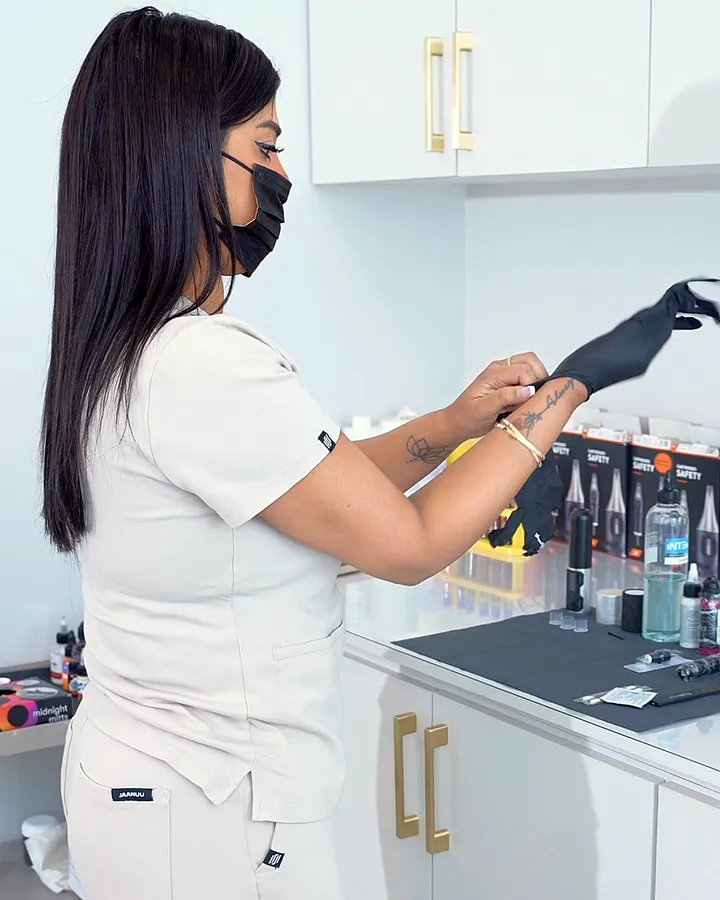
Why PMU artists add camouflage
If you do brows, lips or eyeliner, your clients probably already trust you with their face. Many of them also have a scar, stretch marks or a lighter patch somewhere they would love to discuss. Some of them have asked you. Adding camouflage lets you say yes to those requests with confidence, and gives you a specialist service that most PMU studios in your area do not offer.
It also changes your weekly rhythm. Camouflage sessions are usually longer and spaced weeks apart, which can balance a calendar full of short brow touch-ups.
What carries over from PMU, and what does not
Plenty of your PMU skill carries over: machine handling, needle selection, hygiene, consent forms, aftercare and client communication. What changes is significant:
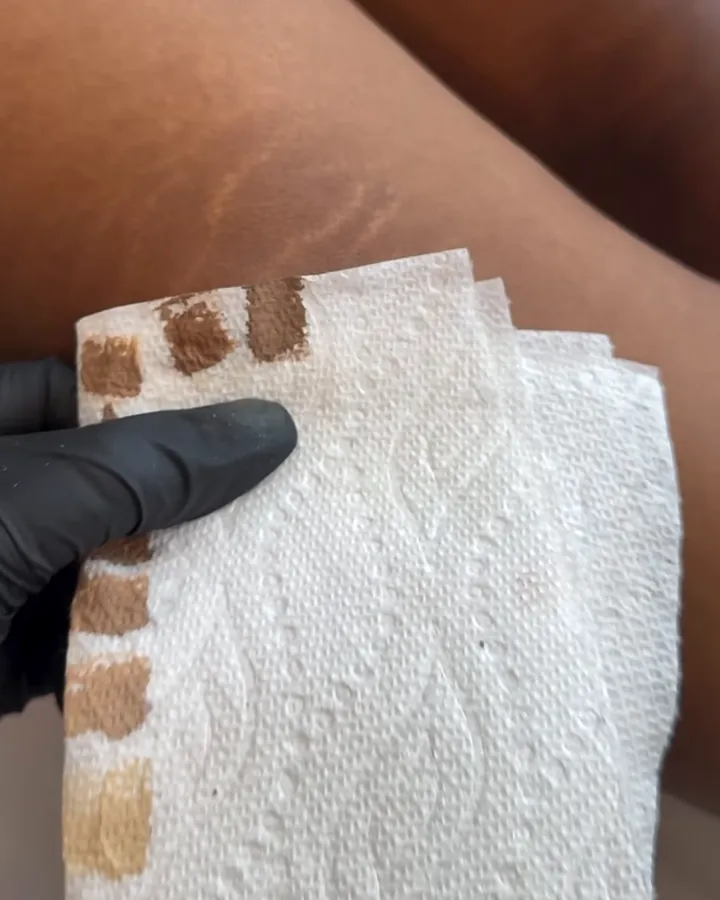
- Colour: you are matching skin, not creating a brow or lip colour. That means mixing custom skin tones with the right undertone, often lighter than you expect. Read colour theory for camouflage artists.
- Tissue: scar tissue and stretch marks take pigment differently from healthy facial skin. Depth and pressure must be adjusted.
- Assessment: many scars are not ready, or not suitable. Your consultation becomes a screening process.
- Body areas: abdomen, hips, breasts and thighs bring different positioning, stretching and healing considerations.
- Sessions: camouflage usually needs two or more sessions, spaced to let colour settle.
Check that your license and studio cover it
Before you add camouflage to your menu, confirm it fits within your current license, permit or studio registration. In some states a PMU license covers all cosmetic tattooing; in others the rules are written for tattooing in general. Some examples: Florida licenses cosmetic tattooing as tattooing, Virginia has separate tattooer and permanent cosmetic tattooer licenses, and Illinois registers the establishment. See paramedical tattoo licensing by state and ask your agency directly if in doubt.
Also check with your insurer that your policy covers camouflage on the body, not only facial PMU.
Build your camouflage menu
Start narrow. Many artists begin with two or three services they can do confidently:
- Light, flat surgical scars, such as healed C-section or tummy tuck scars
- White, mature stretch marks on the abdomen, hips or thighs
- Small lighter patches, once you are comfortable with colour matching
Leave complex cases, such as burn scars, skin grafts and vitiligo, until you have more experience and mentor support.
Pricing strategy without guesswork
You set your own prices. Rather than copying a competitor, work out your own pricing strategy based on:
- How long a typical session takes, including consultation and photos
- How many sessions a case usually needs
- Your local market and your level of experience
- Whether you offer a consultation fee, package or per-session pricing
Session spacing matters too. Booking follow-ups too close together can affect healing and colour; too far apart and clients lose momentum. SKINEAV's course covers audience, pricing strategy and session spacing as part of its marketing module.
Marketing your new service
Your existing clients are the easiest place to start. Tell them you now offer camouflage, and invite them to ask. Then build outward:
- Post healed results, with consent, in consistent lighting. See camouflage photography for artists.
- Write a clear page on your website about who camouflage helps and who it does not.
- Introduce yourself to local plastic surgeons, dermatologists and med spas once you have a few healed cases.
- Answer questions honestly online: what camouflage is, how many sessions, what aftercare involves.
Avoid promising results. Honest, conservative marketing builds the trust paramedical clients need.
Setting up your consultation process
Camouflage consultations are longer and more structured than brow consultations. A good process includes a health and medication questionnaire, questions about the scar's age and history, photographs in consistent light, a look at the scar's colour, texture and stability, and an honest conversation about what camouflage can and cannot do. Many artists also do a small test area before committing to a full plan.
Write your consultation notes down every time. They protect you, help you plan sessions and give you a record to discuss with your mentor. Read camouflage consultation skills.
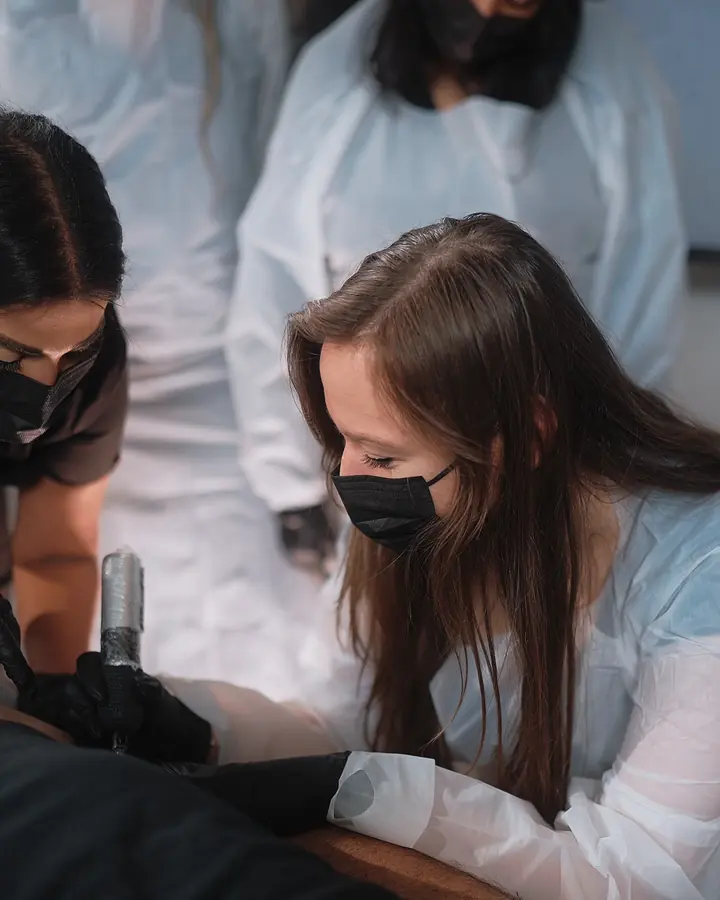
Equipment and supplies to review
You may already have most of what you need, but check:
- A machine and needle configurations suitable for body work and scar tissue
- A range of skin-tone pigments and modifiers for custom mixing
- Daylight-balanced lighting for colour checks and photos
- A treatment bed that lets you position abdomen, hips and thighs comfortably
- Practice skin for ongoing drills between clients
SKINEAV's course includes a kit option for artists who want a ready-made starting set.
A 90-day plan to launch camouflage
Days 1–30: complete training, confirm licensing and insurance, and practise daily on practice skin. Days 31–60: take two or three simple real cases, with mentor review, and photograph everything. Days 61–90: add a camouflage page to your website, tell existing clients, and introduce yourself to one or two local clinics. Keep the menu small until your healed results are consistent. This pace feels slow, but it protects your reputation in a service where trust is everything.
Getting trained
A dedicated camouflage course is the safest way to add the service. If you are in the US and cannot travel, Evelyn's live 1:1 online paramedical camouflage course teaches PMU artists one-on-one on Zoom, scheduled in your time zone. It covers the full basics, practice skin, theory, machine and ink, pigment chemistry basics and marketing, with a kit option, a Certificate of Completion and six months of mentorship. State guides are available for California, Texas, Georgia, New York and more.
Licensing note: the SKINEAV Certificate of Completion shows you finished Evelyn's training. It is not a state license, permit or registration. Before you tattoo anyone in the US, check and follow the rules of your state, county and city.
Frequently asked questions
Can a PMU artist do scar camouflage?
Many do, after specialist training. Check that your license, studio and insurance cover camouflage work on the body.
What is the hardest part of camouflage for PMU artists?
Usually colour matching to skin and adjusting technique for scar tissue.
Should I offer camouflage on all scars?
No. Start with flat, mature, lighter scars and stretch marks. Refer or decline raised, red, recent or keloid scars.
How should I price camouflage?
Set your own prices based on time, number of sessions, your market and your experience. Avoid discount-led pricing.
Can I learn camouflage online?
Yes, through live one-on-one training with practice skin and mentorship, as long as you also follow your local rules for practising.