
Training · Choosing a course
The best online paramedical tattoo course: what to look for
"Best" is the course that actually makes you safe and confident. Here is a checklist you can use on any program, including ours.
Why choosing carefully matters
Online paramedical and camouflage courses have multiplied. Some are excellent. Others are a few hours of recorded video and a certificate. Because camouflage is done on scars and fragile skin, a weak course can lead to visible mistakes on real people, and those are hard to fix. It is worth taking an hour to compare programs properly.
1. Live feedback, not just videos
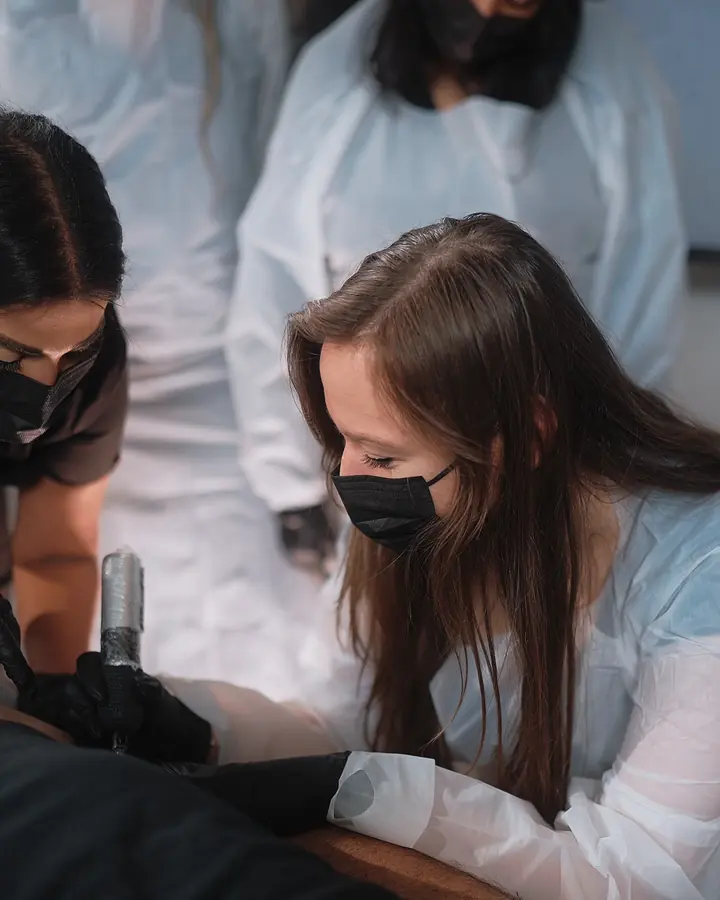
Watching someone else work is useful, but you learn technique by being corrected. Ask whether the course is live, how much of it is one-on-one, and whether the instructor will watch your hands while you work. A second camera or phone on your hands lets an instructor see angle, depth and speed. Pre-recorded content can support learning; it should not be all of it.
2. Practice skin and a clear progression
A good course has you practising from early on, on practice skin, with clear exercises that build from simple lines and colour patches to full scar and stretch mark simulations. Ask what you will practise, how much, and how your work will be reviewed.
3. Real colour theory for skin
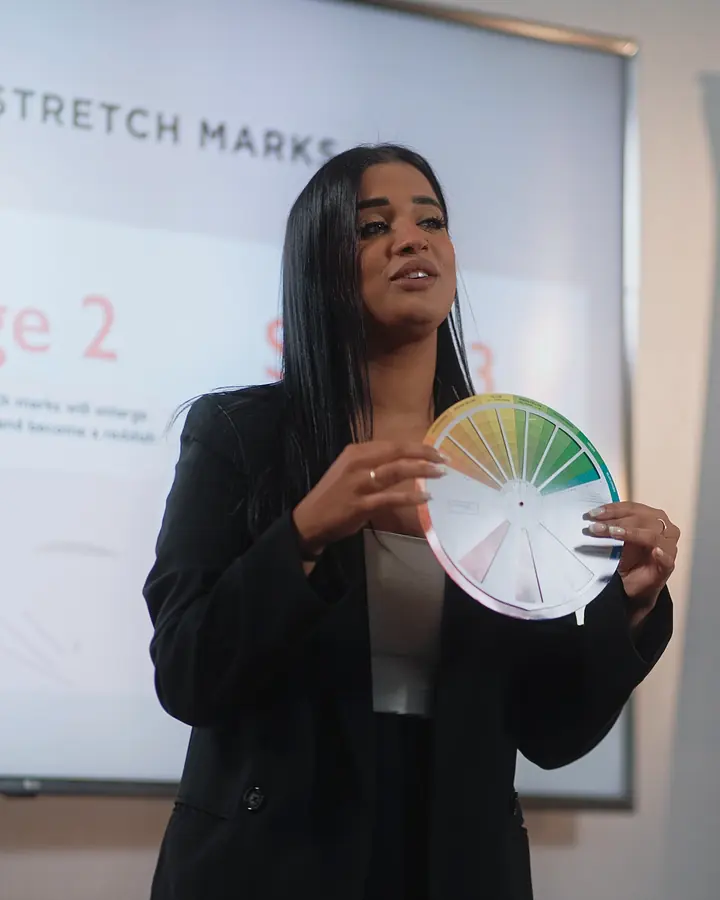
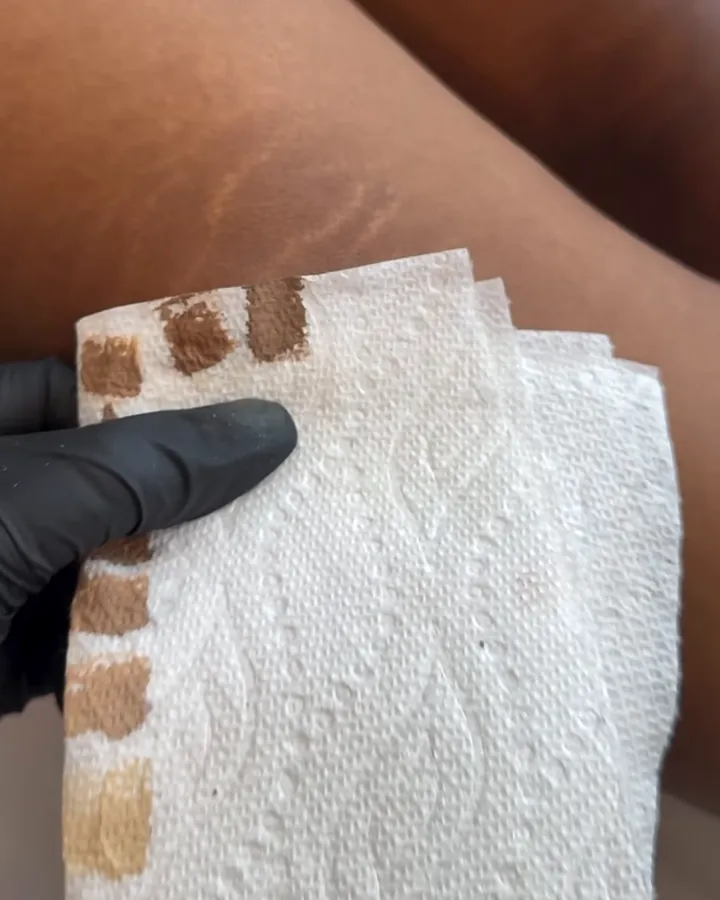
Camouflage is colour work. Look for a course that teaches undertones, mixing custom skin tones, how pigment changes as it heals and how to match across very fair, olive, brown and deep skin. Be wary if a course promises one "universal" skin-tone pigment. Read colour theory for camouflage artists.
4. Pigment chemistry and machine basics
You should understand, at least at a basic level, what is in the pigments you use, why some shift colour over time, and how needle and machine choices affect skin. A course that skips this leaves you guessing when something heals unexpectedly.
5. Honest teaching about who not to treat
The best camouflage artists say no often. A good course spends real time on contraindications: fresh or red scars, raised and keloid scars, unstable vitiligo, certain medical conditions and unrealistic expectations. If a course suggests camouflage works on everyone, treat that as a red flag. See camouflage contraindications.
6. The business side, without hype
Useful marketing training covers who your audience is, how to build your own pricing strategy, session spacing, consent and photography. Be cautious of courses that promise a specific income or "guaranteed" clients. Nobody can promise that, and it often signals a program built around selling courses rather than teaching skill.
7. Mentorship after the course
Your first real cases will raise questions you did not think of during training. Ask how long support lasts after the course, how you contact the instructor, and whether they will review photos of client cases. Months of mentorship is worth more than a thicker manual.
8. Clarity about certificates and licensing
A trustworthy course is clear that its certificate is proof of training, not a license. In the US, licensing depends on your state, county and city. If a course claims its certificate "licenses" you, look elsewhere. Use our guide to paramedical tattoo licensing by state to check your own requirements.
9. Instructor experience you can check
Look at the instructor's own healed work, how long they have specialised in camouflage, and whether they teach other artists regularly. Check that the photos they show are real and consistent.
Questions to ask before you pay
- How many hours are live, and how many are one-on-one?
- Will the instructor watch my hands through a second camera?
- What practice materials are included or recommended?
- How do you teach colour matching across different skin tones?
- What do you teach about contraindications and declining clients?
- How long does mentorship last, and how do I reach you?
- What exactly does the certificate say, and how do you describe it?
- Can I see healed results from the instructor's own clients?
A good instructor will answer every one of these clearly. Hesitation or vague answers are useful information too.
Live 1:1 vs small group vs recorded
Live one-on-one gives you the most correction and lets the course follow your pace and background, which suits experienced artists adding a specialty. Small live groups offer some feedback and peer learning, with less individual attention. Recorded courses are flexible and useful for theory, but they cannot watch your technique. Many artists combine a recorded theory resource with live training. If you can only choose one format for camouflage, live training with practice-skin feedback is the safer choice.
Red flags to walk away from
- Promises of a specific income, "six figures" or guaranteed clients
- Claims that the certificate is a license or lets you work anywhere
- Before-and-after photos that look edited, inconsistent or borrowed
- No discussion of contraindications or declining clients
- One "universal" pigment for every skin tone
- No way to reach the instructor after you pay
- Pressure to enrol today with countdown timers
Any one of these is worth a closer look. Several together usually mean the course is built to sell rather than to teach. A serious instructor would rather you take time to decide.
How SKINEAV measures up
We built Evelyn's live 1:1 online paramedical camouflage course around this checklist. It is live and one-on-one on Zoom, scheduled in your time zone. It includes the full basics, practice-skin learning, theory, machine and ink, pigment chemistry basics, marketing (audience, pricing strategy and session spacing), a kit option, a Certificate of Completion that is clearly not a license, and six months of mentorship. Tuition is $2,997 USD, or $3,697 USD with the training kit shipped to the US, and payment plans are available (e.g. $500 deposit + 3 x $999). It is taught live over Zoom from Canada. Evelyn has more than ten years of experience in skin camouflage. See the state guides for Texas, Arizona, Nevada, Pennsylvania and North Carolina, or read questions to ask before a paramedical course.
Licensing note: the SKINEAV Certificate of Completion shows you finished Evelyn's training. It is not a state license, permit or registration. Before you tattoo anyone in the US, check and follow the rules of your state, county and city.
Frequently asked questions
What is the best online paramedical tattoo course?
The best course for you offers live feedback, practice skin, real colour theory, honest contraindication teaching, mentorship and clarity about licensing.
Are pre-recorded paramedical courses enough?
Usually not on their own. Technique improves fastest with live correction from an instructor.
Does an online certificate let me work in the US?
No. Certificates show training. Licensing comes from your state or local agency.
What are red flags in a camouflage course?
Income guarantees, claims that camouflage works on everyone, a single universal pigment and no support after the course.
How long should mentorship last?
Several months is ideal, so you have support through your first real cases.