
Training · Safety
Bloodborne pathogen training for tattoo and PMU artists: what US states ask for
Almost every US state that regulates tattooing asks for bloodborne pathogen training. Here is what it covers, how the requirements differ, and how it fits with specialist camouflage training.
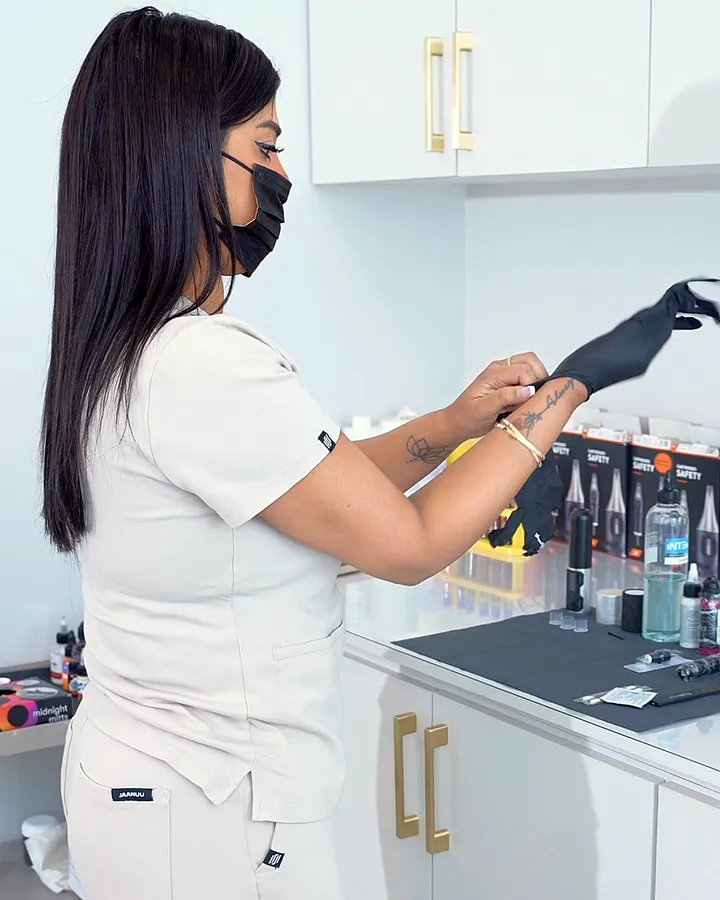
Why bloodborne pathogen training comes first
Tattooing, permanent makeup and paramedical camouflage all break the skin. That creates a small but real risk of passing infections such as hepatitis B, hepatitis C and HIV between clients and artists through blood or contaminated equipment. Bloodborne pathogen training, often shortened to BBP training, teaches you how that happens and how to prevent it.
For camouflage artists the stakes are, if anything, higher. Clients often have surgical or injury scars, sometimes with fragile skin, and many have spent years in medical settings. They notice hygiene. A careful, well-documented safety routine is part of what makes them trust you.
What a BBP course usually covers
Courses vary, but most cover the same core topics, many of them drawn from the federal OSHA bloodborne pathogens standard:
- How bloodborne diseases spread and which ones matter most in body art
- Hand hygiene and the correct use of single-use gloves
- Cleaning, disinfection and sterilization, and the difference between them
- Safe handling and disposal of needles and other sharps
- Preventing cross-contamination of pigment, cups, bottles and surfaces
- What to do after a needlestick or other exposure
- Hepatitis B vaccination and record keeping
A general workplace course is not always enough. Some states ask for a course aimed at body art, or one from an approved provider list, so check before you pay for one.
How requirements differ from state to state
There is no single national rule for artists. Each state, and sometimes each county, decides what it accepts. A few examples from official sources, reviewed in October 2026:
- Oklahoma: the State Department of Health asks artist license applicants for current bloodborne pathogen, first aid and CPR certification. Oklahoma guide
- Missouri: practitioner license applicants show a bloodborne pathogen program that includes infection control, waste disposal, hand washing and sterilization, plus first aid and CPR. Missouri guide
- Minnesota: technician license applicants show a current bloodborne pathogens course taken within the past year. Minnesota guide
- Alabama: body art operator permit applicants show a course from the Department of Public Health's approved list, plus hepatitis B vaccination or a signed declination. Alabama guide
- Louisiana: body art operators supply CPR, first aid and bloodborne pathogen training records when they register. Louisiana guide
- Indiana: the state's sanitary rule for tattoo facilities includes bloodborne pathogen training, enforced by county health departments. Indiana guide
For the rest of the country, start with our guide to paramedical tattoo licensing by state.
How often you need to renew
Many states and counties expect BBP training to be current, which often means renewed every year, and some tie renewal to your license renewal date. Minnesota, for example, asks for a course completed within the year before you apply. Keep your certificate somewhere you can find it quickly, add the expiry date to your calendar, and keep a copy in your studio records in case an inspector asks.
Where specialist camouflage training fits
BBP training keeps you and your clients safe. It does not teach you how to camouflage a scar. Specialist training builds on that safety foundation with scar assessment, colour theory, pigment choice, machine and needle technique for scar tissue, and honest consultations. A good camouflage course will expect you to follow your local infection control rules and will show you how they apply to camouflage set-ups, such as working on larger body areas and handling several custom-mixed colours without cross-contamination.
Evelyn's live 1:1 online paramedical camouflage course covers the full basics, learning on practice skin, theory, machine and ink, pigment chemistry basics, and the business side: your audience, a pricing strategy you set yourself, and session spacing. Tuition is $2,997 USD, or $3,697 USD with the training kit shipped to the US, with payment plans available (for example a $500 deposit + 3 x $999). It is taught live over Zoom from Canada, and SKINEAV has no US location. You receive a Certificate of Completion, which is not a license, and six months of mentorship.
Key takeaways
- Bloodborne pathogen training is required, in some form, almost everywhere tattooing is regulated.
- States differ on which courses they accept and how often you must renew.
- Check your state and county before paying for a course.
- Keep certificates current and on file.
- BBP training is the foundation; specialist camouflage training is built on top of it.
Licensing note: the SKINEAV Certificate of Completion shows you finished Evelyn's training. It is not a state license, permit or registration. Before you tattoo anyone in the US, check and follow the rules of your state, county and city.
Frequently asked questions
Is an online bloodborne pathogen course accepted?
Often, but not always. Some states accept online courses and others require specific or approved providers. Check with your state or county.
How long is BBP training valid?
Many jurisdictions expect it to be renewed every year. Check your local rules.
Does a camouflage course include BBP certification?
The SKINEAV course covers hygiene as it applies to camouflage, but it does not replace the BBP certification your state or county requires.
Do nurses need separate BBP training to tattoo?
Some states ask all body art applicants for a specific course, even if they have clinical training. Check with your state.
Is the SKINEAV certificate a license?
No. It is a Certificate of Completion for the training only.