
Training · Areola restoration
Areola tattoo training online: a guide for US artists
Areola and nipple tattooing after breast surgery is meaningful, specialist work. Here is what a serious course should teach, and how online training fits.
Why areola tattooing is in demand
Many people who have breast surgery, especially reconstruction after mastectomy, are left with a breast mound but no areola or nipple, or with areolas that are uneven after reduction or augmentation. Some surgical practices refer patients to tattoo artists for areola and nipple restoration once healing is complete. Others leave patients to find an artist on their own.
In many US cities there are still very few artists trained for this work. Clients often travel long distances or wait months. For artists, areola restoration is a way to offer something genuinely meaningful, but it carries real responsibility: you are working with people at the end of a long medical journey, on skin that has been through surgery and sometimes radiation.
What makes areola work different
Areola tattooing combines two skills. The first is realism: creating the illusion of a three-dimensional nipple and textured areola on a flat surface, using shading, highlight and colour variation. The second is paramedical caution: reconstructed or irradiated skin can be thin, tight, scarred or slow to heal, and it may take pigment very differently from healthy skin.
Symmetry adds another layer. Many clients have one natural breast and one reconstructed, or two reconstructed breasts at slightly different heights. Placement, size and colour have to look natural when the client is standing, not just lying on a treatment bed. Good training teaches you to measure, mark, check with the client and only then begin.
What a good areola tattoo course should cover
- Medical clearance: why work starts only after the surgeon has cleared the area, and what questions to ask about radiation and healing
- Skin assessment: reading thickness, scarring, sensation and blood flow on reconstructed tissue
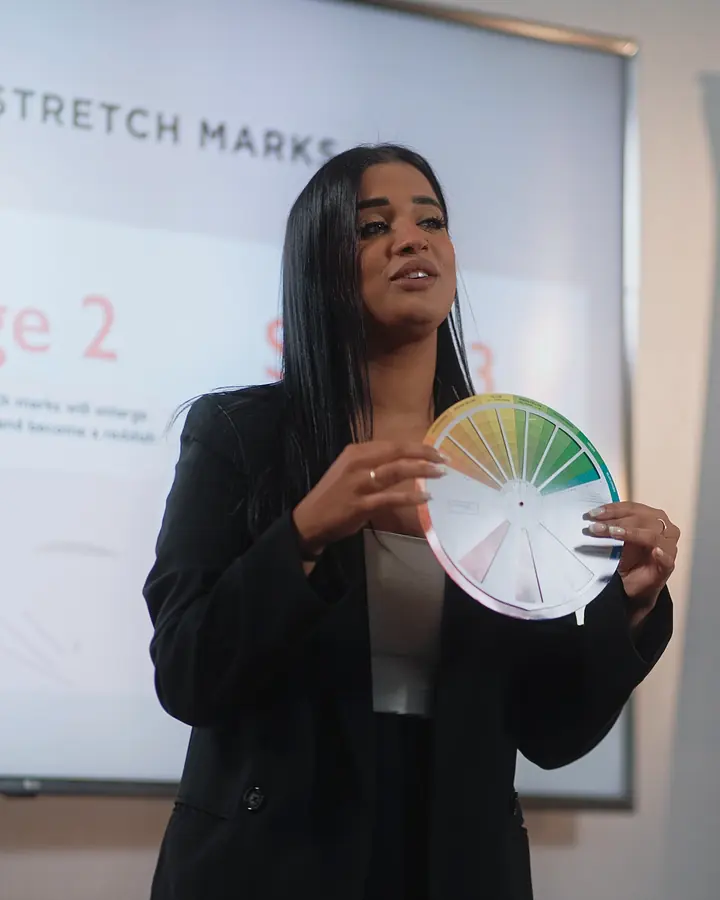
- Colour theory: matching a natural areola, or designing a pair, across very different skin tones
- 3D illusion: shading, highlight and texture so the result reads as natural from a distance
- Placement and symmetry: measuring, marking and confirming with the client standing
- Gentle technique: lighter passes and conservative depth on fragile skin
- Sensitive consultation: privacy, consent, and the emotional side of the appointment
- Aftercare and touch-ups: why a second session is common
Can you learn areola tattooing online?
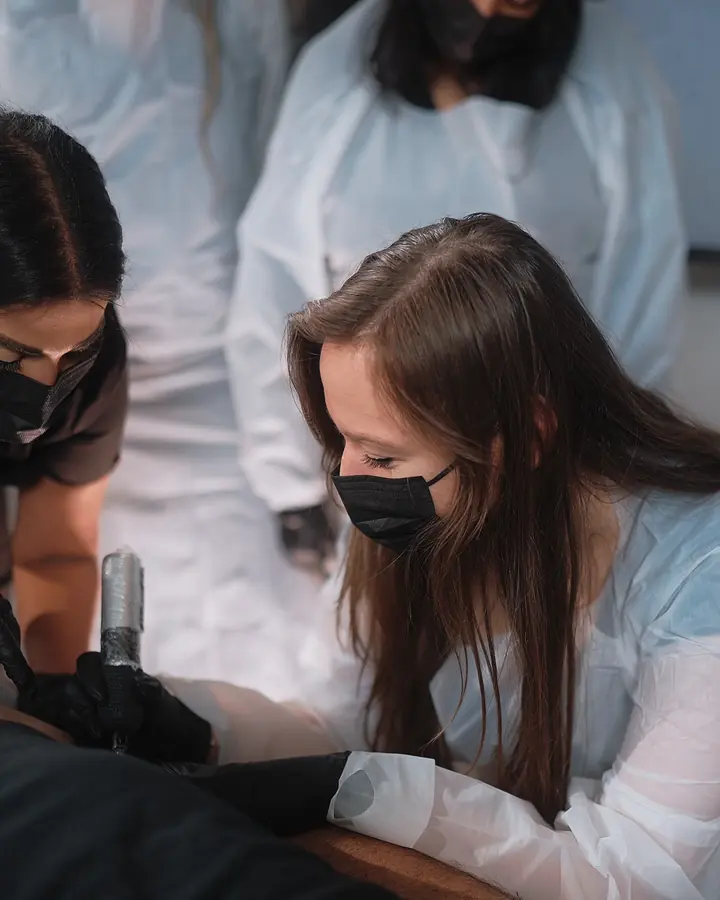
Much of the work can be taught effectively live online, one-on-one: colour theory, shading for realism, placement, consultation and aftercare. Early practice happens on practice skin and silicone forms, where you can repeat shading again and again while your instructor watches on camera and corrects you in real time.
Online training does not replace care on your first real clients. A course that includes mentorship after the sessions, so you can share photos and plans before and after early cases, is far more useful than a certificate on its own.
How areola work relates to scar camouflage
Areola restoration and scar camouflage overlap a lot. Both involve working on surgical tissue, matching skin tones and taking a conservative approach. Many clients who come for areola work also have scars around the breast or at donor sites, such as the abdomen after a flap reconstruction, that they would like to soften. Artists who learn both can serve the whole person. Read tummy tuck and breast scar camouflage.
Licensing in the US
Areola and nipple tattooing is tattooing. In most US states you need the relevant tattoo or permanent cosmetic license, permit or registration, and you may need to work in a licensed or permitted facility. A few states regulate it more strictly or in a medical setting. Rules vary by state, county and city, from Washington and Virginia to Ohio and Utah. Check our guide to paramedical tattoo licensing by state and confirm locally before you begin.
Some artists build relationships with breast surgeons and cancer centres. Those relationships take time and rely on careful, documented work. A course should prepare you for that conversation without promising referrals.
The consultation: more than measurements
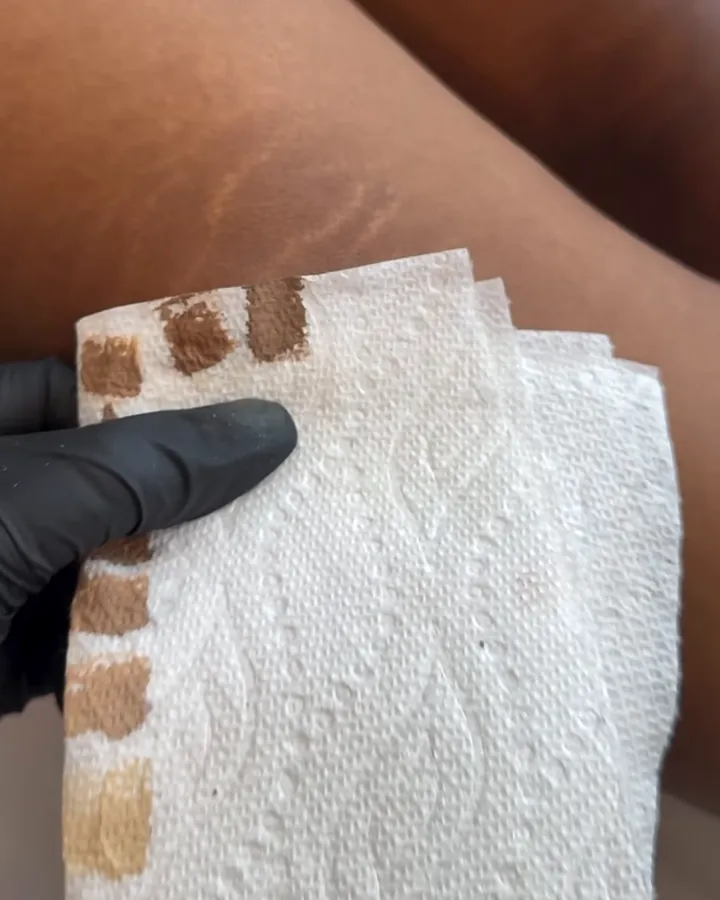
An areola consultation is often the first time a client has talked about their body with someone outside their medical team. Some arrive excited, some anxious, some unsure whether they even want the work. A good artist slows down. Explain the process, show colour options on the skin, and let the client decide on size, shape and tone without pressure. Many artists offer to draw the design on the skin first, so the client can see it in a mirror before any pigment goes in.
Privacy matters too. A calm, private room, clear consent at every step and the option to pause make a big difference. Training should prepare you for these conversations as carefully as it prepares you for shading.
Practising realism before real clients
3D areola work is a technique you build through repetition. Most artists practise dozens of designs on practice skin and silicone forms before their first client, varying size, colour and skin tone each time. Photograph every practice piece in the same light and compare them over weeks. In a live one-on-one course, your instructor can watch your shading on camera, point out where the highlight sits wrong or the edges look flat, and set specific exercises for your next session. That kind of feedback is what turns a flat circle into a convincing illusion.
Working with surgeons and clinics
Some breast surgeons offer areola tattooing in their own practice, while others are happy to refer to a trusted artist. If you want those referrals, build a small portfolio of practice work and early cases with consent, learn the vocabulary surgeons use, and be clear about your licensing and hygiene standards. Never promise outcomes. Surgeons recommend artists who are careful, communicate well and know when to send a patient back.
Colour choices across skin tones
Natural areola colour varies far more than many artists expect. On fair skin it may be pink, peach or light brown; on olive and deep skin it may be rich brown, deep plum or close to black, often with lighter and darker zones within the same areola. A single flat colour rarely looks real. Training should teach you to build two or three related tones, place darker colour toward the nipple and edges where appropriate, and add subtle highlight so the result reads as three-dimensional in normal light. Where a client has one natural side, the goal is to match it as closely as possible, which means studying the existing areola carefully in the same lighting you will work in. Pigment can also heal lighter or warmer than it looks in the cup, so careful colour choice and a planned touch-up are part of the process.
Where SKINEAV fits
SKINEAV's core US course is focused on scar and stretch mark camouflage, colour matching and work on healed surgical tissue, which is the foundation areola work builds on. If areola restoration is your goal, raise it on the free call with Evelyn so she can tell you honestly how the training fits your plans.
Evelyn's live 1:1 online paramedical camouflage course covers the full basics, learning on practice skin, theory, machine and ink, pigment chemistry basics, and the business side: your audience, a pricing strategy you set yourself, and session spacing. Tuition is $2,997 USD, or $3,697 USD with the training kit shipped to the US, with payment plans available (for example a $500 deposit + 3 x $999). It is taught live over Zoom from Canada, and SKINEAV has no US location. You receive a Certificate of Completion, which is not a license, and six months of mentorship.
Licensing note: the SKINEAV Certificate of Completion shows you finished Evelyn's training. It is not a state license, permit or registration. Before you tattoo anyone in the US, check and follow the rules of your state, county and city.
Frequently asked questions
Can I learn areola tattooing online?
Colour theory, 3D shading, placement and consultation can be taught live online, with practice on practice skin and silicone forms first. Mentorship on early real cases matters.
When can a client get an areola tattoo after reconstruction?
Only after their surgeon has cleared the area and healing is complete. The timing is a medical decision.
Do I need a license for areola tattooing?
In most US states, yes. Tattoo or permanent cosmetic rules apply, and some states regulate it more strictly.
Is areola work the same as scar camouflage?
They overlap. Both involve surgical tissue and skin-tone matching, and many clients need both.
Is a certificate of completion a license?
No. It shows you completed training. Licensing comes from your state or local authority.