
Careers · Estheticians
From esthetician to paramedical tattoo artist
Estheticians already understand skin better than most tattoo artists. Moving into camouflage builds on that, but there are licensing steps to respect.
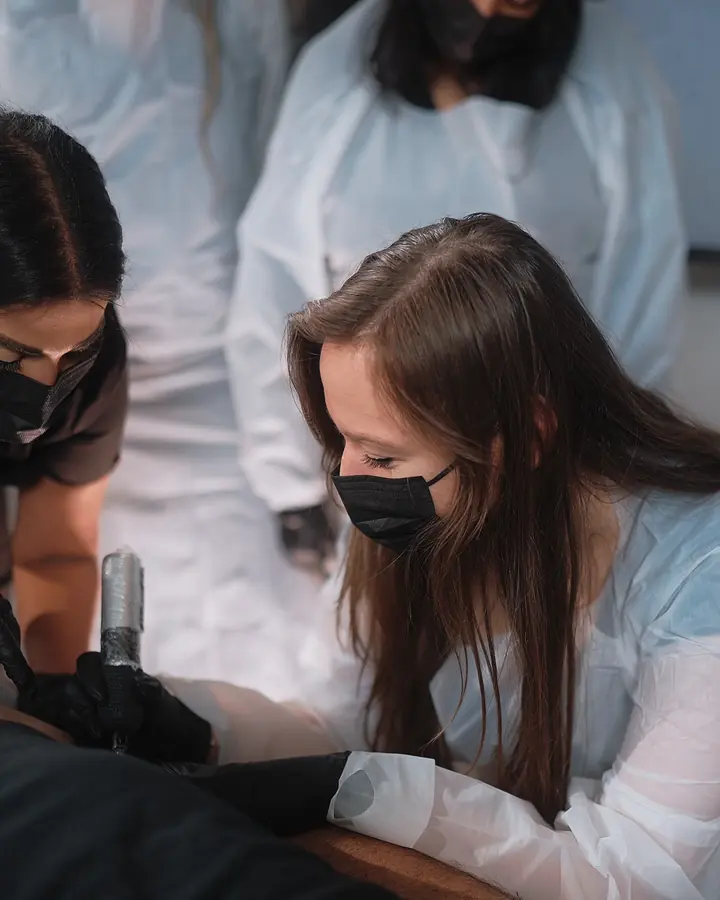
Why estheticians are well placed
As an esthetician, you work with skin every day. You know skin types, Fitzpatrick scales, hyperpigmentation and hypopigmentation, sensitivity, healing and contraindications. Many of your clients already talk to you about acne scars, stretch marks or surgical scars, and some have tried every cream and peel.
That knowledge is a real head start in paramedical camouflage, where assessment and judgment matter as much as technique. What you may not have yet is needle and machine experience, and, importantly, the right license to tattoo.
The licensing difference to understand
In most US states, an esthetics license does not cover tattooing. Permanent makeup and camouflage involve placing pigment into the skin with needles, which states usually treat as tattooing or body art. For example, the Illinois Department of Public Health states that permanent makeup does not fall under cosmetology or esthetics licenses and must be done under body art establishment registration; see our Illinois guide. Florida requires a separate tattoo artist license, and Virginia has its own tattooer and permanent cosmetic tattooer licenses.
So the path usually looks like this: keep your esthetics license, and add whatever tattoo, body art or PMU credential your state requires. Our guide to paramedical tattoo licensing by state links to official sources for many states.
What transfers from esthetics
- Skin assessment: reading texture, tone, undertone and sensitivity
- Client consultation: asking about health, medications and history
- Hygiene and infection control: a strong base for tattoo-level standards
- Aftercare teaching: clients already trust your skin care advice
- Referral judgment: knowing when something needs a doctor
What you will need to learn
- Machine and needle technique: depth, angle, speed and stretch
- Pigment chemistry basics: how pigments behave in skin and heal over time
- Camouflage colour theory: mixing custom skin tones, including warm, olive and deep tones. See how skin colour matching works.
- Working on scar tissue: which scars take pigment, and which to decline
- Photography and documentation for a credible portfolio
A realistic step-by-step path
1. Confirm your state and local rules for tattooing or permanent cosmetics.
2. Complete any required bloodborne pathogen training.
3. Get foundational PMU or tattoo training if your state requires it for a license.
4. Take specialist camouflage training with plenty of practice-skin work.
5. Start with simple, flat, mature scars and stretch marks under mentor guidance.
6. Add camouflage to your menu inside a compliant setting.
Read how to become a paramedical tattoo artist in the US for more detail on each step.
How camouflage fits a skin care business
Camouflage pairs naturally with esthetic services. Clients who come for facials or peels and mention scars can be assessed properly, referred when needed and offered camouflage when they are suitable, either by you once licensed or by a licensed artist you partner with. It is a way to add a high-demand service and keep clients in your care instead of sending them elsewhere.
Many estheticians work in med spas. If that is you, check how your state handles tattooing in that setting; some require a separately registered or licensed body art area.
How long the transition can take
For most estheticians, the longest part is not the camouflage course but the licensing path. In states that require tattoo or permanent cosmetics training hours, an apprenticeship or an exam, that can take months. In states that focus on studio registration and bloodborne pathogen training, it can be quicker. Either way, plan to practise on practice skin for a good while before you work on clients, and to start with simple cases. Rushing this step is the most common reason new artists struggle.
Mistakes estheticians can avoid
Estheticians sometimes underestimate how different needle work feels from skin care tools, so expect a learning curve with machine control and depth. Another trap is assuming an esthetics license covers pigment work; in most states it does not. A third is treating hypopigmentation from peels or lasers without fully understanding its cause; some cases need a dermatologist's opinion first. Read hypopigmentation after laser or peel. Avoiding these keeps your clients safe and your license in good standing.
Talking to existing clients about camouflage
Your existing clients are likely your first camouflage clients. Keep the conversation simple and honest: what camouflage is, that it uses custom pigment, that it usually needs more than one session, and that not every scar or mark is suitable. Invite them to a consultation rather than promising results. If you partner with a licensed artist while you train, explain that clearly. Clients appreciate transparency, especially about something as personal as a scar.
Working with a dermatologist or doctor
Estheticians often already have relationships with dermatologists or plastic surgeons. Those relationships become even more valuable in camouflage. Some clients need a medical opinion first, for example if a scar is still changing, if a patch of lighter skin has an unclear cause, or if vitiligo may not be stable. Building a simple referral arrangement, where you send clients for medical assessment and doctors send healed patients to you for cosmetic camouflage, protects clients and builds your reputation as a careful professional.
Training with SKINEAV
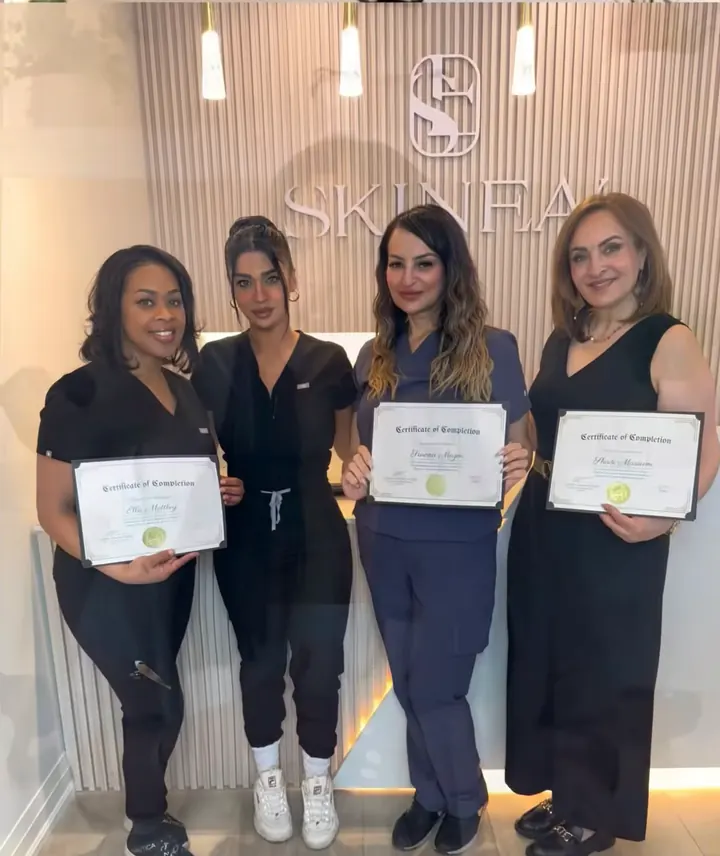
Evelyn's live 1:1 online paramedical camouflage course welcomes estheticians who are working toward, or already hold, the right credentials to tattoo. It is live on Zoom and covers the full basics, practice skin, theory, machine and ink, pigment chemistry basics and marketing, with a kit option, a Certificate of Completion and six months of mentorship. If you are new to needles, tell Evelyn on the free call and she will tell you honestly which path makes sense.
Licensing note: the SKINEAV Certificate of Completion shows you finished Evelyn's training. It is not a state license, permit or registration. Before you tattoo anyone in the US, check and follow the rules of your state, county and city.
Frequently asked questions
Can an esthetician do paramedical tattooing?
Usually only with an additional tattoo, body art or PMU license or registration, depending on the state. An esthetics license alone typically does not cover tattooing.
Is esthetics experience useful for camouflage?
Yes. Skin assessment, consultation, hygiene and aftercare knowledge transfer directly.
What do estheticians need to learn for camouflage?
Machine and needle technique, pigment chemistry, skin-tone colour matching and how to work on scar tissue.
Can I offer camouflage in a med spa?
Possibly, if the setting meets your state and local tattoo or body art rules. Check before offering it.
Is the SKINEAV certificate a license?
No. It is a Certificate of Completion. Licensing is handled by your state or local agency.