
Academy · Colour
Choosing pigments for camouflage work
A small palette, mixed well, beats a large collection used carelessly. How to think about pigment as a camouflage artist.
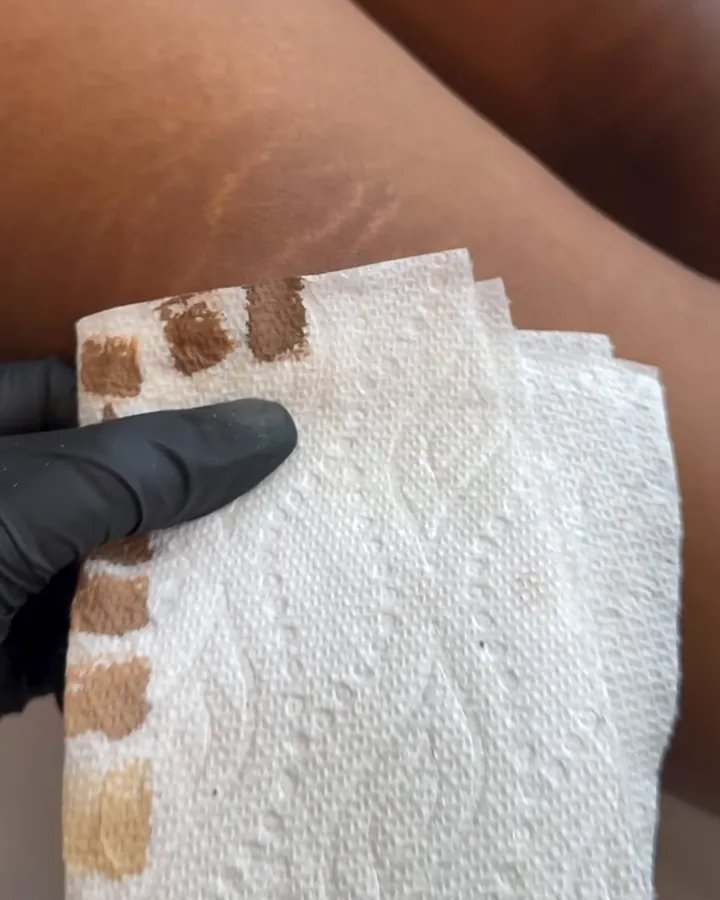
Build, do not buy, the match
No bottle matches a person. Camouflage artists start from a set of skin-tone bases and adjust them with small amounts of warmer, cooler or deeper tones to build each client's formula.
“In the beginning, your portfolio is everything. People need to see your work before they trust you with their skin.”
Evelyn Alvares Vega, SKINEAV Academy
Test on the skin
Swatch your mix on the client's skin beside the area and look at it in neutral daylight. Swatches on paper or towel help you see the mix, but only skin tells the truth. The swatches in the photo on this page are from a real SKINEAV consultation.
Real results and real moments

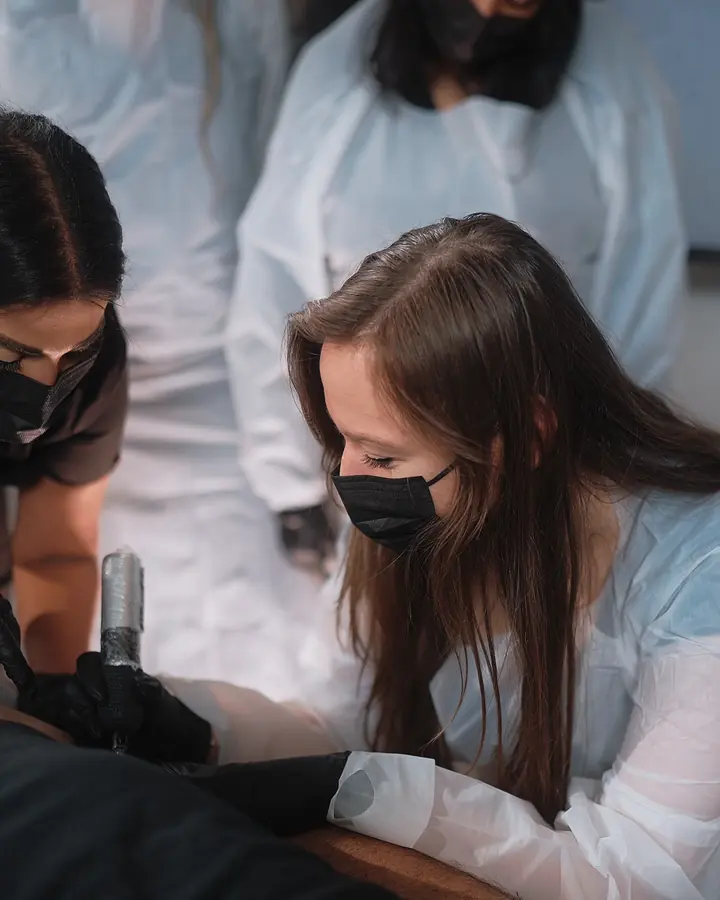
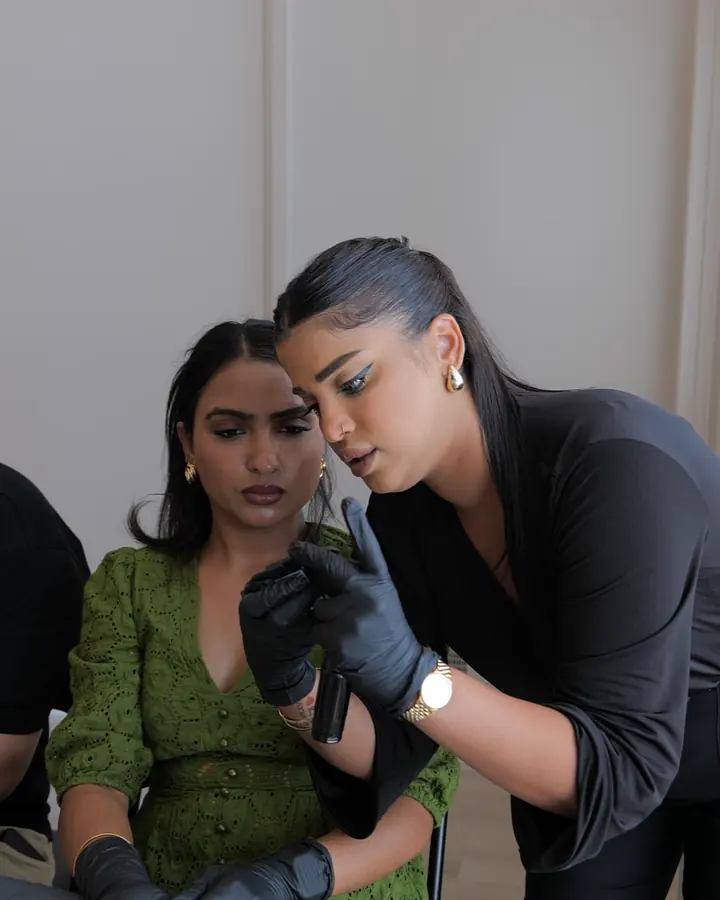
Think about healing
Pigment in the skin heals differently from how it looks fresh. Experience, and reviewing healed results, teaches you how your pigments settle. Keep notes.
How training works
- Free callTalk through your goals, the right format and current offers.
- Reserve your seatIn person in Vaughan or live online via Zoom.
- 3 intensive daysColour theory, technique and supervised practice with Evelyn.
- Six months of mentorshipFeedback on your work while you build your business.
Keep records
For every client: the formula, ratios, needle, machine settings and date. When they come back for a follow-up, you can reproduce or adjust precisely.
| Record | Why |
|---|---|
| Formula and ratios | Reproduce the match at follow-ups |
| Needle and settings | Understand how the result was achieved |
| Photos in the same light | Compare healed results honestly |
Quality and safety
Use pigments intended for cosmetic tattooing from reputable suppliers, and follow your local public health requirements for your setting.
Frequently asked questions
Can I buy a pigment that matches each skin tone?
No single bottle matches a person. Artists build a custom mix from skin-tone bases and test it on the skin.
Why keep pigment records?
So you can reproduce or adjust the exact formula at follow-up sessions.