
Academy · For barbers & SMP
Barbers and SMP artists: expanding into skin camouflage
How barbers, scalp micropigmentation and tattoo artists can expand into scar, stretch mark and vitiligo camouflage: transferable skills, what to learn, and building a new service.
Barbers see scars every day: on scalps, along hairlines, through beards. Scalp micropigmentation (SMP) artists already place pigment with precision to create natural-looking results. Tattoo artists know machines and skin. All three groups have a real head start in paramedical camouflage. This guide explains what transfers, what you need to learn and how camouflage can become a natural extension of your business.
Why camouflage fits your skill set
- Detail work. Fading, line-ups and SMP impressions all train your eye and hand for precision.
- Needle and pigment experience (for SMP and tattoo artists).
- Client trust. People already talk to their barber about things that bother them, including scars.
- A loyal client base who may need, or know someone who needs, camouflage.
What is new
Matching skin, not hair. SMP mimics follicles in dark pigment tones. Camouflage requires custom skin-tone mixes with careful undertone reading, often several mixes across one area.
Body and scar tissue. Stretch marks, surgical scars and burns behave differently from scalp skin. Technique, depth and session planning change.
Assessment and suitability. Knowing which scars are mature, which are not, and when camouflage should not be done at all, including keloids, active vitiligo and unhealed scars.
Expectation setting. Camouflage softens contrast rather than erasing. Honest communication is essential.
Scalp and hairline scars
Scalp scars, such as those from hair transplant procedures or injuries, are a natural crossover between SMP and camouflage. Depending on the scar and the hair around it, an SMP approach, a skin-tone camouflage approach, or a combination may be appropriate. Learning both helps you choose wisely.
Building the service
- Start with your existing clients. Let them know you are training in camouflage, and offer a few reduced-rate portfolio treatments with photo permission.
- Show healed results, and tell clients' stories with consent.
- Name the service clearly so people can find it: scar camouflage, stretch mark camouflage.
- Partner locally with clinics and surgeons who see post-surgical scars.
- Collect Google reviews after every happy client.
Compliance
If you add needle-based services in Ontario, personal service setting rules, public health inspection and infection prevention requirements apply. Barbershops adding tattooing services should check with their local public health unit before starting. See paramedical tattoo rules in Ontario.
Choosing the right training
Look for a course that covers colour theory for skin, scar assessment, body technique, hygiene and the business side, with supervised live-model practice and support afterwards. See how to choose a paramedical tattoo course.
SKINEAV Academy welcomes barbers and SMP artists. Evelyn holds certifications in camouflage, PMU and SMP, and has more than 10 years in paramedical tattooing. Courses run over 3 intensive days, about 5–7 hours each, as 1:1 private training, small groups of up to 5, or a Masterclass, in person in Vaughan or online via Zoom. SKINEAV also teaches an SMP course; ask for format and dates.
What you leave with
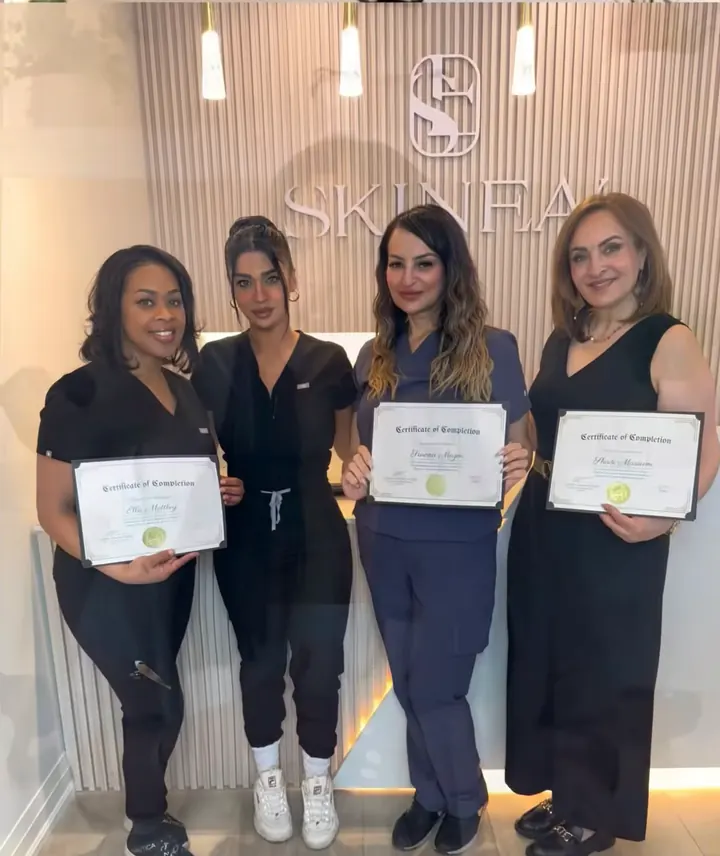
- SKINEAV certification.
- All the equipment you need to start.
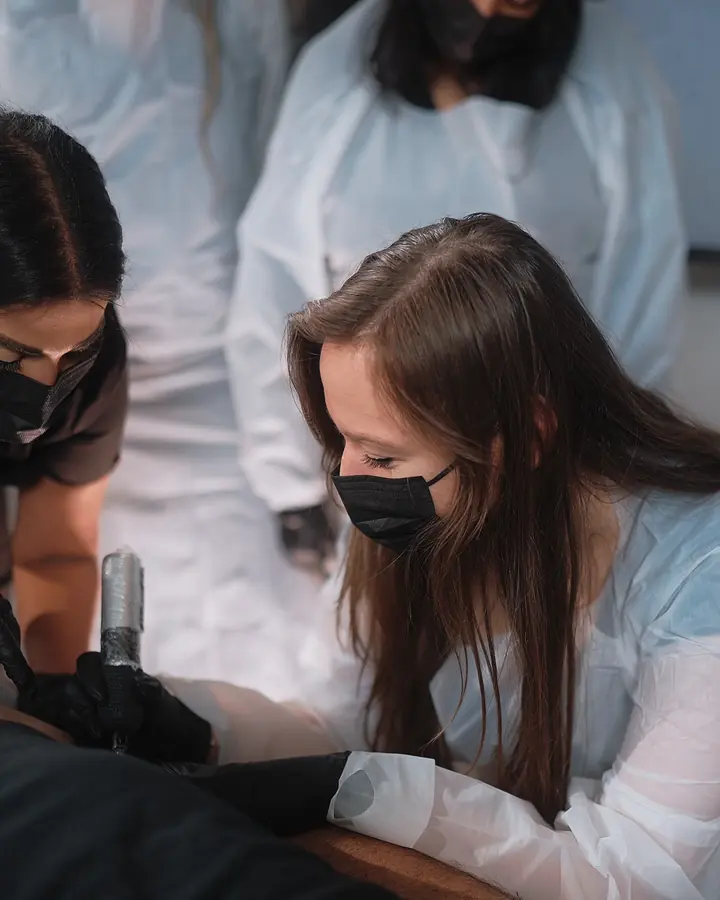
- Supervised practice on real live models (in-person courses).
- Marketing basics for getting your first clients.
- Six months of mentorship after the course.
Is it worth it?
For many barbers and SMP artists, camouflage adds depth to their craft and a service clients actively search for. Like any new service, it takes time to build a portfolio and reputation. The reward is work that can genuinely change how someone feels.
A natural service ladder
For barbers and SMP artists, camouflage can be part of a natural ladder of services:
- Hair and grooming, where clients already trust you.
- SMP, for hair density and scalp scars.
- Scar and skin camouflage, for scars and marks beyond the scalp.
Each step builds on the last and lets you serve existing clients more fully.
Talking with clients about scars
Many clients mention scars casually in the chair. Listening without judgement, and offering information only when they want it, builds trust. A simple line like "I've been training in scar camouflage if you ever want to talk about it" can open the door without pressure.
Keeping services separate
If you run a barbershop, keep needle-based services in an appropriate, compliant space with proper infection control, separate from general grooming areas, as your public health unit requires.
What barbers often find easiest and hardest
Easiest: steady hands, an eye for symmetry, building rapport, and making clients feel at ease.
Hardest: custom skin-tone mixing, reading undertones, and accepting that results are built over several sessions rather than in one visit.
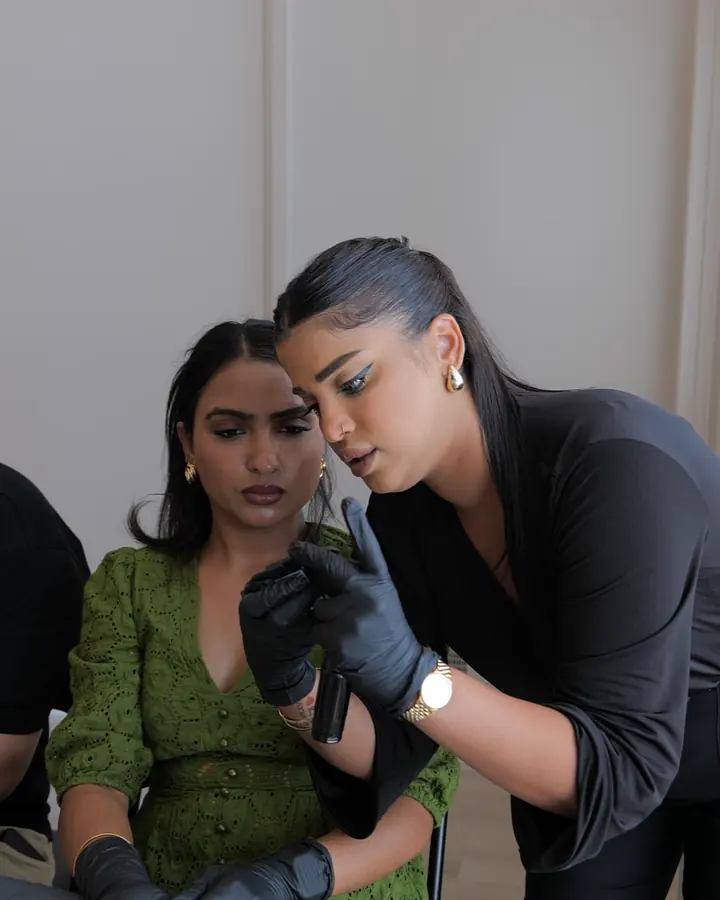
What helps: small-group or 1:1 training where colour can be practised repeatedly, plus mentorship for the first real cases.
A word for tattoo artists
Traditional tattoo artists bring excellent machine skills, but camouflage often asks you to work more lightly, with more restraint, and with colours that should disappear rather than stand out. Many find that this shift sharpens their work in general.
Growing slowly and well
You do not need to launch with a full camouflage menu. Many artists start with one area, such as stretch marks on the abdomen, and expand as their portfolio grows.
Next step
See the camouflage courses, download the free career guide, or text 647-492-4584 to ask which format fits your background.
Frequently asked questions
Can barbers learn camouflage tattooing?
Yes. Detail skills transfer, and courses like SKINEAV's welcome barbers, with full training on pigment, skin and hygiene.
How is SMP different from scar camouflage?
SMP mimics hair follicles with dark tones; camouflage matches skin tone with custom mixes to soften scars and marks.
Can scalp scars be camouflaged?
Often, using SMP, skin-tone camouflage or a combination, depending on the scar and surrounding hair.
Do I need public health approval to add tattooing to a barbershop?
In Ontario, needle-based services fall under personal service setting rules. Check with your local public health unit first.
Does SKINEAV teach SMP too?
Yes, SKINEAV Academy also offers an SMP course. Ask for format and dates.
“In the beginning, your portfolio is everything. People need to see your work before they trust you with their skin.”
Evelyn Alvares Vega, SKINEAV Academy
Real results and real moments
How training works
- Free callTalk through your goals, the right format and current offers.
- Reserve your seatIn person in Vaughan or live online via Zoom.
- 3 intensive daysColour theory, technique and supervised practice with Evelyn.
- Six months of mentorshipFeedback on your work while you build your business.