
Vitiligo · Seasons
Vitiligo camouflage through summer and winter
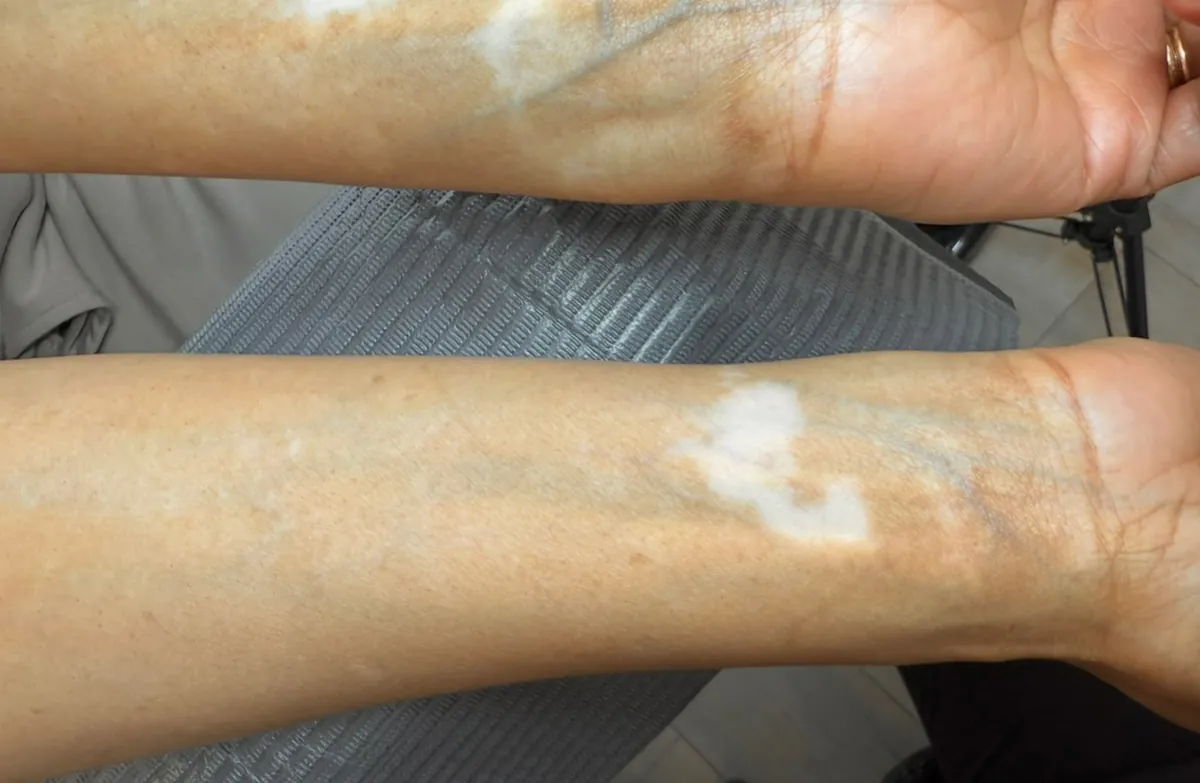
Vitiligo patches do not tan. The skin around them does. That seasonal gap shapes every vitiligo camouflage plan.
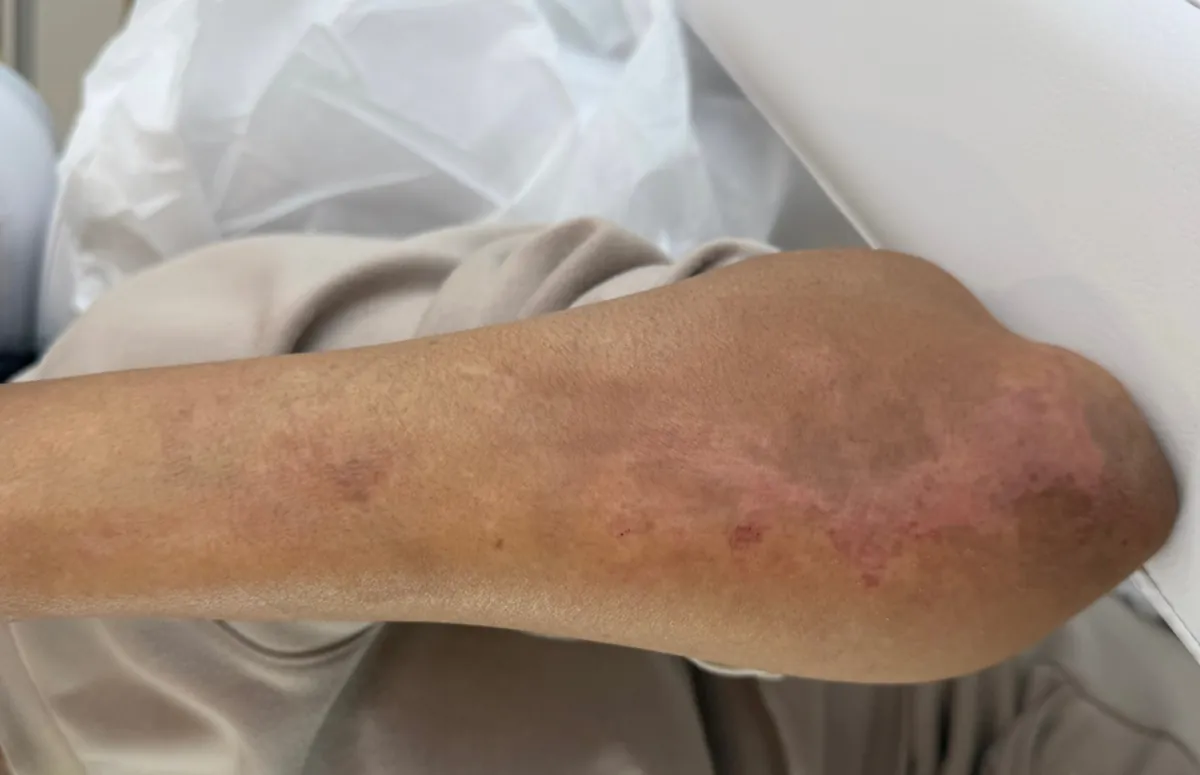
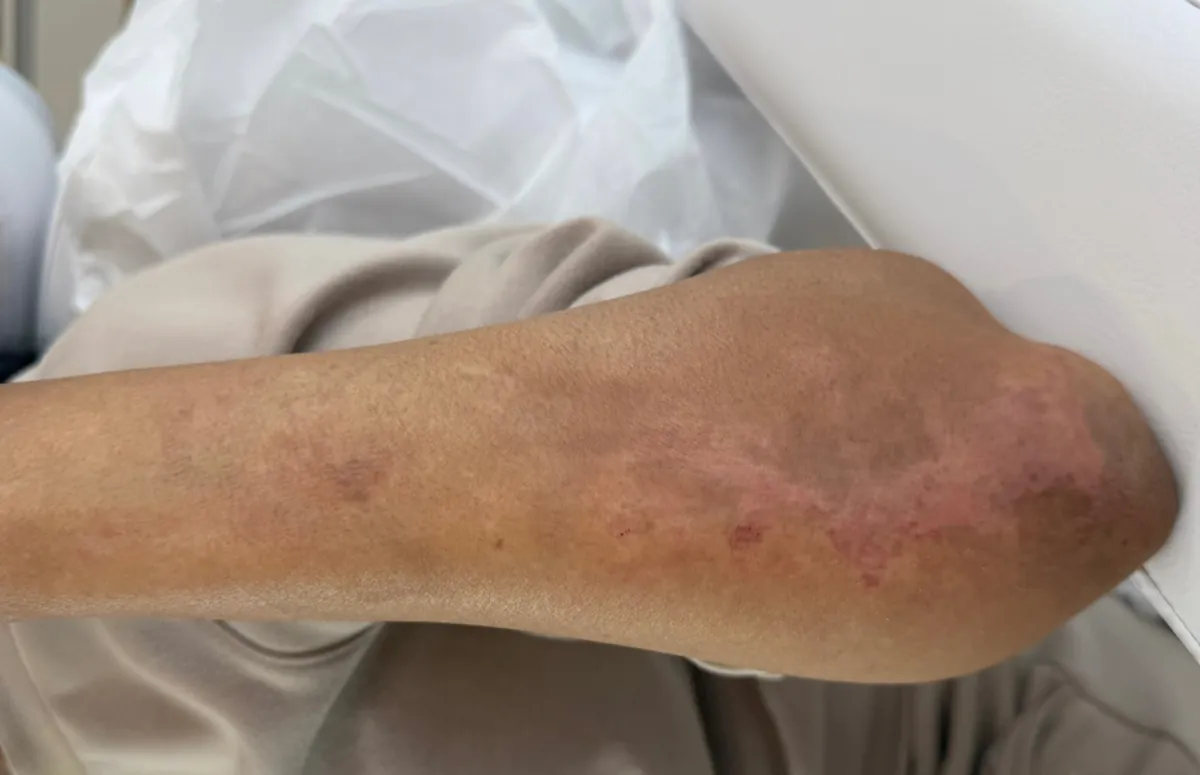
Many people with vitiligo notice their patches far more in summer. The surrounding skin darkens with the sun while the patches stay light, so the contrast grows.
What this means for camouflage
Camouflage pigment does not tan either. If I match your summer skin, the area may look darker than your skin in winter. If I match your winter skin, it may look lighter in summer. We talk about which season matters most to you, and how much your skin changes.
“We don’t fix texture, we fix color.”
Evelyn Alvares Vega, founder of SKINEAV
Practical habits
- Use sun protection on the patches and the surrounding skin
- Cover up during long days outside
- Avoid tanning beds
- Keeping the surrounding skin from tanning strongly keeps the contrast smaller year-round
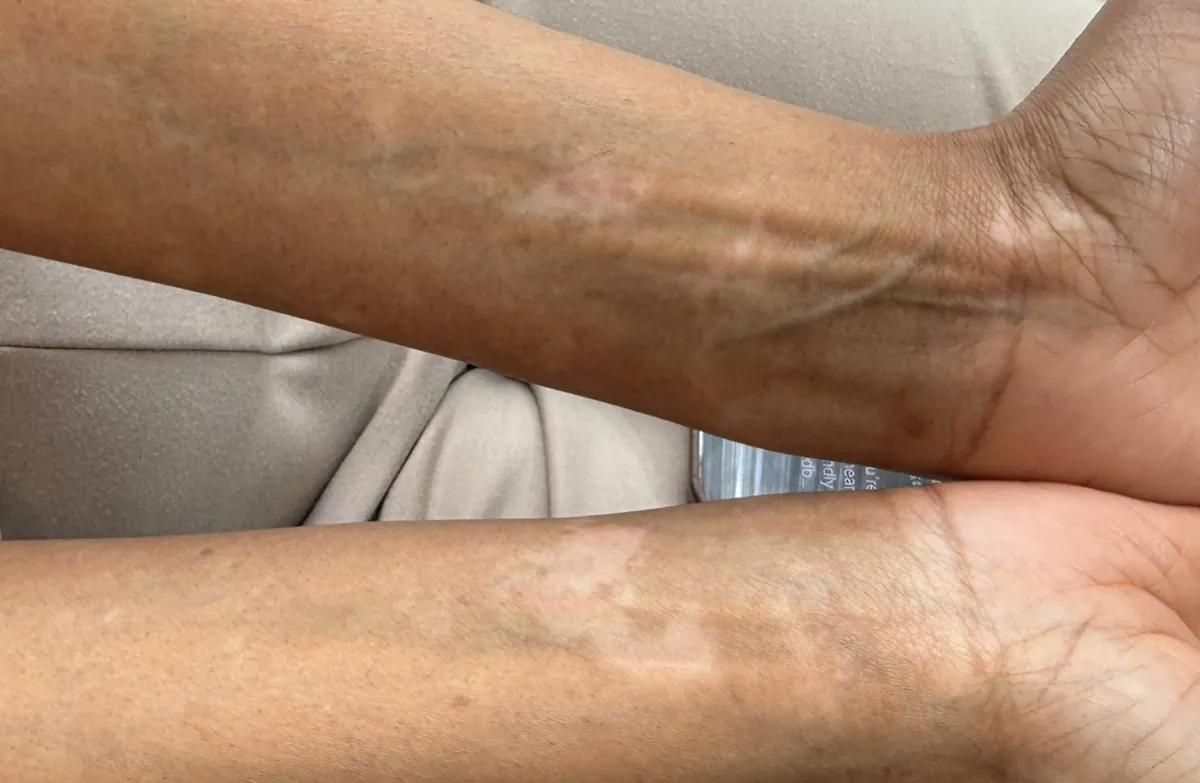
Real results and real moments
Timing your sessions
Many clients prefer autumn or winter for treatment, so the area heals away from strong sun.
How it works at SKINEAV
- Photo or callSend a photo or book a free phone consult. Honest first answer.
- Assessment & colour testIn clinic, Evelyn checks your skin and tests a custom formula.
- TreatmentPigment placed precisely, only where it is needed, one-on-one.
- Heal & reviewThe colour settles over weeks; follow-ups are planned if needed.
Your dermatologist
Ask your dermatologist about sun protection for your vitiligo and any treatment they recommend. Camouflage is cosmetic.
Frequently asked questions
Why does my vitiligo show more in summer?
The skin around the patches tans while the patches do not, so the contrast grows.
Which season should my camouflage match?
It depends on how much your skin changes and which season matters most to you. This is discussed at consultation.