
Skin colour · White patches · Diagnosis first
Tinea versicolor or vitiligo? Why a diagnosis comes first
Pale patches on the chest, back, shoulders or neck are often assumed to be vitiligo, but a very common, treatable condition called tinea versicolor (pityriasis versicolor) can look similar. Other causes exist too. Here is why getting the right diagnosis matters before you think about covering anything.
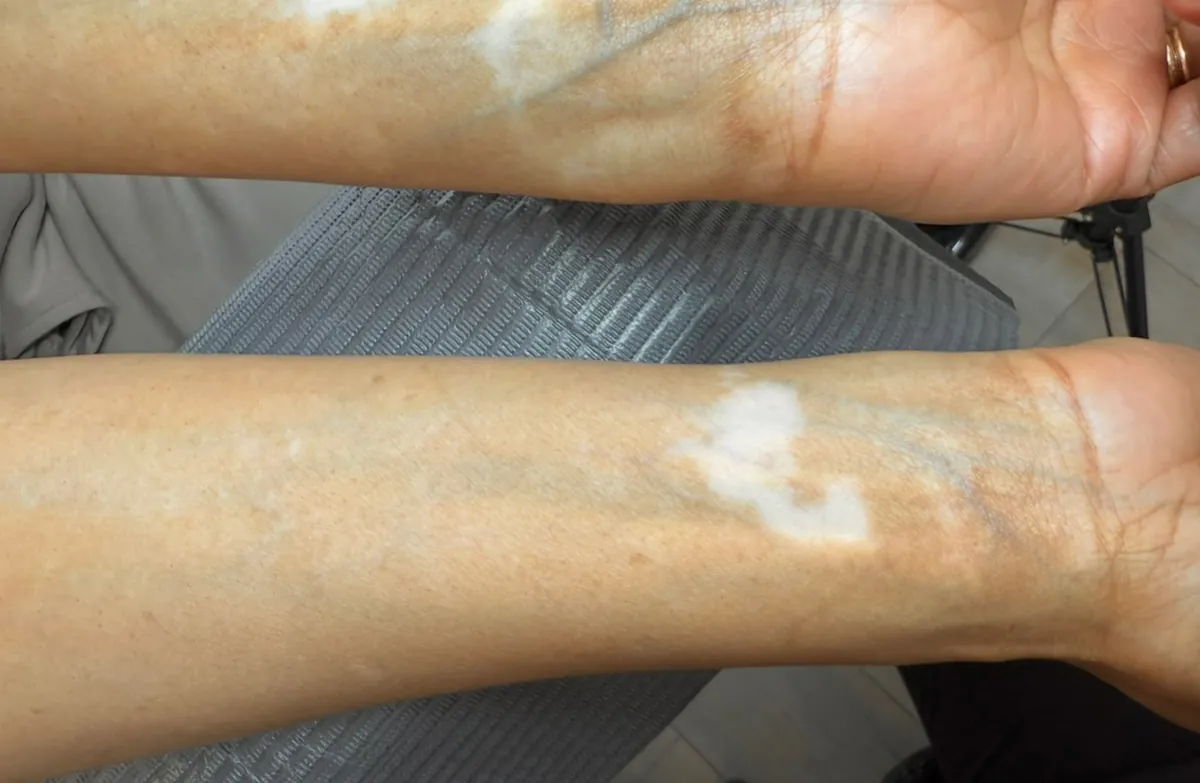
Two different conditions
Tinea versicolor is caused by an overgrowth of a yeast that normally lives on the skin. It often causes lighter (or sometimes darker or pinkish) patches, usually on the chest, back and upper arms, frequently with a fine scale, and it tends to show more after sun exposure or in warm, humid weather. A doctor can usually treat it.
Vitiligo is the loss of pigment cells in patches of skin. Patches are often very white, well defined, and common on the face, hands, around body openings and over joints. It is not infectious and has different treatment options.
Other things, such as pityriasis alba, post-inflammatory hypopigmentation after eczema, or scarring, can also cause pale patches. Only a doctor or dermatologist can tell you which you have.
Why it matters for cover
If it is tinea versicolor, treatment may allow your colour to return over time, and camouflage would be the wrong choice. If it is vitiligo, the next question is stability, and treatment may help too. Placing pigment into skin with an undiagnosed condition is never appropriate, and SKINEAV does not diagnose skin conditions.
Real results and real moments
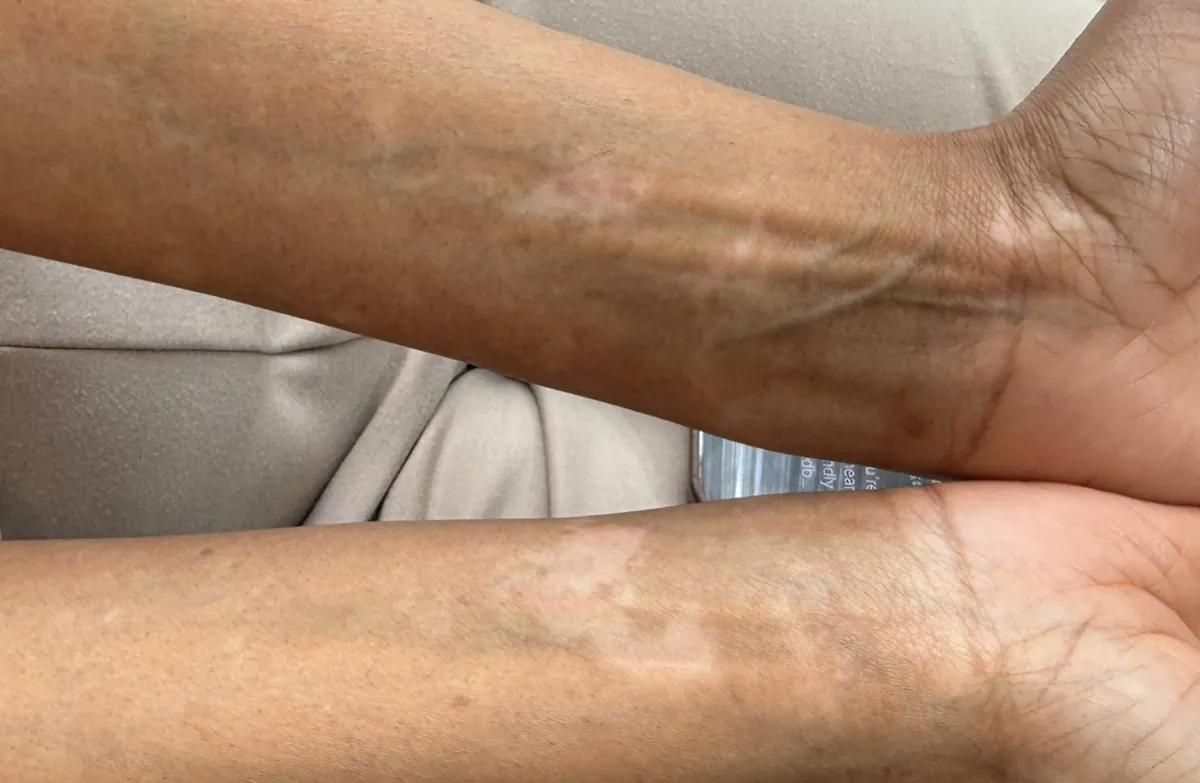
Covering patches while you wait
Until you have a diagnosis, use makeup only, not anything permanent. A body concealer matched to your surrounding skin, applied thinly and set, works well on the chest and shoulders. Avoid heavy scrubs or harsh products on the area. Sun protection keeps tanned skin from contrasting more with pale patches.
If it is confirmed vitiligo
Once a dermatologist confirms vitiligo and it has been stable for a long time, vitiligo camouflage is one option for patches that still bother you. See is my vitiligo stable? for the signs Evelyn looks for, and melasma vs vitiligo for another common mix-up.
How it works at SKINEAV
- Photo or callSend a photo or book a free phone consult. Honest first answer.
- Assessment & colour testIn clinic, Evelyn checks your skin and tests a custom formula.
- TreatmentPigment placed precisely, only where it is needed, one-on-one.
- Heal & reviewThe colour settles over weeks; follow-ups are planned if needed.
What Evelyn will ask
At a free phone consult, expect questions such as: has a doctor looked at the patches, what did they call it, and how long has it looked the same? If you do not have a diagnosis yet, the honest advice will be to get one first.
Your next step
Ready to talk? Call 437-475-2757 for a free phone consult with Evelyn, or send a photo for a free assessment. Visits are by appointment at the clinic in Vaughan (36 Bessemer Ct, Unit 1).
Frequently asked questions
Can tinea versicolor be mistaken for vitiligo?
Yes, both can cause light patches. A doctor can usually tell the difference, sometimes with a simple skin test.
Does tinea versicolor come back?
It can recur, especially in warm weather. Your doctor can advise on treatment and prevention.
Can you tell me which one I have from a photo?
No. SKINEAV does not diagnose skin conditions. Please see a doctor or dermatologist.
How do I find out if camouflage suits my vitiligo?
Call 437-475-2757 for a free phone consult with Evelyn, or send photos through the free assessment page. Expect questions about how long your patches have been stable and what your dermatologist has said.