
How-to · Stitch & staple marks
Stitch marks on a scar: how to soften the “railroad track” look
Sometimes the line of a surgical or injury scar has faded nicely, but the little dots or cross-hatches from stitches or staples still stand out. People often call this a railroad-track or ladder scar. Here is why it happens and what can help.
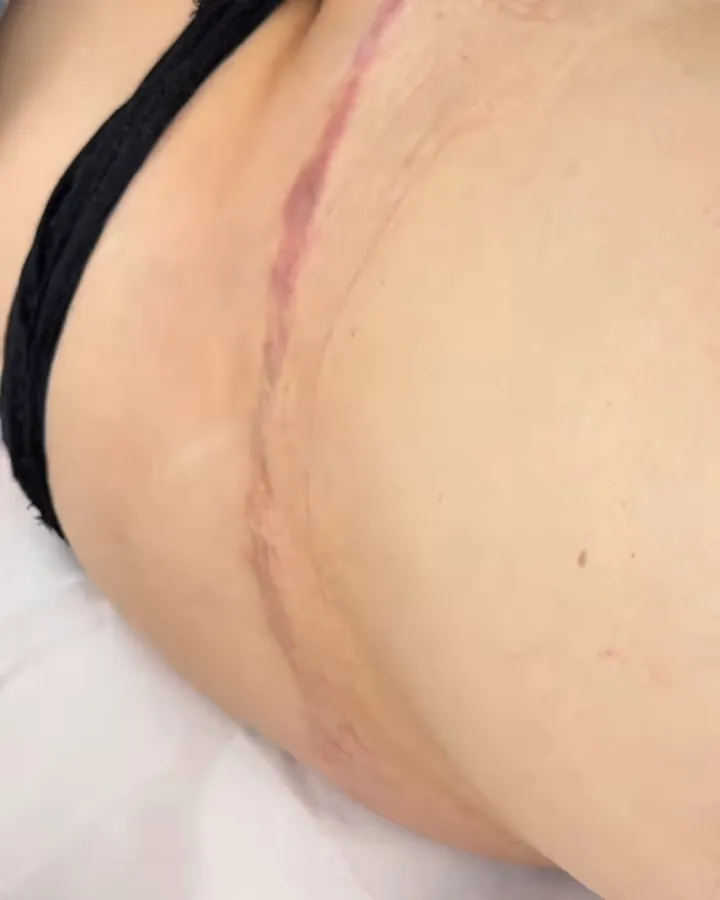
Why stitch marks stay visible
Stitches and staples pass through the skin on both sides of a wound. If they stayed in a while, the skin was under tension, or the area healed with inflammation, each entry point can leave a tiny scar of its own. Over time these dots usually become paler than the skin, and the regular pattern is what draws the eye, more than any single mark.
Common places include knees, abdomen, the back of the head, the chest and the forearm after an injury.
Makeup: working with tiny dots
Full coverage over the whole line can look heavy. Instead, use a fine brush to place a skin-matched concealer only on the pale dots, then lightly blend the edges. Breaking up the pattern is the goal. Set with a translucent powder. On the body, waterproof formulas last longer.
Real results and real moments
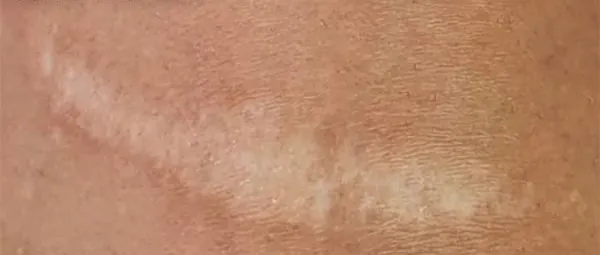
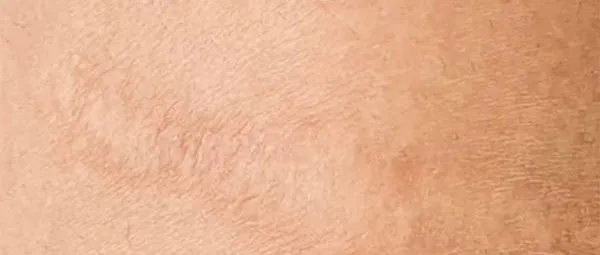
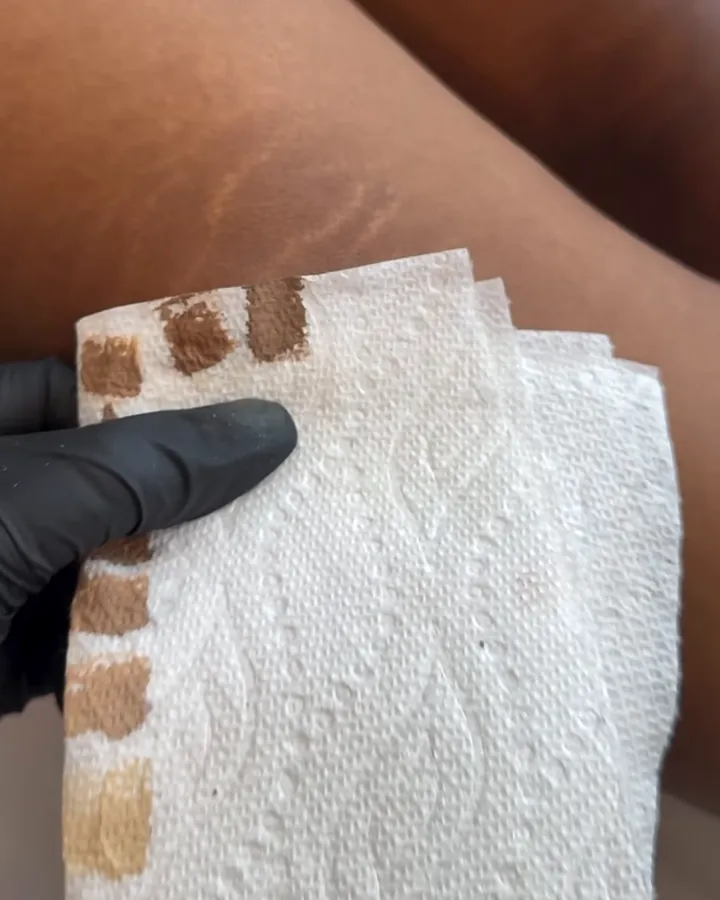
How camouflage approaches stitch marks
Because stitch marks are often small, flat and pale, they can be a good fit for colour matching once the scar is fully mature. With scar camouflage, Evelyn places skin-tone pigment into the light dots and along any pale line so the pattern blends toward the surrounding skin. It does not erase the marks, and if any dots are raised or indented that texture will remain. Results vary, and a follow-up session is common to fine-tune colour once it has healed.
If the main scar is still pink, raised or tender, it is not ready yet.
Other options to know about
If the marks are wide or raised, a dermatologist or plastic surgeon can discuss medical options such as revision, silicone treatment or laser. Some people use those first and camouflage only the colour difference afterwards. See camouflage vs laser for how these choices compare.
How it works at SKINEAV
- Photo or callSend a photo or book a free phone consult. Honest first answer.
- Assessment & colour testIn clinic, Evelyn checks your skin and tests a custom formula.
- TreatmentPigment placed precisely, only where it is needed, one-on-one.
- Heal & reviewThe colour settles over weeks; follow-ups are planned if needed.
What a session is like
Evelyn maps the dots and the line first, then works dot by dot with a fine needle configuration so the pattern breaks up. Small areas are often done in one appointment, with a follow-up to adjust any dots that healed lighter or darker. Expect redness along the line for a day or two. The realistic result is a scar that reads as one soft line rather than a ladder.
Your next step
Ready to talk? Call 437-475-2757 for a free phone consult with Evelyn, or send a photo for a free assessment. Visits are by appointment at the clinic in Vaughan (36 Bessemer Ct, Unit 1).
Frequently asked questions
My scar line has faded but the dots haven’t. Is that normal?
Yes, it is very common. The dots are small scars from the stitch or staple holes and often stay paler than the line.
Can camouflage hide stitch marks completely?
It can blend their colour so they are less noticeable, but it does not erase them. Texture and how they catch the light can remain.
Are staple marks different from stitch marks?
They look a little different, but the approach is similar: pale, flat, mature marks may suit colour matching.
How do I find out if my scar is suitable?
Call 437-475-2757 for a free phone consult with Evelyn, or send clear daylight photos through the free assessment page. You will get an honest answer, including “not yet” or “this is not a good fit” when that is the truth.