
Academy · Technique
How to practise colour matching
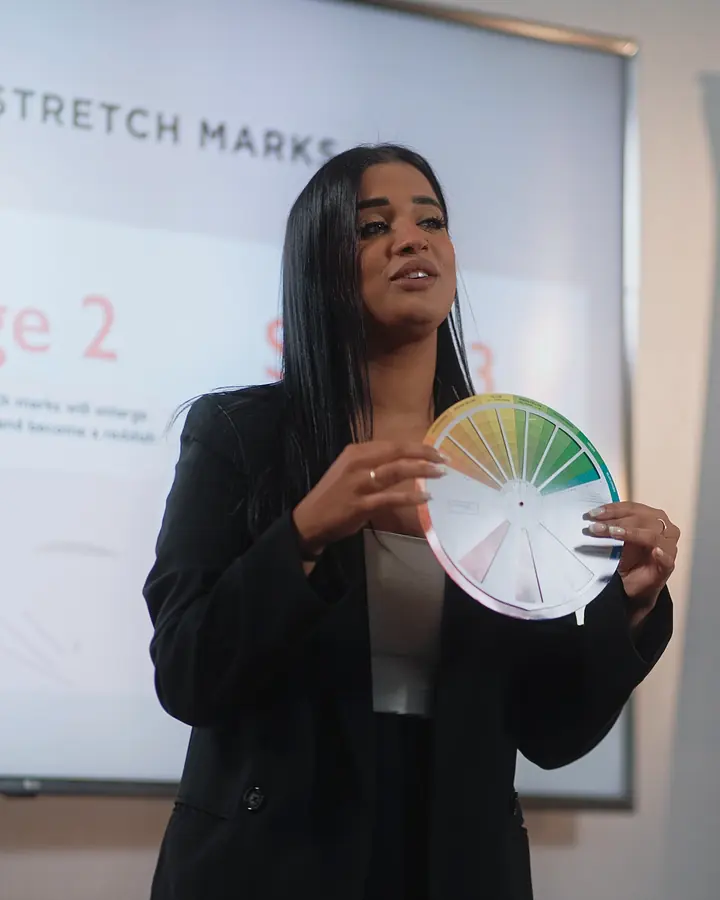
Colour matching is the skill clients notice most. It improves with deliberate, recorded practice.
A practice routine
- 1. Read the undertone in daylight: warm, cool or neutral.
- 2. Mix two or three test swatches and record the exact ratios.
- 3. Compare in daylight, never under warm lamps.
- 4. Record everything: formula, area, lighting, photo.
- 5. Review healed colour. Healed colour is the real test.
- 6. Adjust the next formula from what the healed result tells you.
“In the beginning, your portfolio is everything. People need to see your work before they trust you with their skin.”
Evelyn Alvares Vega, SKINEAV Academy
Build a swatch library
Keep a notebook or digital library of formulas with photos. Over time this becomes your most valuable tool.
Real results and real moments
Common traps
- Matching under warm indoor light
- Ignoring that skin varies around a scar
- Judging fresh colour instead of healed colour
See colour theory for camouflage artists.
How training works
- Free callTalk through your goals, the right format and current offers.
- Reserve your seatIn person in Vaughan or live online via Zoom.
- 3 intensive daysColour theory, technique and supervised practice with Evelyn.
- Six months of mentorshipFeedback on your work while you build your business.
Frequently asked questions
What is the best light for colour matching?
Natural daylight. Warm indoor lamps distort colour.
Why record colour formulas?
So you can compare them with healed results and refine the next formula.