
Academy · Formats
Online vs in-person camouflage training
Should you learn scar and stretch mark camouflage online or in person? What each format does well, where each falls short, and how to get supervised practice either way.
"Can I learn camouflage online?" is one of the most common questions we get from future students, especially from outside the GTA. The honest answer: you can learn a great deal online, but hands-on skill needs real, supervised practice. The best choice depends on where you live, your experience and how you learn. This guide compares the two formats so you can decide.
What online training does well
- Flexibility. Learn from home, anywhere in Canada or beyond, without travel or accommodation.
- Theory. Skin anatomy, scar types, colour theory, contraindications and business topics translate well to video and live calls.
- Replay and pace. Recorded material can be reviewed as often as you need.
- Live feedback via camera. On live Zoom sessions, an educator can watch your setup and hand position and correct you in real time.
Where online training falls short
- Touch and feel. It is harder to judge needle depth, skin tension and tissue resistance through a screen.
- Live models. You may need to source your own model and work without someone physically beside you.
- Colour in real light. Screens and cameras alter colour, which matters a great deal in camouflage.
- Immediate correction. An educator in the room can guide your hand in the moment.
What in-person training does well
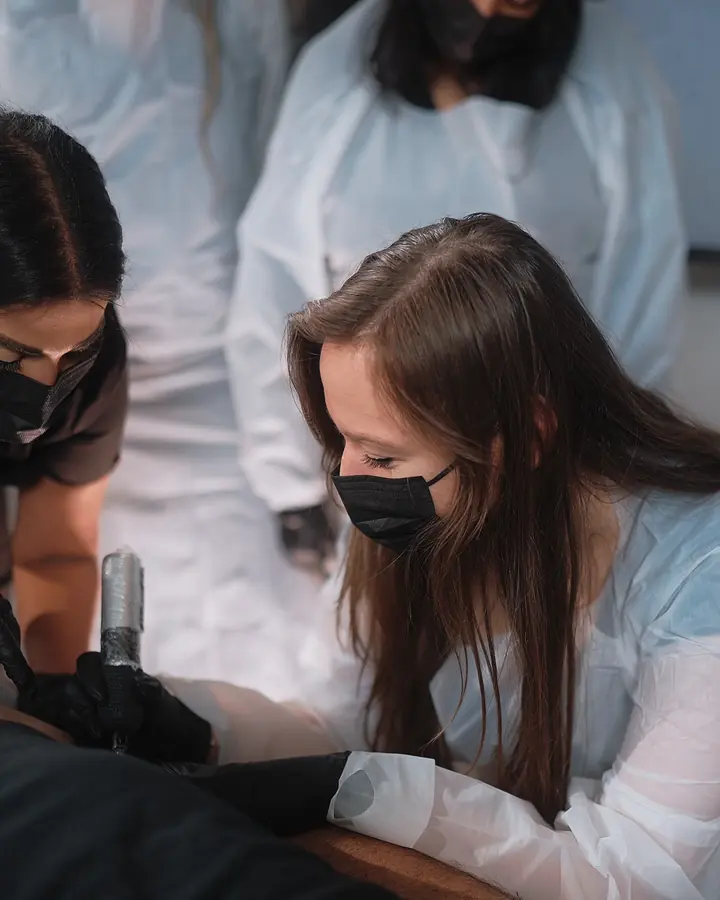
- Supervised live-model practice. Working on real skin with the educator beside you builds confidence faster.
- Real-light colour work. Mixing and testing pigment in natural-like clinic light.
- Hands-on correction. Angle, depth and stretch adjusted as you work.
- Clinic workflow. Seeing how consultation, setup, treatment and aftercare flow in a working clinic.
- Community. Learning alongside a small group can be motivating.
Where in-person falls short
- Travel time and cost for those outside the area.
- Fixed dates that may not suit every schedule.
Hybrid approaches
Many students combine both: theory online, then in-person practice. Or they train online first and arrange supervised practice or mentorship afterwards. What matters is that, one way or another, you get real feedback on real skin before you work on paying clients.
Questions to ask about any online course
- Is it live with an educator, or only recorded?
- How will my practical work be checked?
- Will I work on a live model, and who supervises?
- How is colour judged through the camera?
- What support do I get after?
How SKINEAV Academy approaches it
SKINEAV courses run in person in Vaughan or online via Zoom, over 3 intensive days, about 5–7 hours each. In-person courses include supervised, hands-on practice on real live models. Formats include 1:1 private training, small groups of up to 5, and a Masterclass. Whichever you choose, you receive SKINEAV certification, the equipment you need to start, and six months of mentorship after the course, which is especially valuable for online students working on their first clients.
Travelling to Vaughan for training
The SKINEAV clinic is at 36 Bessemer Ct Unit 1, Vaughan, ON L4K 3C9, with free parking, close to Highways 400, 407 and 7, and reachable from across the GTA. Students from further away often choose the 1:1 format to fit training into a focused trip.
Which should you choose?
- Complete beginner, within reach of the GTA: in-person, ideally small-group or 1:1.
- Experienced PMU or tattoo artist far away: online may work well, with mentorship for your first cases.
- Busy parent or full-time worker: whichever format lets you focus fully during training days; 1:1 offers schedule flexibility.
Read how to choose a paramedical tattoo course for a complete checklist.
Getting the most from an online course
- Set up a proper space with good lighting and a stable camera angle so your educator can see your hands clearly.
- Use daylight-balanced lighting to reduce colour distortion.
- Block out the time fully, as you would for in-person training.
- Prepare your model and materials in advance.
- Record your practice where permitted, so you can review technique later.
Getting the most from an in-person course
- Arrive rested and ready for long, focused days.
- Ask questions constantly. Small groups exist for this reason.
- Take notes on colour mixes and settings for each skin type you see.
- Photograph your work (with permission) to start your portfolio.
After either format
Keep practising regularly, choose your first clients carefully and use your mentorship time. The six months after training are when most of your real-world learning happens.
Common concerns from future students
"I live far from Vaughan." Online via Zoom is available, and some students travel for a focused 1:1 format.
"I've never held a machine." Beginners are welcome. Practice skin and supervised live-model work build your confidence step by step.
"I'm worried about falling behind in a group." Groups are capped at five so nobody is left behind.
"What if I have questions months later?" Six months of mentorship after the course is included, with extra time when you need it.
How to decide quickly
If you can travel to Vaughan for three days and you are a beginner, in-person is usually the stronger choice. If travel is not realistic, or you already have strong needle skills, online can work well with mentorship. If you are unsure, a free call is the easiest way to talk it through.
Next step
See the camouflage courses, get the free career guide, or text 647-492-4584 to talk through which format suits you. Investment, dates and payment options are explained on a free call. Courses start from $1,999, depending on the format and length. The in-person scar camouflage course runs 3 days in small groups of up to 5. Ask about current offers.
Frequently asked questions
Can you learn camouflage tattooing online?
You can learn theory and get live feedback online, but supervised practice on real skin is essential before working on clients.
Does SKINEAV offer online courses?
Yes. Courses run in person in Vaughan or online via Zoom.
Do in-person courses include live models?
Yes. SKINEAV's in-person courses include supervised, hands-on practice on real clients.
Is mentorship included for online students?
Yes. Every format includes six months of mentorship after the course.
How long are the courses?
3 intensive days, about 5–7 hours each.
“In the beginning, your portfolio is everything. People need to see your work before they trust you with their skin.”
Evelyn Alvares Vega, SKINEAV Academy
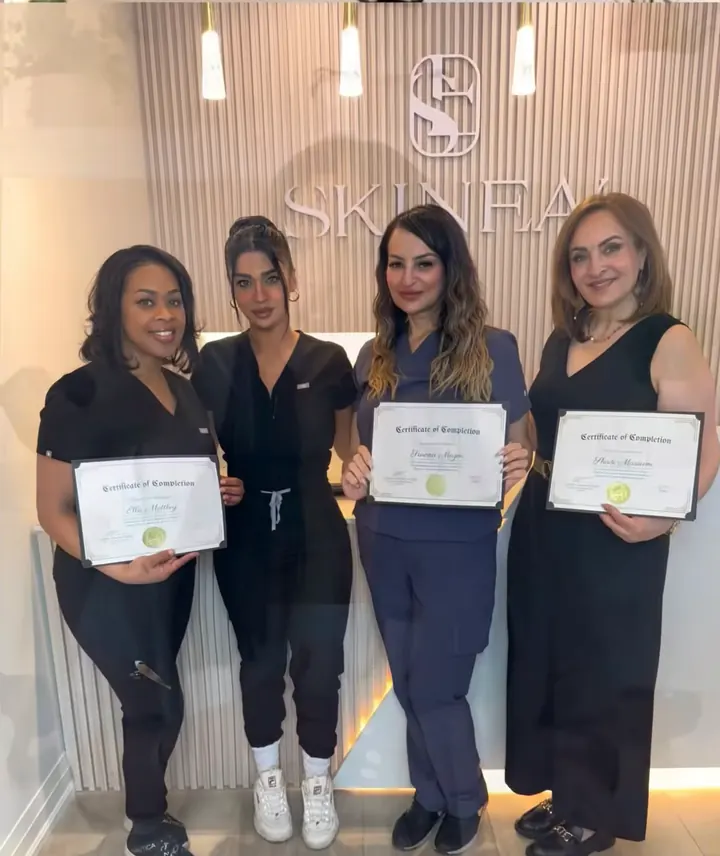
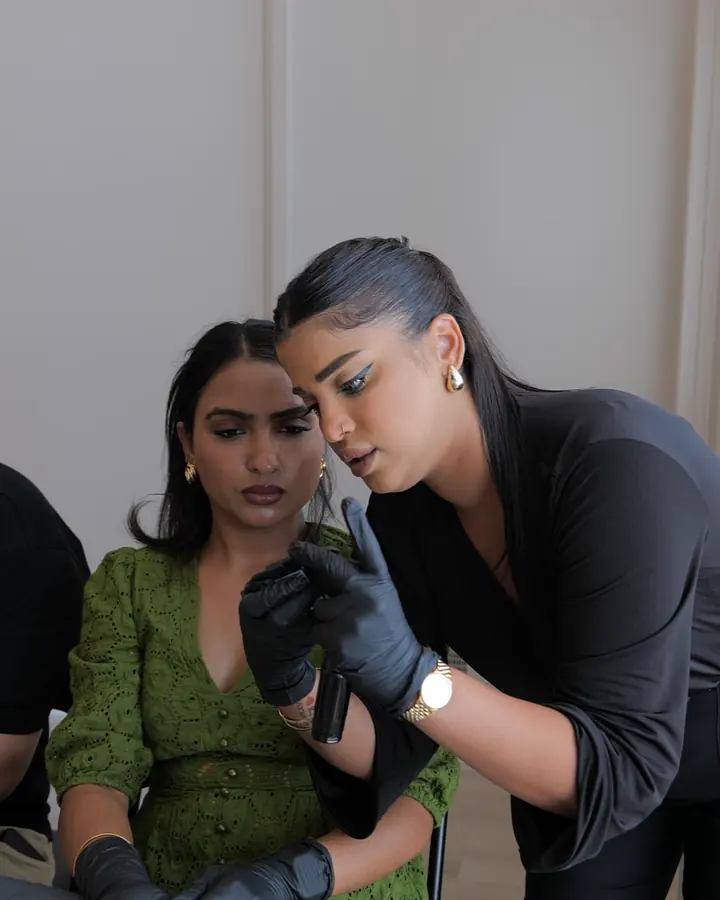
Real results and real moments
How training works
- Free callTalk through your goals, the right format and current offers.
- Reserve your seatIn person in Vaughan or live online via Zoom.
- 3 intensive daysColour theory, technique and supervised practice with Evelyn.
- Six months of mentorshipFeedback on your work while you build your business.