
Scars · Skin science
Hypopigmented scars: why scars turn white
A pale scar is the most common reason people look into camouflage. Understanding why it is pale explains why camouflage can help.
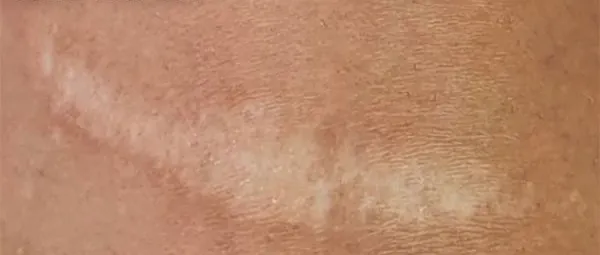
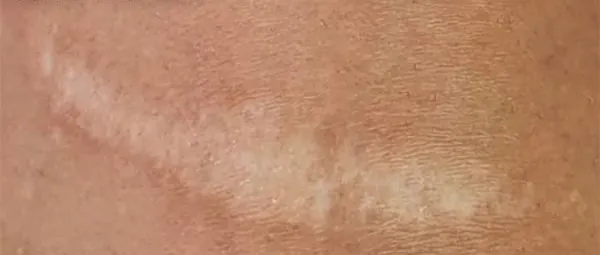
"Hypopigmented" simply means lighter than the surrounding skin. Many mature scars end up that way, and on medium and deeper skin tones the contrast can be striking.
Why it happens
Skin colour comes from pigment made by cells in the skin. When skin is injured deeply, the tissue that replaces it is scar tissue, which is structured differently. It often produces less pigment than normal skin, so as the scar matures and its early redness fades, it can end up paler than everything around it. Tanning makes the contrast even stronger, because the skin around the scar darkens and the scar often does not.
“We don’t fix texture, we fix color.”
Evelyn Alvares Vega, founder of SKINEAV
Will it darken on its own?
Some scars change colour over a long period, especially in the first year or more. Once a scar has been pale and stable for a long time, it is unlikely to fill in with colour by itself. That is the point where camouflage becomes an option.
Real results and real moments
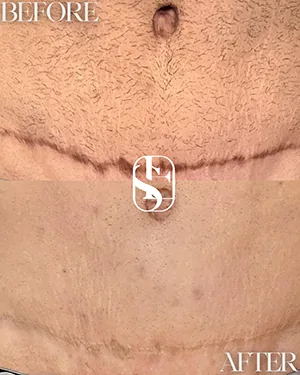
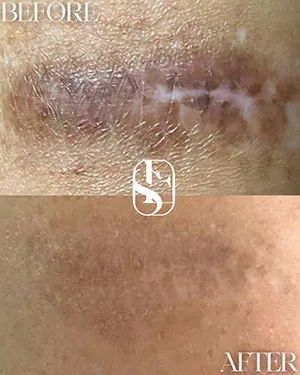
How camouflage helps
Camouflage tattooing places a pigment mixed for your skin into the scar. The aim is not to paint over the scar but to replace the missing colour so the eye stops picking it out. Because skin is never one flat colour, the formula is built around your undertone and tested on your skin first. See how skin colour matching works.
How it works at SKINEAV
- Photo or callSend a photo or book a free phone consult. Honest first answer.
- Assessment & colour testIn clinic, Evelyn checks your skin and tests a custom formula.
- TreatmentPigment placed precisely, only where it is needed, one-on-one.
- Heal & reviewThe colour settles over weeks; follow-ups are planned if needed.
What affects the result
- Texture: flat scars blend better than raised or dented ones
- Sun: the surrounding skin changes with tanning; the pigment does not
- Scar tissue: it can hold pigment unevenly, so follow-up sessions are common
Darker scars are a different case
Hyperpigmented scars, darker than the skin, are harder to improve with pigment and are assessed individually. See hyperpigmentation and stain camouflage.
Frequently asked questions
Why is my scar white?
Mature scar tissue often makes less pigment than normal skin, so it can heal paler than the skin around it.
Does tanning help a white scar?
Usually not. Tanning tends to darken the skin around the scar, which increases the contrast.