
Scars · Abdomen · After transplant
Liver transplant scars: options once you’re fully recovered
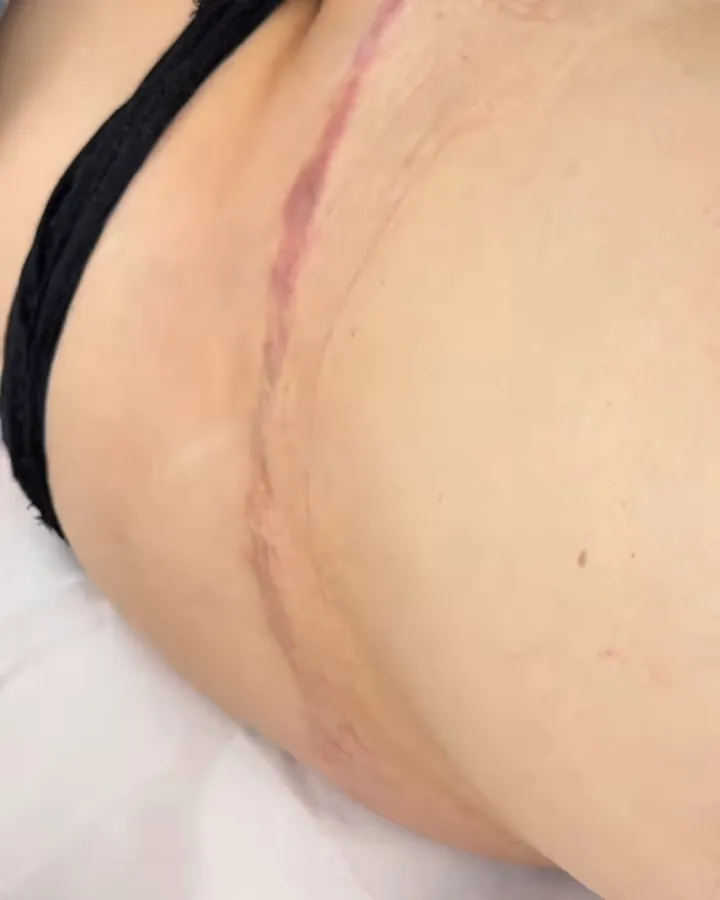
A liver transplant usually leaves a large scar across the upper abdomen, often a curved line or a shape sometimes described as a “Mercedes” or chevron. Many recipients see it as a symbol of a second chance. Some still want it less visible at the beach or the gym. Here is an honest guide.
Your transplant team comes first
Recipients take immunosuppressant (anti-rejection) medicines, which affect healing and raise infection risk. Before any cosmetic needle work, including camouflage, please talk to your transplant team and get their go-ahead. Evelyn will ask about your medications and recovery at consult, and if there is any doubt, the answer will be to wait.
What these scars are often like
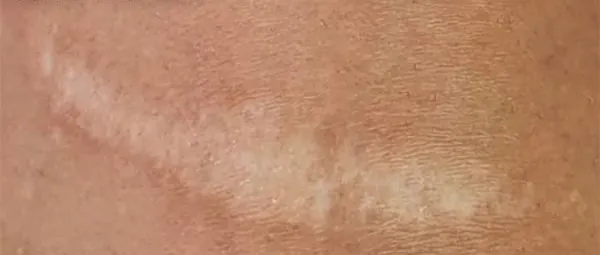
Large abdominal scars can be wide in places, raised in others, and paler or darker than the surrounding skin. There may also be smaller scars from drains. The skin around the scar can be numb for a long time. Colour work only addresses colour, so it helps to know whether colour or texture is what bothers you most.
Real results and real moments
Covering it day to day
One-piece swimsuits, rash guards and high-waisted swimwear cover most of the area. For photos, a waterproof body concealer can soften pale or pink sections, though covering a long scar with makeup takes time. Daily SPF on exposed scar tissue is important, especially as some anti-rejection medicines increase sun sensitivity.
What camouflage can and can’t do
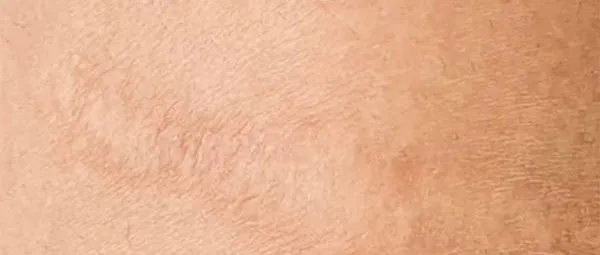
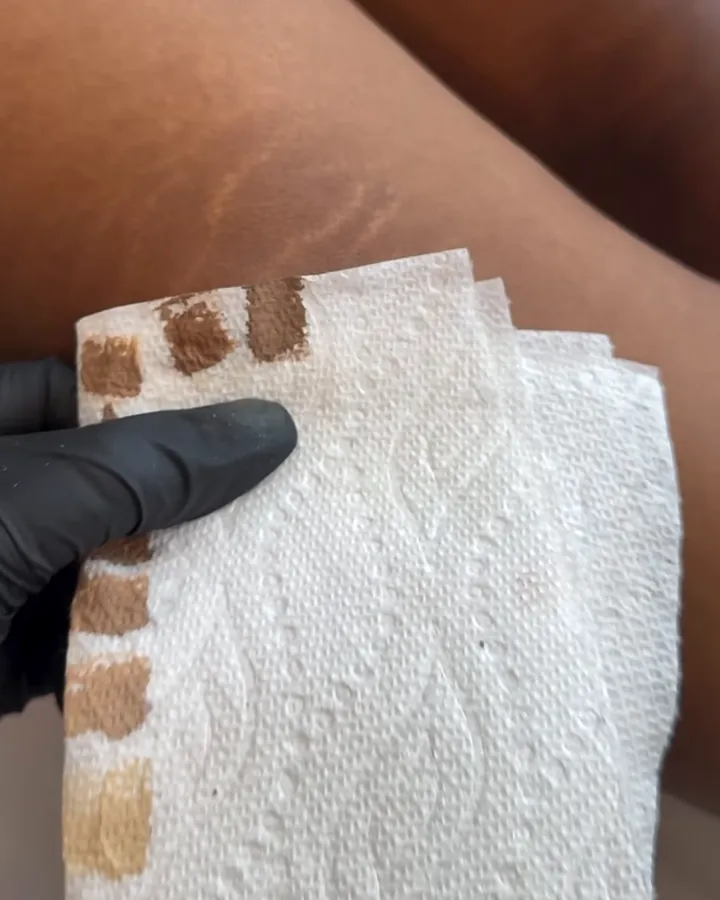
With your team’s approval and once the scar is fully mature, pale sections can sometimes be blended toward your skin tone with scar camouflage. Large scars are usually done in stages. Raised or very thick areas are not ideal, and camouflage does not change texture or remove the scar. Results vary. Some people choose to treat only the part that shows above a waistband.
How it works at SKINEAV
- Photo or callSend a photo or book a free phone consult. Honest first answer.
- Assessment & colour testIn clinic, Evelyn checks your skin and tests a custom formula.
- TreatmentPigment placed precisely, only where it is needed, one-on-one.
- Heal & reviewThe colour settles over weeks; follow-ups are planned if needed.
A realistic plan
Most recipients who choose camouflage start with the most visible section, for example the part that shows above a waistband, and see how their skin heals before doing more. Each session is spaced to allow full healing. Evelyn will keep the plan conservative, check in about any changes in your medications, and stop if anything does not look right.
Your next step
Ready to talk? Call 437-475-2757 for a free phone consult with Evelyn, or send a photo for a free assessment. Visits are by appointment at the clinic in Vaughan (36 Bessemer Ct, Unit 1).
Frequently asked questions
Is camouflage safe while on anti-rejection medicines?
That is a decision for your transplant team. Please ask them first; Evelyn will not proceed without clear medical clearance.
Can you do the whole scar in one visit?
Large scars are usually done in sections over several sessions so the skin can heal between them.
The area is numb. Is that a problem?
Numb skin is common after surgery. It means you may feel less, but Evelyn still works gently and checks the skin closely.
How do I find out if my scar is suitable?
Call 437-475-2757 for a free phone consult with Evelyn, or send clear daylight photos through the free assessment page. You will get an honest answer, including “not yet” or “this is not a good fit” when that is the truth.