
How-to · Ribs · Surgical scars
How to hide a chest tube scar: honest options for the side of the ribs
A chest tube scar usually sits on the side of the chest, below the armpit, after a collapsed lung, heart or lung surgery, or trauma care. It is small but often noticeable because it can pucker or pull inwards. This guide explains what helps, what does not, and when to ask your surgeon first.
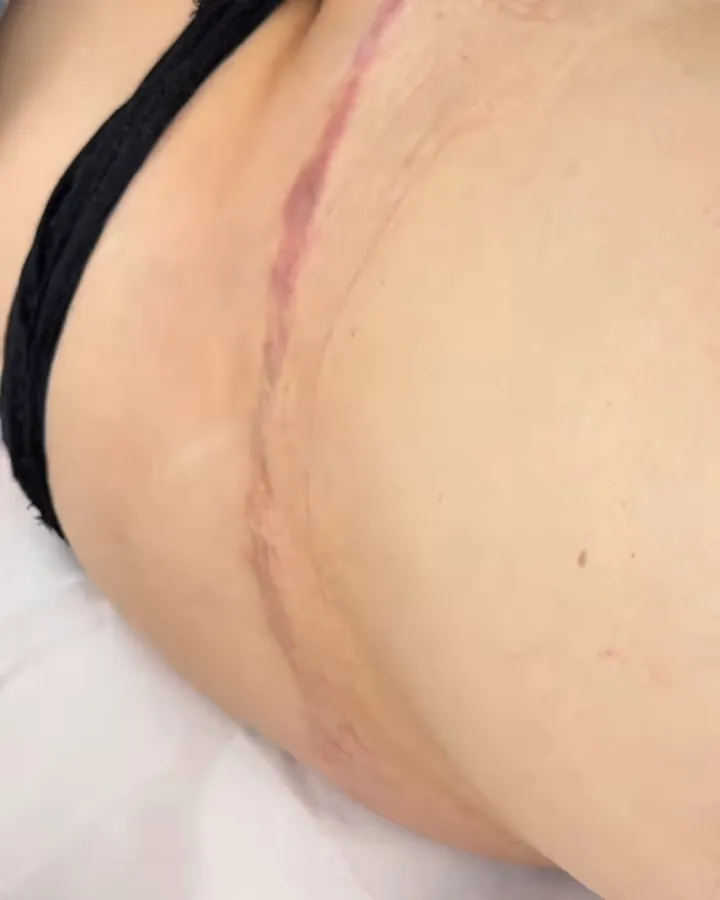
What a chest tube scar is usually like
The tube goes in between the ribs, so the scar is often short and round or slightly oval, sometimes with a stitch mark on either side. Because the tissue underneath healed around the tube, many of these scars are indented or tethered, meaning the skin dips and moves differently when you raise your arm.
Colour varies: some are pink for a long time, some fade to white, some stay brownish on deeper skin tones. Each of those needs a different approach.
Covering it day to day
This is a spot most clothing already covers, so the moments that matter are usually swimwear, sports bras, tank tops and changing rooms. A waterproof body concealer can soften colour for a pool day; set it well, because the area rubs against your arm. A rash guard or a swimsuit with a higher side panel is an easy fix many people prefer.
If the scar is still pink or red, a green-tinted colour corrector under concealer reduces redness, but redness is also a sign the scar is still maturing, which matters for anything more permanent.
Real results and real moments
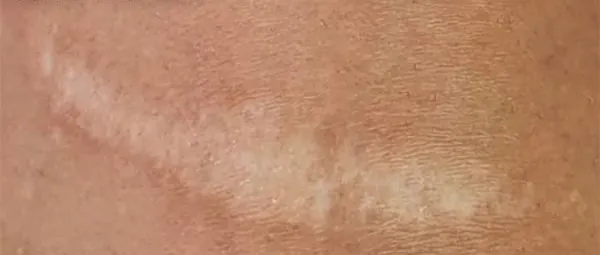
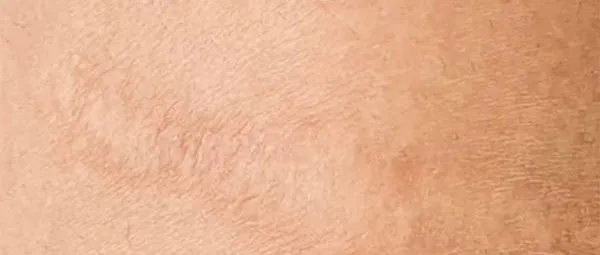
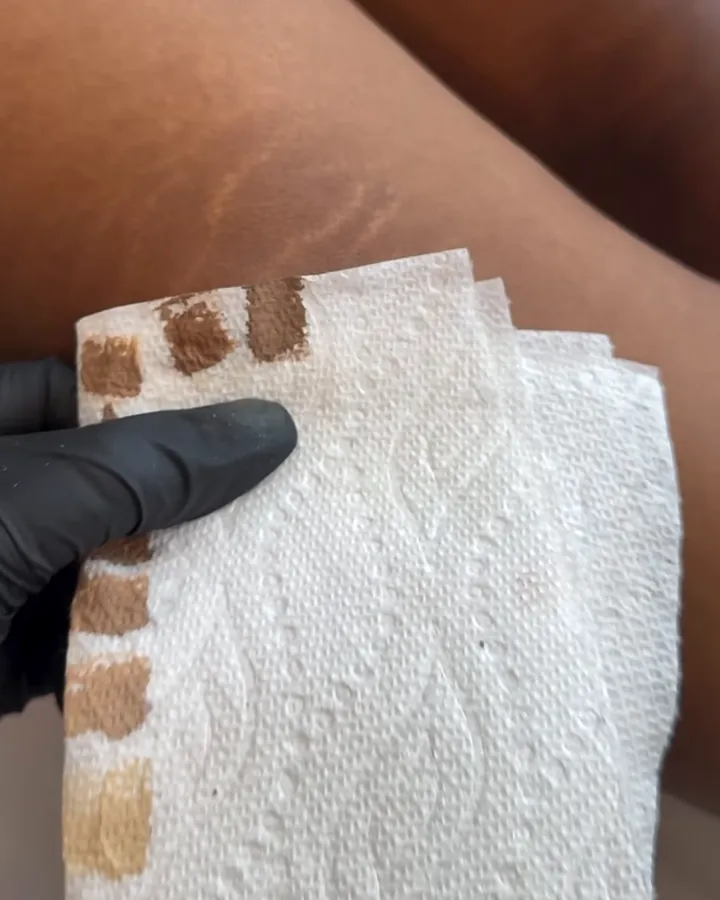
Can camouflage help?
When the scar is fully mature, flat enough and paler than your skin, scar camouflage can blend its colour toward the surrounding skin. It does not lift a dent or release tethering; a deep pucker will still be visible in certain light. Some people choose to ask their surgeon about scar revision first and consider camouflage afterwards for any remaining colour difference.
Most surgical scars need many months, often a year or more, before they are settled. See how long after surgery to wait for the general signs of a mature scar.
Questions to clear with your medical team
If you had a chest tube because of lung or heart disease, cancer treatment or a serious injury, check with your doctor before any cosmetic needle work, particularly if you take blood thinners, have had radiation to the area, or have ongoing healing problems. SKINEAV does not diagnose or treat medical conditions; camouflage is cosmetic colour work only.
How it works at SKINEAV
- Photo or callSend a photo or book a free phone consult. Honest first answer.
- Assessment & colour testIn clinic, Evelyn checks your skin and tests a custom formula.
- TreatmentPigment placed precisely, only where it is needed, one-on-one.
- Heal & reviewThe colour settles over weeks; follow-ups are planned if needed.
Realistic results
On a flat, pale chest tube scar, a good result usually means the colour stops standing out when you are in a swimsuit or changing room. On a puckered scar, people typically notice the shadow of the dip more than the colour after treatment, which is why it helps to be clear about what bothers you before deciding. Sessions on the side of the chest are short; you will be asked to avoid tight straps rubbing the area while it heals.
Your next step
Ready to talk? Call 437-475-2757 for a free phone consult with Evelyn, or send a photo for a free assessment. Visits are by appointment at the clinic in Vaughan (36 Bessemer Ct, Unit 1).
Frequently asked questions
Is a chest tube scar too small to bother with?
That is entirely your call. Small scars are often quick to assess, and many people decide clothing or makeup is enough once they understand the options.
My scar pulls when I lift my arm. Will camouflage fix that?
No. Tethering is a tissue issue. Ask your surgeon or a physiotherapist about it; camouflage only changes colour.
Can I get camouflage if I am on blood thinners?
Talk with your prescribing doctor first. Never stop a medication for a cosmetic appointment without medical advice.
How do I find out if my scar is suitable?
Call 437-475-2757 for a free phone consult with Evelyn, or send clear daylight photos through the free assessment page. You will get an honest answer, including “not yet” or “this is not a good fit” when that is the truth.