
Skin colour · After cryotherapy
White spot after wart freezing: will it go away, and how to cover it
Freezing a wart, skin tag or sun spot with liquid nitrogen sometimes leaves a pale or white patch where the treatment was. It is a well-known side effect. Here is what is going on, how long to wait, and what can help if it stays.
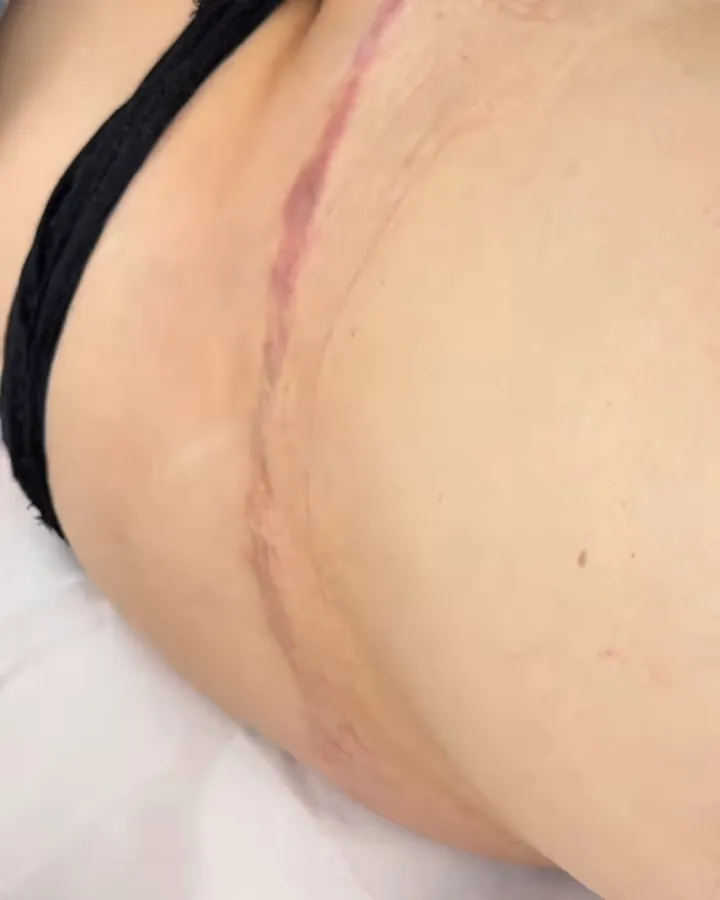
Why freezing can leave a white mark
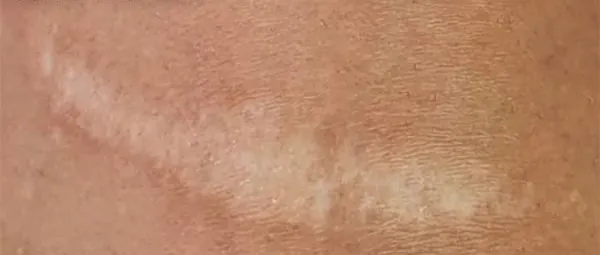
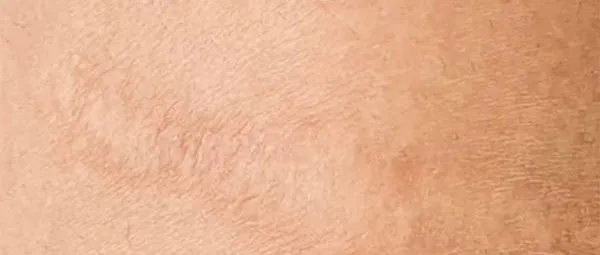
The cells that make pigment (melanocytes) are sensitive to cold. Cryotherapy can damage them in the treated spot, so the skin heals lighter than its surroundings. This is more noticeable on medium and deeper skin tones and after a summer tan, when the contrast is greater.
If the spot is white, flat and smooth, it is a colour change. If it is also indented or shiny, there may be a small scar as well.
Will it come back on its own?
Sometimes. Some white spots slowly regain colour over months; others stay pale. There is no way to know in advance, so it is worth giving it time. Protecting the area from the sun helps reduce contrast with the surrounding skin while you wait. If the white area keeps growing, or new white spots appear elsewhere, see your doctor, because that is a different situation from a single treated spot.
Real results and real moments
Covering it in the meantime
A small dab of concealer matched to your skin, applied with a fingertip or a small brush and set with powder, usually covers a single spot well. On hands and feet it will wear off with washing, so carry a small tube if it matters to you that day. Self-tanner on the spot can reduce contrast for a few days but often looks patchy on small areas.
When colour matching may make sense
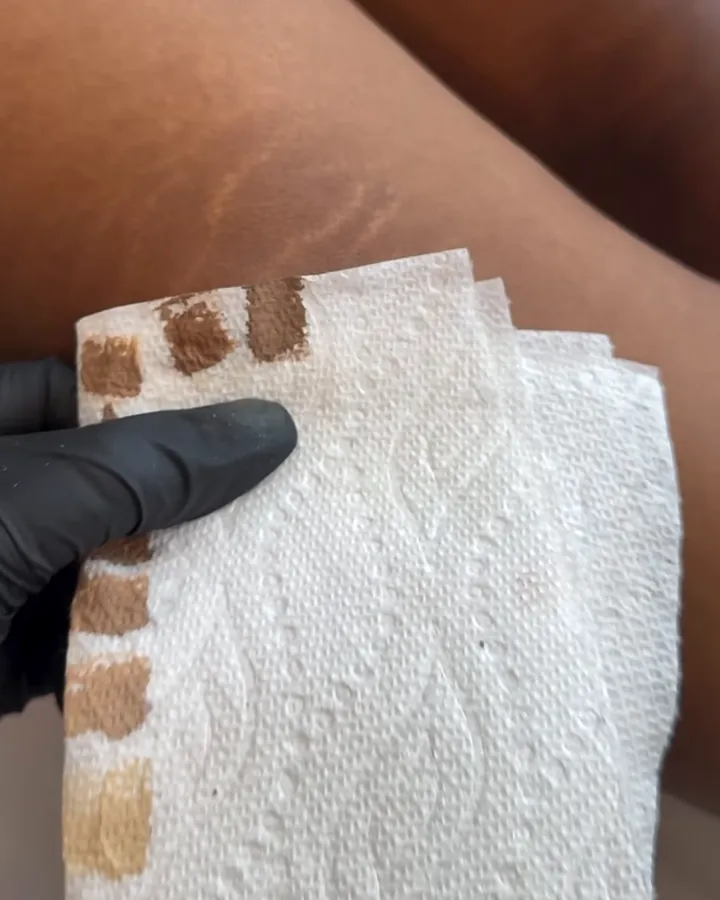
If the spot has stayed pale and stable for a long time and still bothers you, colour matching with scar camouflage can add skin-tone pigment into the light area so it blends better. It does not restore your own pigment cells; it adds colour that sits in the skin and may need a touch-up over time. Hands and feet hold pigment less well than other areas, and Evelyn will tell you honestly if your spot is in a hard location.
How it works at SKINEAV
- Photo or callSend a photo or book a free phone consult. Honest first answer.
- Assessment & colour testIn clinic, Evelyn checks your skin and tests a custom formula.
- TreatmentPigment placed precisely, only where it is needed, one-on-one.
- Heal & reviewThe colour settles over weeks; follow-ups are planned if needed.
Realistic results
For a single pale spot on a forearm, leg or face, a good result is that the spot no longer catches the eye. On hands and feet, colour may soften faster because of washing and friction, so a touch-up is more likely. Your own pigment will keep changing with the seasons while the added pigment stays the same, so Evelyn matches to your usual skin tone rather than a summer tan.
Your next step
Ready to talk? Call 437-475-2757 for a free phone consult with Evelyn, or send a photo for a free assessment. Visits are by appointment at the clinic in Vaughan (36 Bessemer Ct, Unit 1).
Frequently asked questions
How long should I wait before considering camouflage?
Long enough that the spot has clearly stopped changing. For many people that means many months. Your doctor can confirm the area has healed properly.
Is a white spot after freezing vitiligo?
A single pale spot exactly where you were treated is usually a known side effect of freezing. New, spreading white patches elsewhere should be checked by a doctor.
Can camouflage remove the original wart?
No. Camouflage is not a treatment for warts or any skin condition. Any active wart needs to be treated by a doctor first.
How do I find out if my scar is suitable?
Call 437-475-2757 for a free phone consult with Evelyn, or send clear daylight photos through the free assessment page. You will get an honest answer, including “not yet” or “this is not a good fit” when that is the truth.