
Scars · Abdomen · After donation
Kidney donor scars: options to make them less visible
Living kidney donation is a generous decision, and many donors wear their scars with pride. Others would simply rather they were less noticeable in a swimsuit. Both are valid. Here is an honest guide for donors (and recipients) thinking about their options.
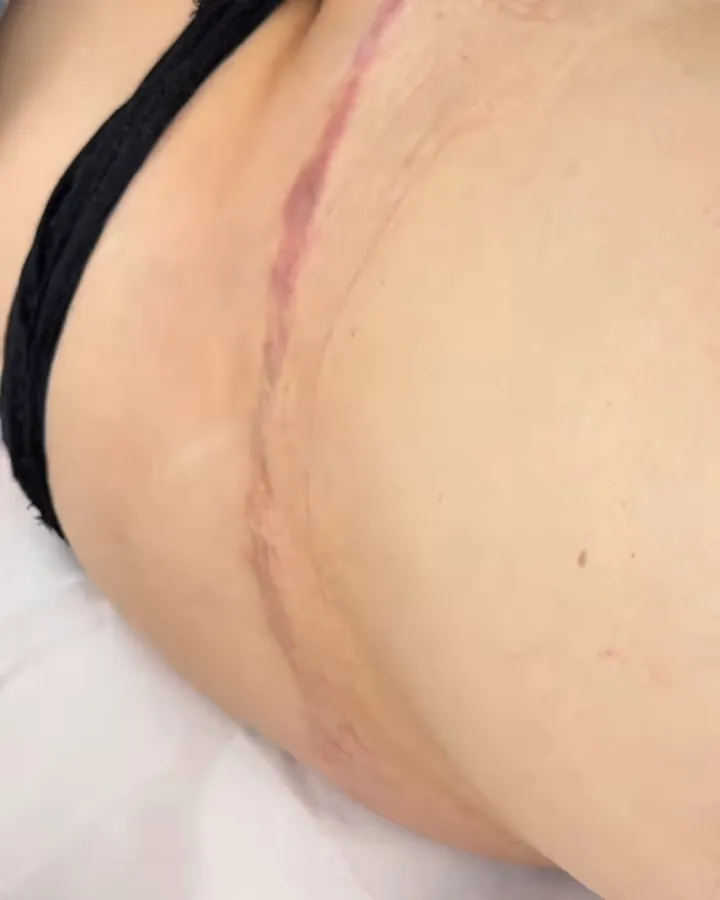
What donor scars usually look like
Most living donor surgery today is laparoscopic, which usually leaves a few small scars on the abdomen plus one somewhat longer incision where the kidney was removed, often low on the belly or near the belly button. Older or open operations can leave a longer scar on the side (flank). Recipients usually have a curved scar in the lower abdomen. Exact placement depends on the surgical technique your hospital used.
Covering them day to day
Small laparoscopic scars are often hidden by high-waisted swimwear or a one-piece. For a beach day or photos, a waterproof body concealer set with powder covers pale or pink marks. Most donors find clothing does the job; the question tends to come up around holidays, weddings and the gym.
Real results and real moments
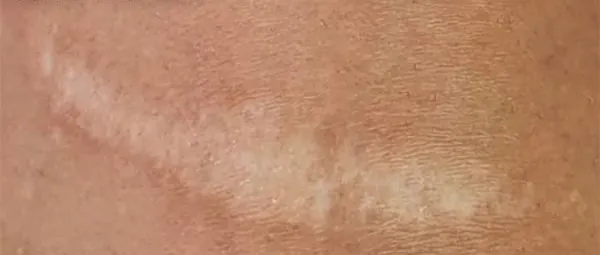
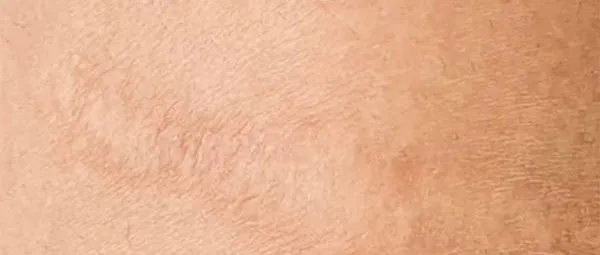
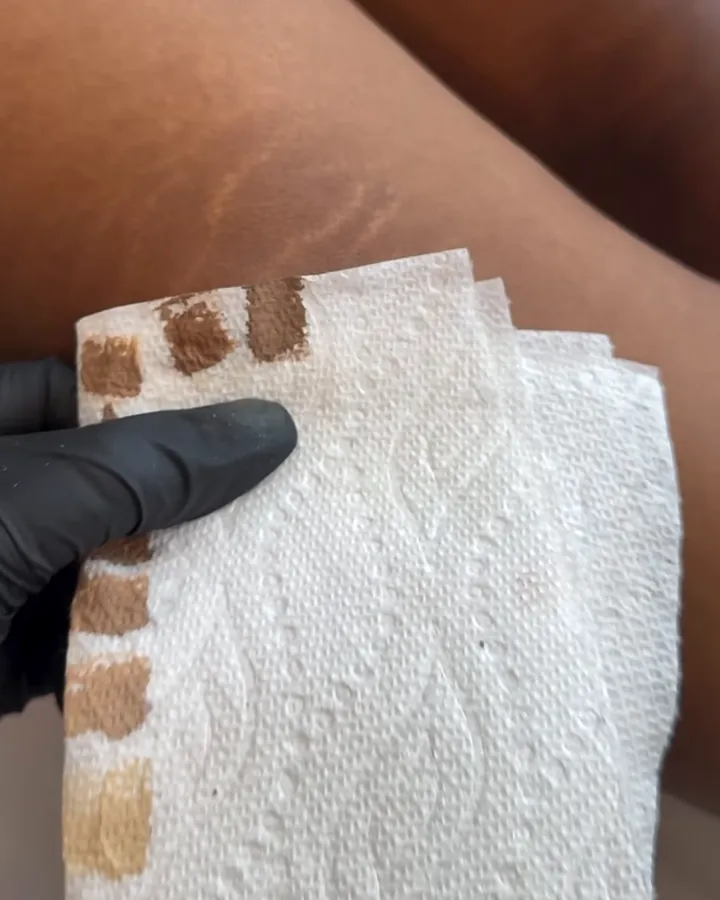
When colour matching may help
If your scars are fully healed and mature, flat and noticeably paler than your skin, scar camouflage can blend their colour toward the surrounding skin. It does not erase the scars or change any indentation. Results vary, and some scars need more than one session.
If you are a transplant recipient taking anti-rejection medicines, your immune system is suppressed. Please get clearance from your transplant team before any needle-based cosmetic work. Evelyn will ask about this at consult.
Timing
Abdominal scars can take a year or more to mature. Wait until they are no longer pink, raised or tender. Your surgeon or follow-up clinic can confirm you are fully recovered. See abdominal surgery scars for more on how these scars change over time.
How it works at SKINEAV
- Photo or callSend a photo or book a free phone consult. Honest first answer.
- Assessment & colour testIn clinic, Evelyn checks your skin and tests a custom formula.
- TreatmentPigment placed precisely, only where it is needed, one-on-one.
- Heal & reviewThe colour settles over weeks; follow-ups are planned if needed.
What a session is like
Small laparoscopic scars are usually quick to treat, and the longer extraction scar may be done in sections. Evelyn tests a colour first and works only inside the pale scar tissue. Afterwards, loose waistbands help while the area heals. Many donors are happy with one or two sessions on the small scars; larger scars may need more.
Your next step
Ready to talk? Call 437-475-2757 for a free phone consult with Evelyn, or send a photo for a free assessment. Visits are by appointment at the clinic in Vaughan (36 Bessemer Ct, Unit 1).
Frequently asked questions
Is camouflage safe after kidney donation?
For healthy donors with fully healed scars, cosmetic colour work is generally a question of scar maturity. If you have any ongoing health issues, check with your doctor first.
I am a kidney recipient. Can I get camouflage?
Only after discussing it with your transplant team, because anti-rejection medicines affect healing and infection risk.
Will it hide the scars completely?
No. The aim is to blend colour so they draw less attention. Texture and shape can still show.
How do I find out if my scar is suitable?
Call 437-475-2757 for a free phone consult with Evelyn, or send clear daylight photos through the free assessment page. You will get an honest answer, including “not yet” or “this is not a good fit” when that is the truth.