
How-to · Knee · Sports surgery
ACL and knee scope scars: how to hide them in shorts and dresses
Knee surgery for a torn ACL or meniscus is common after sports injuries. The scars are usually small, but they sit on the front of the knee, which is on show every time you wear shorts, a skirt or a swimsuit. Here is how to make them less noticeable without overselling anything.
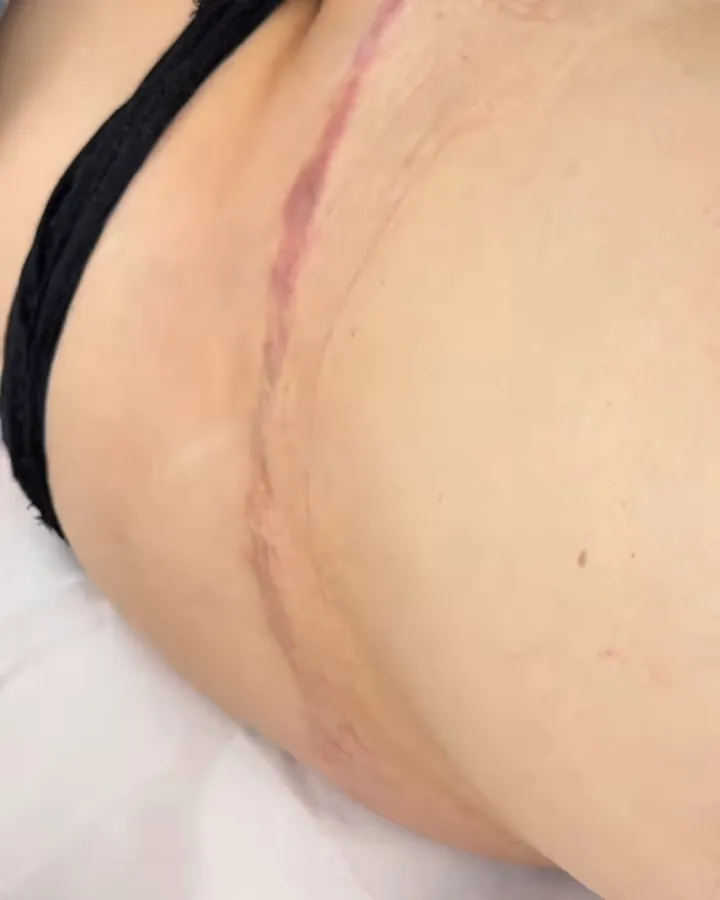
What knee surgery scars usually look like
Arthroscopy (a knee scope) leaves two or three short scars around the kneecap where the instruments went in. ACL reconstruction often adds a longer scar where the graft was taken, commonly below the kneecap or on the inner side of the knee, depending on the technique. These scars may stay pink for a long time, then fade to white or, on deeper skin tones, stay darker.
The knee bends hundreds of times a day, so scars here are under repeated stretch. That can make them widen a little or mature more slowly.
Short-term cover
Leg makeup or a body foundation applied thinly, then set, works for a wedding or photos. Knee skin creases, so press product in rather than layering thickly, and check how it looks with your knee bent. Self-tanner can soften contrast on pale scars for a few days. See leg makeup for scars for techniques.
Real results and real moments
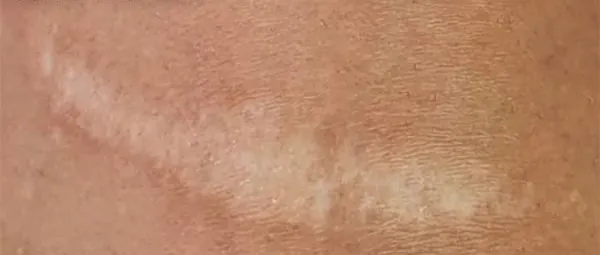
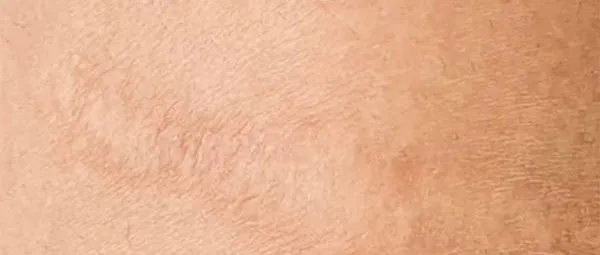
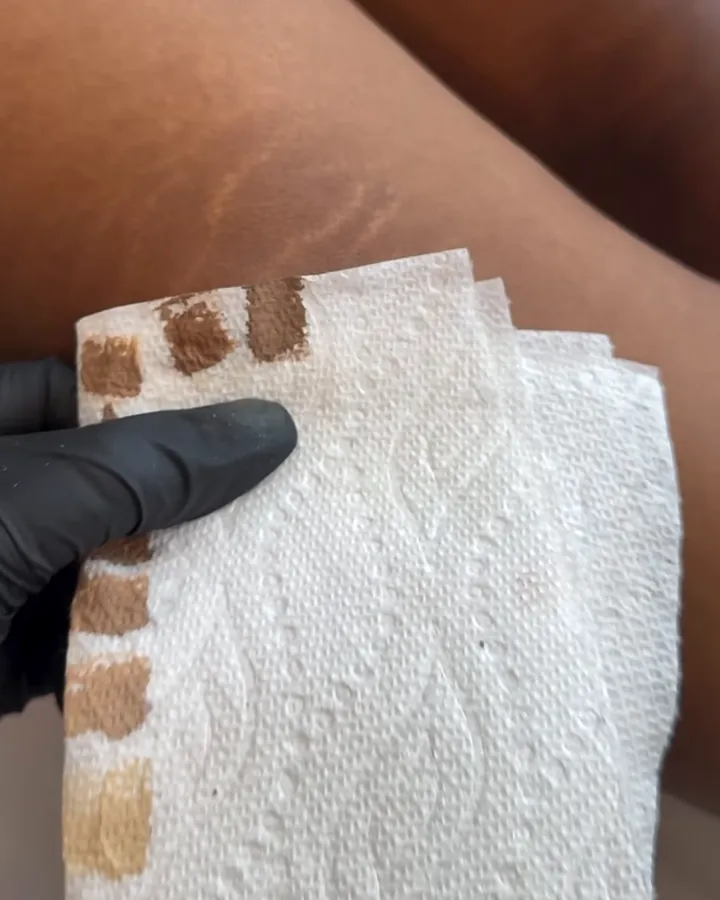
When colour matching may help
Once the scars are fully mature, flat and paler than your skin, scar camouflage can blend their colour toward the surrounding tone. Small portal scars are often a good, quick fit. Longer graft-site scars can work too but may need more than one session. Camouflage does not change texture, and a scar that has stretched wider will still be wider. Results vary.
If you are still doing rehab, your knee is still swollen, or your surgeon has more procedures planned, wait.
Sport, sun and timing
Plan any session so you are not kneeling, swimming or doing heavy training in the first days of healing. Outdoor athletes should use SPF on the area; tan lines make pale scars stand out more. Read returning to the gym after camouflage for aftercare timing.
How it works at SKINEAV
- Photo or callSend a photo or book a free phone consult. Honest first answer.
- Assessment & colour testIn clinic, Evelyn checks your skin and tests a custom formula.
- TreatmentPigment placed precisely, only where it is needed, one-on-one.
- Heal & reviewThe colour settles over weeks; follow-ups are planned if needed.
What to expect after treatment
Knee scars usually look stronger in colour for the first week, then soften as they heal. Avoid kneeling, swimming and heavy leg training while healing. A follow-up is often booked once colour has settled, because knee skin can heal unevenly where it bends. A good result means the scars no longer catch the eye in shorts; texture and outline can still be visible up close.
Your next step
Ready to talk? Call 437-475-2757 for a free phone consult with Evelyn, or send a photo for a free assessment. Visits are by appointment at the clinic in Vaughan (36 Bessemer Ct, Unit 1).
Frequently asked questions
How soon after ACL surgery can I get camouflage?
Only once the scars are fully mature and your surgeon is happy with your recovery. Many people wait a year or more.
My scars are dark, not light. Can you help?
Camouflage is usually a poor fit for scars darker than your skin, because pigment cannot lighten them. A dermatologist may suggest other options.
Will kneeling ruin the colour?
Avoid kneeling and friction while it heals. After healing, normal activity is fine, though high-friction areas may need touch-ups sooner.
How do I find out if my scar is suitable?
Call 437-475-2757 for a free phone consult with Evelyn, or send clear daylight photos through the free assessment page. You will get an honest answer, including “not yet” or “this is not a good fit” when that is the truth.